


More news on this day
Rising visitor numbers, climate stress and a patchwork of voluntary rules have pushed Antarctica’s booming tourism industry into the spotlight as Antarctic Treaty parties gather in Hiroshima, Japan, to debate stricter controls on access to the world’s southernmost wilderness.
Get the latest news straight to your inbox!
Record Tourist Numbers Test a Fragile Continent
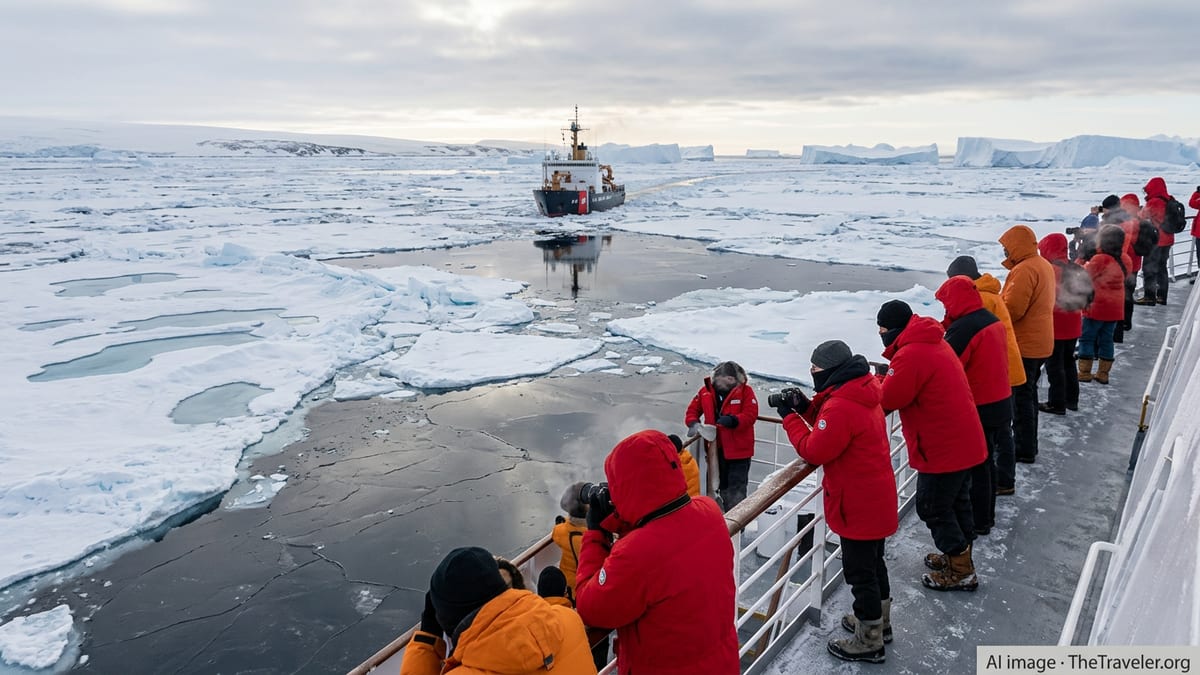
Antarctic tourism, once a niche pursuit, has entered a period of sustained growth that many researchers and environmental groups increasingly describe as a crisis for one of the planet’s most fragile regions. Publicly available statistics compiled by the International Association of Antarctica Tour Operators show that more than 122,000 tourists visited Antarctica in the 2023–24 season, with total numbers for 2024–25 remaining well above 100,000 despite a modest dip. Cruise ships, expedition vessels and small aircraft now deliver visitors to a network of coastal landing sites that were, until a few decades ago, rarely seen by anyone other than scientists and logisticians.
Academic analyses of long term data indicate that tourist arrivals have multiplied many times over since the 1990s, with landing passengers and cruise only visitors contributing to a steadily rising human footprint along the Antarctic Peninsula and surrounding islands. New vessels, including larger and more luxurious ships, have expanded capacity, while warmer temperatures and retreating sea ice are lengthening the operating season and opening access to previously ice choked areas. These trends are reshaping what had long been a short, highly specialized travel window into a longer, more commercially attractive market.
Supporters of well regulated tourism argue that carefully managed visits can foster global awareness of Antarctica’s scientific and environmental value. However, concern is growing that rapid expansion risks overwhelming the regulatory system created when tourism numbers were far lower. The cumulative impact of tens of thousands of landings, combined with emissions from ships and aircraft, is increasingly at odds with the idea of Antarctica as a near pristine natural reserve devoted to peace and science.
Hiroshima Meeting Confronts Calls for Stricter Limits
The 48th Antarctic Treaty Consultative Meeting, hosted in Hiroshima in May 2026, has become a focal point for debate over how far and how fast governments should tighten controls on tourism. According to information released by Japan’s Ministry of Foreign Affairs, the agenda for the gathering includes tourism activities, the impact of climate change on Antarctic ecosystems and the broader question of how to uphold the environmental principles of the treaty system in an era of rising visitation.
Consultative Parties to the Antarctic Treaty are expected to examine new and updated information papers on ship based and air supported tourism, including recent data on visitor numbers, nationalities and operating patterns submitted by industry bodies and national programs. Parallel academic and civil society events organized around the Hiroshima meeting, such as public symposia hosted by Japanese universities, are highlighting tourism as a central test of whether consensus based governance can keep pace with commercial interest in the continent.
Observers note that tourism has risen on the agenda over the past decade, but efforts to adopt comprehensive binding limits, such as an overall cap on visitor numbers or strict quotas for specific regions, have repeatedly run into political and practical obstacles. Any decision of the Antarctic Treaty Consultative Meeting requires consensus among all consultative parties, a requirement that can slow or dilute attempts at far reaching regulation. The Hiroshima talks are widely viewed as a key opportunity to move from fragmented site based rules toward a more system wide approach.
Environmental Risks Drive Demands for Tougher Controls
Concerns voiced in scientific publications and environmental advocacy reports focus on a cluster of related risks tied to the tourism boom. One major issue is the potential introduction of non native species through seeds, spores or small organisms transported on clothing, equipment and ship hulls. As visitor numbers rise and more landing sites are used, the chance of invasive species gaining a foothold in ice free coastal areas grows, potentially disrupting fragile terrestrial ecosystems.
Wildlife disturbance is another central worry. Many of the most popular landing sites are near penguin colonies, seal haul outs and seabird nesting areas. Even with codes of conduct that keep visitors at set distances, repeated landings can alter animal behavior, especially during breeding seasons. Studies examining long term site use show that some locations now receive landings by multiple vessels on the same day, increasing the intensity of human presence compared with earlier decades.
Climate change amplifies these pressures. Research published in recent months links the improving accessibility of parts of the Antarctic Peninsula to changing sea ice conditions, noting that longer ice free periods make it easier for more ships to operate over a wider window. Warmer conditions and glacial retreat are also reshaping landscapes and habitats that tour operators market as must see destinations, raising questions about whether promoting visitation to rapidly changing sites is compatible with the precautionary approach embedded in the Antarctic environmental protocol.
Marine pollution and safety risks round out the list of concerns. Heavy fuel oil bans in Antarctic waters and ship safety rules have reduced some dangers, but environmental groups warn that any major accident involving a large cruise vessel could have severe consequences in remote, storm prone waters where rescue and clean up operations are inherently difficult. As ship sizes increase, so does the scale of potential incidents, adding urgency to calls for stricter limits on vessel capacity and routing.
Industry Self Regulation Under Pressure
For more than three decades, the International Association of Antarctica Tour Operators has promoted a model of self regulation within the framework of the Antarctic Treaty System. The association sets guidelines on issues such as maximum numbers ashore at specific sites, staff to passenger ratios during landings and biosecurity procedures for cleaning boots and gear. Publicly available IAATO documents describe a system of pre season planning, incident reporting and member oversight intended to keep activities within agreed environmental bounds.
Critics, including some researchers and non governmental organizations, argue that this architecture no longer matches the scale and pace of tourism growth. They point out that IAATO membership is voluntary and that the association, as a trade body, has limited tools to constrain overall growth in capacity. Academic commentary in international law and sustainable tourism journals has repeatedly highlighted the gap between detailed site specific guidelines and the absence of firm, binding limits on aggregate visitor numbers or the total size of the tourism fleet.
Industry representatives counter that self regulation has produced a high level of environmental awareness and operational discipline compared with many other remote destinations. They emphasize that member operators coordinate itineraries to minimize congestion, adhere to strict wildlife approach distances and collaborate with scientists on monitoring projects. Even so, there is growing acceptance within and beyond the sector that clearer direction from treaty parties will be needed if Antarctica is to avoid tipping from carefully managed niche destination toward a textbook example of overtourism.
Proposals on the Table in Hiroshima
In the lead up to the Hiroshima meeting, policy papers and conference programs indicate that a range of potential measures are under discussion. These include hard caps on the size of ships allowed to conduct landings, tighter rules on how many passengers can go ashore at a time and expansion of site specific management plans that can temporarily close or rotate sensitive locations. Some delegations and experts are also promoting stronger reporting obligations for tourism operators and more robust inspection regimes to verify compliance.
Longer term ideas circulating in the academic and policy literature involve adopting a system wide carrying capacity framework that would set maximum annual visitor limits for key regions or for the continent as a whole. Other suggestions include differential fees or environmental levies calibrated to vessel size and emissions, with revenue earmarked for scientific monitoring and conservation efforts. Implementing such measures would require agreement not only among treaty parties but also effective coordination with flag states and port states in South America, Australasia and elsewhere.
Whether the Hiroshima talks deliver binding new restrictions or mainly incremental adjustments, the gathering underscores how central tourism has become to the future of Antarctic governance. With visitor numbers likely to remain above 100,000 per year and climate change transforming the continent at unprecedented speed, pressure is mounting on the treaty system to demonstrate that it can balance access, education and economic interests with the protection of a unique, rapidly changing environment.