


More news on this day
The United States has elevated its travel advisory for the United Arab Emirates to Level 3 “Reconsider Travel” following a series of Iranian missile and drone strikes, prompting renewed attention to shelter-in-place guidance and emergency warnings for Americans in the Gulf state.
Get the latest news straight to your inbox!
Escalating Tensions and the New Level 3 Advisory
The Level 3 advisory for the UAE, updated in March 2026, reflects what U.S. travel guidance describes as a sustained threat of armed conflict, including ongoing risks from Iranian drones and missiles targeting locations in and around the Emirates. Publicly available information from the State Department notes that non-emergency U.S. government employees and their family members were ordered to depart on March 2 as part of a wider regional security posture.
Reports on the 2026 Iranian strikes on the United Arab Emirates indicate that Emirati air defenses have intercepted large numbers of ballistic missiles and drones since the outbreak of hostilities at the end of February. At the same time, several incidents, including a fire at industrial facilities and strikes near key oil and port infrastructure, have underscored the vulnerability of civilian areas and transport hubs.
Travel risk monitors and security analysis groups describe the current advisory as part of a broader pattern of elevated warnings across the Gulf, as Iran and the United States trade attacks by air and sea in and around the Strait of Hormuz. The UAE has publicly emphasized that its air defense systems are active and that it continues to coordinate closely with international partners, but travel advisories remain cautious given the possibility of renewed salvos.
For Americans, the Level 3 rating does not impose a legal ban on travel but signals that nonessential trips should be reconsidered. It also means that those already in the UAE are being urged to carefully review contingency plans and to understand exactly what “shelter in place” and related alerts will look and sound like if threats are detected.
What “Shelter in Place” Really Means in the UAE Context
Since late February, the U.S. mission to the UAE has issued multiple security messages advising Americans to shelter in place at various points as Iranian attacks intensified. Coverage in regional outlets and security briefings shows that these instructions were initially directed at embassy and consulate staff before being extended as a recommendation to U.S. citizens throughout the country when missile and drone barrages were reported.
In practice, shelter in place in the UAE has meant remaining indoors, away from windows, in an interior room or reinforced area, while monitoring official alert channels for updates. Publicly available embassy guidance stresses that individuals should avoid unnecessary movement during active alerts, resist the impulse to travel to diplomatic facilities, and instead stay where they are unless they face an immediate, localized danger such as fire or structural damage.
The UAE’s own emergency notifications, which have reached residents via nationwide mobile messages, are designed to align with these instructions. Local authorities have periodically used these systems to warn of incoming threats and to direct people to stay under cover until an all clear is issued. In a few instances, passengers at airports and shoppers in major malls have reportedly been moved into designated shelter areas as security sirens sounded.
Security analysts note that shelter-in-place advisories in the UAE must be taken seriously because interception rates, while high, do not eliminate the risk of debris, falling interceptors, or errant projectiles. Even when air defenses succeed in destroying incoming drones and missiles, fragments can pose dangers over wide areas, especially in densely built urban environments.
How Alerts Are Delivered: From Embassy Messages to Phone Warnings
According to publicly available State Department materials, Americans in the UAE are expected to rely on several layers of warning systems. The first is the Smart Traveler Enrollment Program, which allows U.S. citizens to receive security messages, including shelter-in-place advisories and updates on airspace or airport disruptions. Security-focused media reports indicate that these messages have been used repeatedly since February to signal changes in threat levels.
In parallel, the UAE has expanded use of its own digital alert infrastructure. Local coverage describes nationwide push notifications from the Ministry of Interior warning of potential aerial threats, as well as advisories to follow instructions from civil defense and police. These alerts have sometimes coincided with reports of Iranian missile and drone launches, giving residents and visitors only minutes to seek shelter.
Embassy security alerts also provide guidance about the status of previous instructions. In mid-April, for example, published coverage of advisories indicated that the U.S. mission lifted a prior shelter-in-place order for government personnel after a lull in attacks, while still urging American citizens to remain vigilant and prepared to take cover again if needed. Observers note that such changes do not necessarily signal a return to normalcy, but rather a temporary reduction in immediate danger.
Travel and risk consultants recommend that Americans in the UAE keep mobile devices charged, ensure roaming or local data access is functioning, and familiarize themselves with notification settings so national and embassy alerts are not filtered or silenced. They also suggest following reputable regional news outlets that provide rapid updates on air defense activity and transport interruptions.
Practical Steps for Americans Already in the UAE
Publicly available crisis guidance documents and embassy advisories outline several practical measures for Americans who decide to remain in the UAE despite the Level 3 advisory. Travelers are encouraged to identify at least two potential shelter locations in their accommodation or workplace, such as an internal hallway or stairwell, and to avoid rooms with large glass facades or exposed roofs.
Basic preparation also includes assembling a small “go kit” that can be reached quickly during an alert. Travel security firms typically recommend copies of identification documents, essential medications, a flashlight, a portable power bank, and a small amount of cash in local currency. While large stockpiles are not generally necessary in the UAE’s urban centers, having enough water and nonperishable snacks for a day or two can be helpful if movement is restricted after a major incident.
Americans are further advised to maintain regular contact with family or employers outside the region and to agree in advance on simple check-in procedures when alerts are issued. Analysts point out that during the most intense barrage periods, mobile networks and messaging apps can become congested, so concise prearranged messages or alternative communication platforms may improve the chances of getting through.
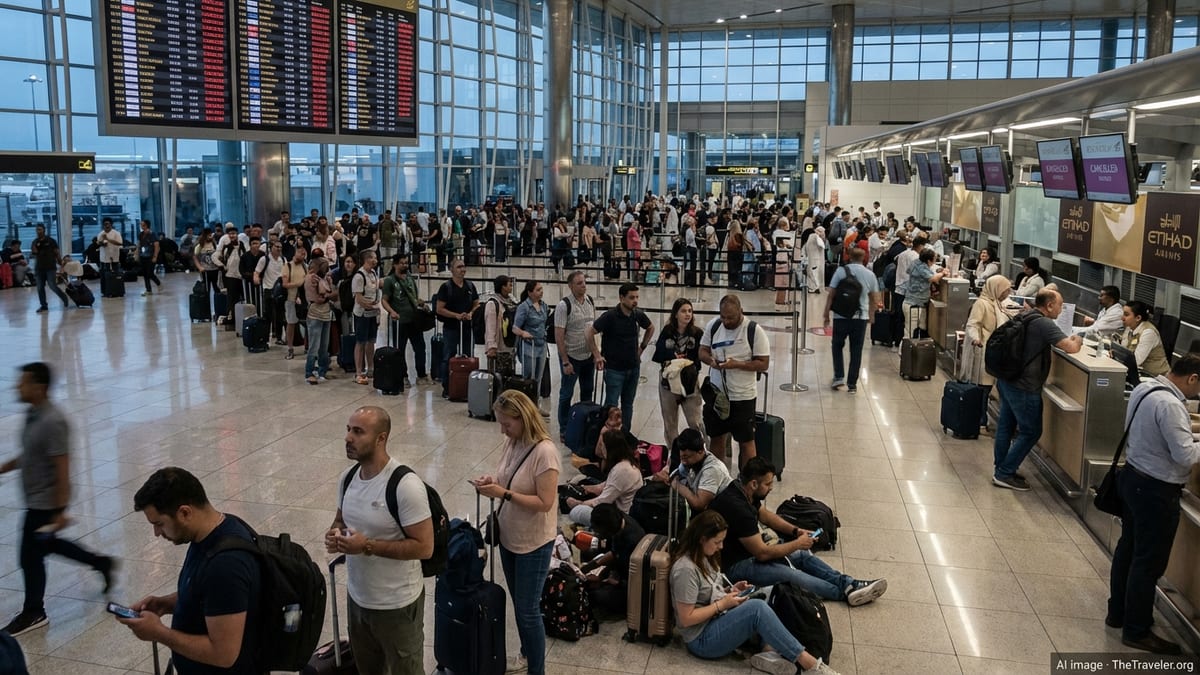
For those considering departure, airlines and travel monitoring services stress the importance of flexible itineraries. Previous rounds of Iranian strikes have prompted temporary airport closures and flight diversions, and current advisories caution that commercial schedules may be disrupted with little notice. Having backup routes through alternative hubs and being prepared for overnight layovers can reduce stress if further attacks affect airspace.
What Prospective Travelers Should Weigh Before Booking
For Americans planning potential trips to the UAE, the Level 3 advisory serves as an explicit signal to reassess timing and necessity. Travel risk assessments highlight that while daily life in major cities such as Abu Dhabi and Dubai continues under a visible security umbrella, the broader regional conflict has introduced a layer of unpredictability that did not exist in previous years.
U.S. travel guidance stresses that conditions can change rapidly based on developments in the Iran conflict, including new rounds of drone and missile launches or incidents at sea in the Gulf. Even periods of relative calm may be punctuated by sudden escalations, as seen in recent weeks when fresh salvos followed announcements of partial ceasefires or diplomatic initiatives.
Analysts point out that travelers with essential business, family, or transit reasons to be in the UAE should monitor both the overall country advisory and real-time embassy messaging, since the two can diverge. The nationwide advisory tends to move slowly, while localized alerts may tighten or ease within hours depending on intelligence about imminent threats.
For leisure travelers, travel security specialists broadly suggest postponing nonessential visits until regional tensions stabilize and advisories are downgraded. Those who decide to go anyway are encouraged to purchase comprehensive travel insurance that explicitly covers war and terrorism-related disruptions, to maintain high situational awareness, and to treat any shelter-in-place or warning messages as urgent instructions rather than optional guidance.