


More news on this day
Polar operator Antarctica21 is collaborating with camera maker Leica to introduce curated photography experiences across its Antarctic air-cruise program, aiming to appeal to travelers seeking both comfort and creative immersion at the far end of the world.
Get the latest news straight to your inbox!
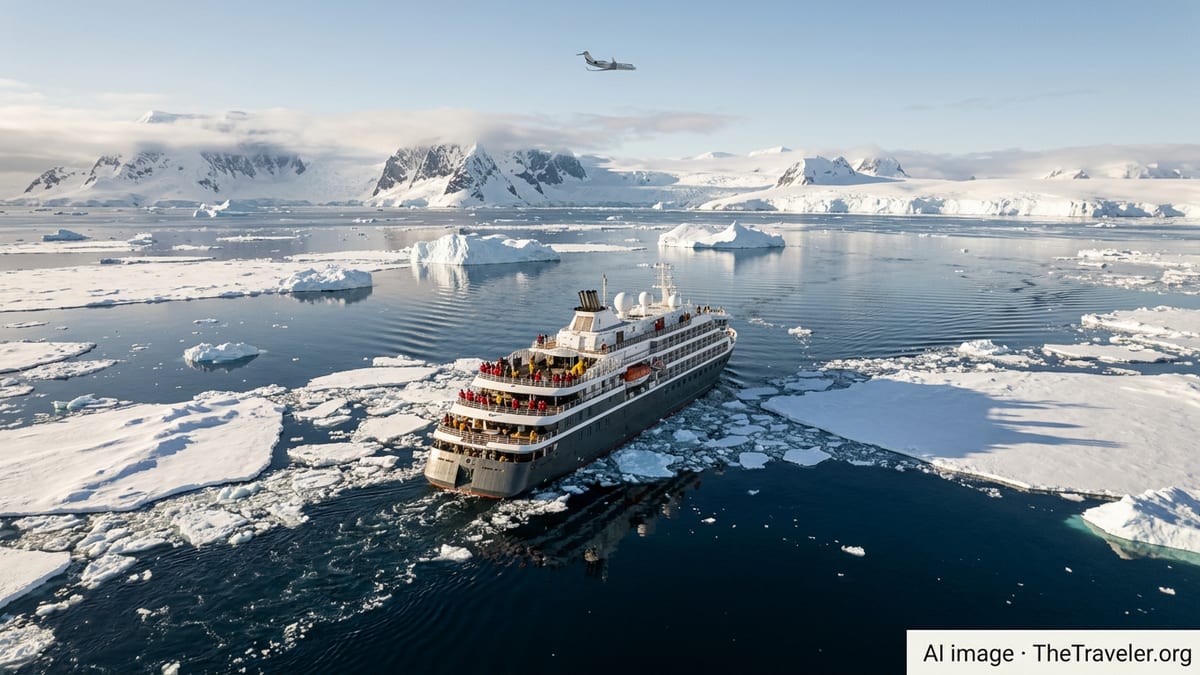
A boutique air-cruise model meets a legendary camera brand
Publicly available information on Antarctica21 shows that the Chile-based company has built its reputation around the air-cruise concept, flying guests over the Drake Passage and joining small expedition ships directly at King George Island. By reducing time at sea and avoiding one of the roughest stretches of ocean, the operator positions its model as a way to reach Antarctica in greater comfort while maintaining a strong focus on time spent in the ice.
The emerging collaboration with Leica aligns with this boutique approach. Leica has long cultivated a following among travel and wildlife photographers, particularly in challenging environments where reliability and optical performance are at a premium. Bringing the two brands together is expected to create a more integrated experience, where the journey by air, the shipboard stay, and excursions on the ice are framed around capturing high quality images of Antarctic landscapes and wildlife.
While detailed terms of the partnership have not been widely disclosed, reports indicate that the initiative is designed to weave photography more deeply into the guest journey rather than offering it as an add-on. That direction reflects a broader trend in expedition cruising, where specialist themes such as photography, citizen science, and wellness are increasingly used to differentiate itineraries in a competitive market.
Enhanced photography programming on board and ashore
According to available coverage, the cooperation between Antarctica21 and Leica is expected to center on structured photography programming, potentially including workshops, guided shoots, and advisory support for guests at all skill levels. In practice, that could range from pre-cruise briefings on gear selection and cold-weather battery management to small-group sessions focused on composition in bright, high-contrast conditions.
On board Antarctica21’s small expedition vessels, photography content is likely to be built into the daily schedule alongside the usual lecture program on wildlife, geology, and polar history. With ships carrying fewer than 80 guests on typical departures, the format lends itself to one-on-one or small group guidance, which is often cited as a key factor for travelers who want to return home with more than snapshots.
Ashore and during Zodiac operations, the partnership is expected to emphasize field-based learning. Guests may receive real-time suggestions on framing penguin colonies, handling fast-changing weather and light, and working within environmental guidelines that limit approach distances to wildlife. By pairing polar guides and photography specialists, the collaboration aims to elevate both the creative and educational value of landings without compromising safety or conservation rules.
Aligning brand values in a changing Antarctic market
Antarctica21 and Leica occupy distinct but complementary spaces in the travel and imaging sectors. Antarctica21 presents itself as a niche operator focused exclusively on the White Continent, with small ships, fly-in access, and a strong emphasis on personalized service. Leica, for its part, is associated with precision engineering, long product lifecycles, and documentary-style storytelling, a combination that resonates strongly with travelers seeking meaningful, once-in-a-lifetime journeys.
Analysts of the expedition cruise segment note that such partnerships often serve multiple purposes. They enhance the guest proposition while also signaling a certain positioning in the luxury and aspirational travel space. In this case, Antarctica21’s decision to align with a high-end camera brand underscores its strategy of attracting travelers who care about design, craftsmanship, and the narrative they bring back from a remote destination.
The timing of the collaboration comes as interest in polar travel continues to rise and more ships enter the market. Industry observers point out that operators are increasingly turning to themed itineraries, branded collaborations, and upgraded onboard facilities to stand out. By offering a clearly defined photography focus through a globally recognized brand, Antarctica21 is adding another layer to its air-cruise differentiation.
Opportunities for guests and implications for the region
For travelers, the partnership is likely to translate into a more intentional photography journey from the moment they begin planning an Antarctic trip. Pre-departure materials could include guidance on equipment, packing, and backup strategies, while onboard programs may encourage guests to build cohesive visual stories rather than disconnected images. This structure may be particularly appealing to guests who see Antarctica as a milestone destination and want to develop their skills alongside the experience.
At a regional level, the move illustrates how Antarctic operators are experimenting with new layers of value while operating under strict environmental and operational frameworks. Reports on the sector emphasize that any new programming must fit within the guidelines set by international bodies and industry associations governing visitor numbers, landing sites, and wildlife interactions. Photography activities are therefore being designed to comply with existing standards, reinforcing messaging on respectful distance and low-impact behavior.
As more travelers bring advanced cameras and drones to remote regions, operators and partners are also confronted with questions of technology management and policy. Current indications suggest that collaborations such as the one between Antarctica21 and Leica will focus on responsible use of equipment, avoiding disturbance of wildlife and other guests. In this way, the partnership does not only enhance guest experience but may also contribute to shaping best practices for visual storytelling in one of the planet’s most fragile environments.
A glimpse of future innovations in polar travel
Observers of the high-end expedition segment suggest that the Antarctica21 and Leica collaboration could serve as a model for future tie-ups between operators and specialist brands. As ships add more sophisticated observation lounges, multimedia rooms, and outdoor viewing decks, there is scope for deeper integration of technical expertise from partners in fields such as optics, imaging, and environmental monitoring.
For Antarctica21, the photography focus complements its broader trajectory, which already includes purpose-built ships and a dedicated Explorers House facility in Punta Arenas that prepares guests for their time in Antarctica. For Leica, participation in a structured air-cruise program provides a high-visibility platform to demonstrate how its cameras and lenses perform in extreme conditions that are difficult to simulate elsewhere.
More broadly, the partnership points toward a future in which polar expeditions become more curated and experience-led, without losing sight of the scientific and environmental context of the journey. Travelers booking an Antarctic air-cruise may now weigh not only the comfort of skipping the Drake Passage and the intimacy of small ships, but also the depth of the storytelling support available as they document ice, wildlife, and the changing climate at the bottom of the world.