


My last trip through New York’s John F. Kennedy International Airport started with optimism and ended with a sweaty jog to the gate, an overpriced sandwich, and a silent vow to do it all differently next time. JFK can be confusing even for frequent travelers: six active terminals, shifting construction, separate security checkpoints, and a web of train, taxi, and rideshare options that all sound straightforward until you are standing at the wrong curb with the clock ticking. Here is exactly what I would change on my next JFK run, based on real missteps and what actually works on the ground in 2026.
Get the latest updates straight to your inbox!
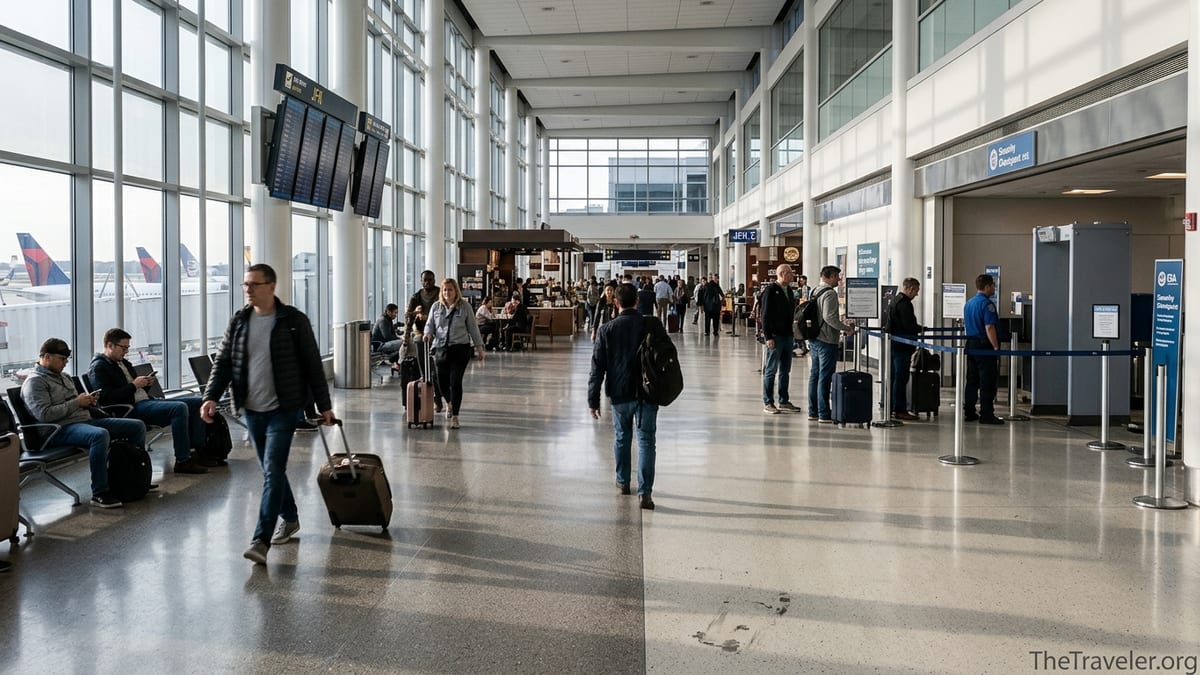
Plan Around Terminals, Not Just Flight Times
On my last trip I made the classic non-New Yorker mistake: I thought of JFK as “one airport” rather than a cluster of separate terminals. I booked a mid-morning departure, glanced at the airline name, and told my rideshare to drop me at “JFK departures.” Only as we curved in did I realize that meant choosing a terminal, and I was not entirely sure which one I needed. JFK now has six active terminals, and each works almost like its own mini airport with different airlines, lounges, and food options. Terminal 4 is the main hub for Delta and many international carriers, Terminal 5 is JetBlue’s home base, and Terminal 8 handles American Airlines, British Airways, and several oneworld partners. Other international airlines are spread between Terminals 1, 4, 7, and 8, and new construction for a reimagined Terminal 1 and a future Terminal 6 only adds to the visual clutter of cranes and detours.
The practical lesson: before you even think about when to leave home, confirm exactly which terminal and check-in area your flight uses, then plan around that one building. Airline apps will usually list the terminal on your boarding pass a day or two in advance, and JFK’s own terminal guide is updated as airlines shift during construction. If you are flying, say, a morning Delta flight to Los Angeles, you will be in Terminal 4, which has its own dedicated TSA checkpoints, food courts, and lounges. A JetBlue flight to London or Los Angeles will use Terminal 5, where security, dining, and gates are completely separate from Terminal 4 even though they are neighbors on the map.
On my rushed trip I ended up dropped at the wrong terminal, then backtracked using the AirTrain with a rolling suitcase and growing anxiety. The inter-terminal train works, but the platform-to-platform transfers, escalators, and elevator waits easily added 20 minutes to the journey. Next time, I will triple-check the exact terminal right when I book, add it to my calendar entry and rideshare notes, and treat every decision at JFK as terminal-specific: which security line, where to eat, which lounge to use, and how early to arrive.
This mindset shift also matters for connections. If you are landing on an international flight in Terminal 4 and connecting to a domestic JetBlue flight in Terminal 5, you may have to clear passport control, collect and re-check bags depending on your ticket, and then ride the AirTrain or follow shuttle signs to the next terminal. Connections that look tight on paper can disappear in the maze between buildings, so I now pad any inter-terminal connection at JFK by at least 90 minutes whenever possible, especially during the late afternoon and evening international rush.
Rethink When You Arrive, Not Just How
If you ask three New Yorkers how early to arrive at JFK, you will hear three different answers, all delivered with strong opinions. On my recent trip, I trusted a generic rule of thumb for domestic flights and aimed to arrive a bit more than two hours before departure. I forgot that JFK’s security lines behave differently from smaller airports. Historical data and the airport’s own guidance suggest that average waits can fall in the 10 to 20 minute range most of the day, yet traveler reports from this year show morning surges where even TSA PreCheck can stretch to 45 to 60 minutes and regular lines can snake out toward the terminal doors around 6 a.m.
On my departure from Terminal 8, I reached the curb around 6:15 a.m. for an 8:30 a.m. flight, pleased with myself. The departure hall told a different story. The general security line wrapped around the check-in area, and the PreCheck lane, advertised as a shortcut, still moved slowly under the weight of early transcontinental and European departures. I watched the clock jump from 6:30 to 7:00 as the line inched forward, losing time I had mentally reserved for breakfast and a quiet coffee.
Looking back, I would time my arrival based on both the terminal and the time of day. For early-morning departures between about 5:30 and 8:30 a.m., I now treat JFK more like a peak-season international hub: for a domestic flight I aim for a full 2.5 to 3 hours before departure, particularly at Terminals 4, 5, and 8. Afternoon departures, especially between about 11 a.m. and 3 p.m., are often calmer; frequent flyers at JFK report breezing through Terminal 4 with Sky Priority and CLEAR in under 20 minutes in that window. Evening international banks, typically around 4 to 8 p.m., can become intense again, as long-haul flights to Europe, the Middle East, and Africa stack up across multiple terminals.
Several tools now provide live or near-live security wait estimates for JFK, including the airport’s own wait-time display and various independent trackers. But recent traveler reports show those numbers can lag reality, particularly when lines stretch far beyond the normal queue area. The smarter approach is to use them as a rough guide while still planning for the worst-case window your specific terminal is known for. On my next trip, I will decide on my departure time from home based on the terminal’s pattern, not just the airline’s generic email reminder.
Upgrade Your Security Strategy: PreCheck, CLEAR, and Bag Tactics
Before this flight I had TSA PreCheck but not CLEAR, and I assumed that combination would be enough to glide through JFK at any hour. It helped, but it did not feel like the magic key I expected. PreCheck lanes exist in every active terminal at JFK, yet they do not automatically shield you from surges. Travelers this year have reported early-morning PreCheck waits of 20 to 60 minutes at Terminals 4 and 8 when many premium and long-haul flights converge, especially between about 5 and 7 a.m.
What I would do differently is think of PreCheck and CLEAR less as a guarantee and more as insurance. CLEAR, which uses biometric ID checks, operates in key JFK terminals and can reduce the time you spend in the initial identity-check queue before joining the physical screening line. PreCheck still saves time and hassle by allowing you to keep shoes and light jackets on and keep laptops in bags, speeding up the screening itself. For frequent JFK travelers, particularly those who often fly in the early morning or early evening when banks of departures stack up, the combination can still be worthwhile even if it only regularly shaves 15 to 20 minutes from worst-case waits.
Bags are the other part of a smart security strategy. On my rushed trip I had both a carry-on and a checked suitcase. The checked bag required a stop at the airline counter behind a long queue of people digging for passports and figuring out self-tagging kiosks. That added another 15 minutes before I even saw the security line. For relatively short trips, I would now avoid checking luggage at JFK when possible. Many carriers out of Terminals 4, 5, and 8 allow a full-size carry-on plus a personal item, and overhead bin space is generally manageable on early flights if you board in the first half of the groups.
Even if you must check a bag, you can smooth the process by paying attention to timing and tools. Online or kiosk check-in the night before, preprinted or app-based bag tags where available, and familiarizing yourself with your airline’s bag drop procedures at that specific terminal will save precious minutes. On my next run through JFK, I will treat bag drop time as a separate, fixed block in my planning: 15 to 20 minutes for a reasonably short line, more during peak times or with a family or oversized items. That time is on top of whatever buffer I give myself for security.
Get Smarter About Getting To and From JFK
My journey to JFK last time started on the subway, transferred to the AirTrain, and ended with a dash up an escalator. The combination is popular for a reason: it is relatively affordable and often predictable outside of major disruptions. As of 2026, most subway rides to the AirTrain connection points at Jamaica Station or Howard Beach cost around 3 dollars, and the AirTrain itself has a separate fare that has risen in step with inflation. Official documents note that the AirTrain fare increased in 2023 and again in March 2026, putting it in the mid-single-digit range per ride. For a solo traveler, that total still compares favorably to a 60 to 90 dollar taxi or rideshare from Manhattan in typical traffic.
What I underestimated was the time spent inside the airport once I stepped off the AirTrain. At Jamaica Station I was pleased to see frequent trains running to every terminal. I tapped in, boarded, and watched terminals flash by in quick succession. That part took about 12 minutes. The time penalty came in the vertical movement: the elevator queues from the AirTrain platform down to the terminal level, the crowds gathering at escalators, and the short indoor walks that feel much longer when everyone around you has a rolling bag. From AirTrain platform to check-in hall at my terminal, I spent nearly 15 minutes, which I had not fully accounted for when planning my door-to-gate estimate.
Next time, I will treat the AirTrain platform as the halfway point, not the finish line. From any Manhattan or Brooklyn origin, I will add 30 to 45 minutes beyond my subway and AirTrain estimates to cover the last leg into the terminal, check-in, and an initial scan of the security situation. For late-night or pre-dawn flights, I would be more inclined to use a fixed-fare yellow cab or a reputable rideshare, budgeting anywhere from 60 minutes from Midtown in light traffic to 90 minutes or more during weekday rush hours or bad weather. The extra cost buys predictability and drops you directly at your terminal door, a meaningful advantage if you are traveling with children, bulky luggage, or mobility concerns.
Leaving JFK, I would also rethink my strategy. On my return I defaulted to a rideshare queue, which snaked out along the curb in the rain. I watched the AirTrain signs glowing just above, leading to a cheaper and often faster ride to the subway or Long Island Rail Road. For solo travelers, especially during daylight hours, the AirTrain plus subway or LIRR combination is usually the more efficient way into Manhattan and Brooklyn. For groups of three or four, a taxi can become competitive on cost per person while still saving the transfer hassle. The key is to decide your plan before you land and follow airport signs straight to the appropriate option rather than pausing in the arrivals hall to debate while precious time ticks by.
Use JFK’s Food, Lounges, and Layout To Your Advantage
By the time I emerged from security in Terminal 8 on my last trip, my dream of a proper breakfast had condensed into a practical question: what can I grab in five minutes near my gate that will not feel like regret at 35,000 feet? I ended up with a packaged sandwich and an expensive coffee from the nearest kiosk, both fine but forgettable. Only after reaching the gate did I see a more appealing sit-down restaurant just a short walk away, along with a better selection of snacks and salads around a corner I had not explored.
Each JFK terminal has its own mix of dining and shopping, and the differences are stark. Terminal 5, for example, is known for a more cohesive food court experience, with recognizable national chains and a few local New York brands clustered post-security. Terminal 4, in contrast, spreads its options along a long concourse, with a mix of fast-casual outlets, coffee bars, and full-service restaurants near certain gate clusters. Terminal 8 has improved its offerings in recent years, adding more modern dining options and bars that cater to the joint operation of American Airlines and British Airways, but those options are not always right next to the security exit.
On a future trip, I will look up the dining map for my exact terminal the day before departure and make one or two realistic targets based on how much buffer time I expect to have. If I know I will arrive during a busy morning wave at Terminal 5, I will prioritize clearing security as early as possible, then aim for a specific coffee shop or bakery I have pre-identified, rather than defaulting to the first kiosk I see. For afternoon departures from Terminal 4, where security may be calmer, I might give myself permission to sit down for a proper meal at a mid-range restaurant overlooking the concourse, turning that otherwise dead time into something I actually enjoy.
Lounges are another piece of the puzzle. JFK now boasts dozens of lounges across its terminals, from airline-branded spaces like the American Airlines Admirals Club and premium Flagship-style lounges in Terminal 8 to independent options, credit card lounges, and international carrier lounges in Terminals 1, 4, 5, and 7. Access rules vary by ticket class, elite status, and credit card, but many travelers can enter at least one lounge through a premium travel card or paid day pass. On my rushed trip I technically had access to a lounge but arrived too late to use it. In future, if lounge access is part of my plan, I will build my schedule backward: decide how much time I want inside, then add realistic buffers for check-in and security based on my terminal and time of day.
One more layout lesson: JFK terminals are long, and some gates sit a 15-minute walk from the security exit. In Terminal 4, for instance, long-haul flights often depart from gates at the far ends of the concourses. Even if the departures board lists your gate near security now, last-minute changes can shift you to a distant pier. On my next visit, I will pause at the first terminal map I see after security, identify my gate zone, and mentally rehearse the time it will take to walk there. That mental map can save you from a last-minute sprint and lets you choose food and restroom stops that lie along your route instead of dragging you in the opposite direction.
Navigating Construction, Signage, and Last-Minute Changes
If you have not flown through JFK for a few years, you may be surprised by how much looks different in 2026. Major terminal redevelopment projects are underway, including a new Terminal 1 complex that is opening in phases and planning for a new Terminal 6 at the site of former Terminal 6 and part of Terminal 7. This construction brings a rotating cast of temporary walkways, relocated check-in counters, and rerouted drop-off and pick-up lanes. On my last trip I trusted my memory of the roadway layout and ended up in a slow-moving line of cars looped around a closed curb, watching my rideshare fare creep up as we detoured to the correct entrance.
Next time I will treat JFK as a living construction site and plan accordingly. That starts with checking the airport’s official announcements page or my airline’s travel alerts in the days leading up to the flight. When a major curb or entrance closes at a terminal, airlines usually send targeted emails or app notifications explaining the change, often with diagrams showing the new drop-off points or walking routes. These might look like minor nuisances on screen but can translate into five or ten extra minutes of walking if you arrive at the old curb with heavy luggage.
Inside the terminals, signage can be both helpful and overwhelming. New electronic boards now show estimated security wait times for each checkpoint and sometimes differentiate between standard, PreCheck, and priority lanes. Travelers on recent flights report that these boards tend to understate waits when lines stretch outside the usual stanchions, but they are still useful for choosing between two open checkpoints in the same terminal if that option exists. I would now scan these boards as soon as I step into the check-in hall and, if my airline permits, choose the checkpoint with the shorter posted wait even if it means walking a bit farther away from the nearest podium.
Finally, expect last-minute gate changes and build in flexibility. On my trip, our departure gate in Terminal 8 shifted from a central location to a far pier about 40 minutes before boarding. The change appeared in the airline app immediately, but the airport monitors lagged by several minutes and some passengers did not notice until announcements echoed through the concourse. I was already halfway to the original gate area and had to reverse course, cutting into the last window for grabbing water and a snack. On the next JFK run, I will keep push notifications on for my airline app, glance at the gate number every 15 or 20 minutes, and choose a seat in the concourse that keeps my walking time modest even if gates shuffle along the same pier.
The Takeaway
JFK will probably never be a stress-free airport. It is busy, perpetually under construction, and segmented into terminals that behave more like separate airports than wings of the same building. Yet my last hurried trip through its halls showed me that much of the frustration came from decisions I controlled. I treated the airport as a monolith instead of planning around a single terminal. I underestimated early-morning security surges and overestimated what TSA PreCheck could do at peak times. I counted the AirTrain platform as the finish line, not the halfway mark. I wandered past better dining and lounge options because I had not researched the layout of my specific terminal.
On my next flight, I will do it differently. I will anchor every decision to my exact terminal and time of day, arrive earlier for morning departures, and build in separate buffers for bag drop, security, and the walk to my gate. I will decide in advance how I am getting to and from JFK, with realistic door-to-terminal estimates and a backup plan if traffic or trains misbehave. I will use the airport’s evolving mix of dining, lounges, and services as tools to improve the experience rather than last-minute afterthoughts. JFK may still throw surprises at me, but with a more deliberate plan, I am far more likely to be sipping a calm coffee near my gate than sprinting down a long corridor with my backpack bouncing and boarding already underway.
FAQ
Q1. How early should I arrive at JFK for a domestic flight?
For domestic flights, aim for at least 2.5 hours before departure in the early morning or evening peak and about 2 hours at quieter midday times, always adjusting for your specific terminal and whether you need to check bags.
Q2. Do I really need TSA PreCheck or CLEAR at JFK?
They are not mandatory, but both can significantly reduce hassle on busy days. PreCheck speeds up screening, while CLEAR can shorten ID-check lines in the terminals where it operates, which is especially useful during early-morning and evening surges.
Q3. Is the AirTrain still the best way to reach JFK from Manhattan?
For solo travelers, AirTrain plus subway or commuter rail is often the best value and can be time-efficient outside disruptions. Taxis and rideshares cost more but are convenient for groups, travelers with heavy luggage, or very early and late flights.
Q4. How much time should I allow to move between JFK terminals?
Plan for at least 30 minutes from gate exit in one terminal to check-in or security in another, including AirTrain travel and walking time, and more if you must clear immigration, collect bags, and re-check for an international-to-domestic connection.
Q5. Which JFK terminal is best for food options?
Terminal 5 offers a concentrated selection of recognizable fast-casual outlets, while Terminals 4 and 8 have a broader mix of full-service restaurants, bars, and grab-and-go spots spread along their concourses.
Q6. Are security wait-time displays at JFK accurate?
They provide a helpful ballpark but can lag behind reality during heavy surges, especially when lines extend beyond the normal queue area, so use them as guidance while still giving yourself a generous buffer.
Q7. Can I walk between JFK terminals after security?
In most cases no. JFK’s terminals are separate buildings with their own security checkpoints, so you typically need to exit, use the AirTrain or a shuttle, and clear security again at the new terminal.
Q8. What is the best way to use a lounge at JFK without missing my flight?
Confirm which lounge is in your specific terminal, plan your arrival time around having at least 45 to 60 minutes there, and always leave early for your gate, accounting for long concourses and potential last-minute gate changes.
Q9. How do JFK’s construction projects affect travelers right now?
Ongoing work around Terminals 1, 4, 6, and 7 can shift drop-off lanes, create longer walks, and temporarily relocate check-in or security areas, so it is wise to check airport and airline updates in the days before travel.
Q10. What is the single most important thing to do differently at JFK?
Plan every step around your exact terminal and time of day: know where you are flying from, how you are getting there, when your terminal is busiest, and how much buffer you truly need for bag drop, security, and the walk to your gate.