


More news on this day
Plans for a next-generation smart travel corridor across Southeast Asia are accelerating in 2026, as ASEAN governments move to link biometric airports, contactless immigration and digital travel systems into a more seamless regional tourism network.
Get the latest news straight to your inbox!
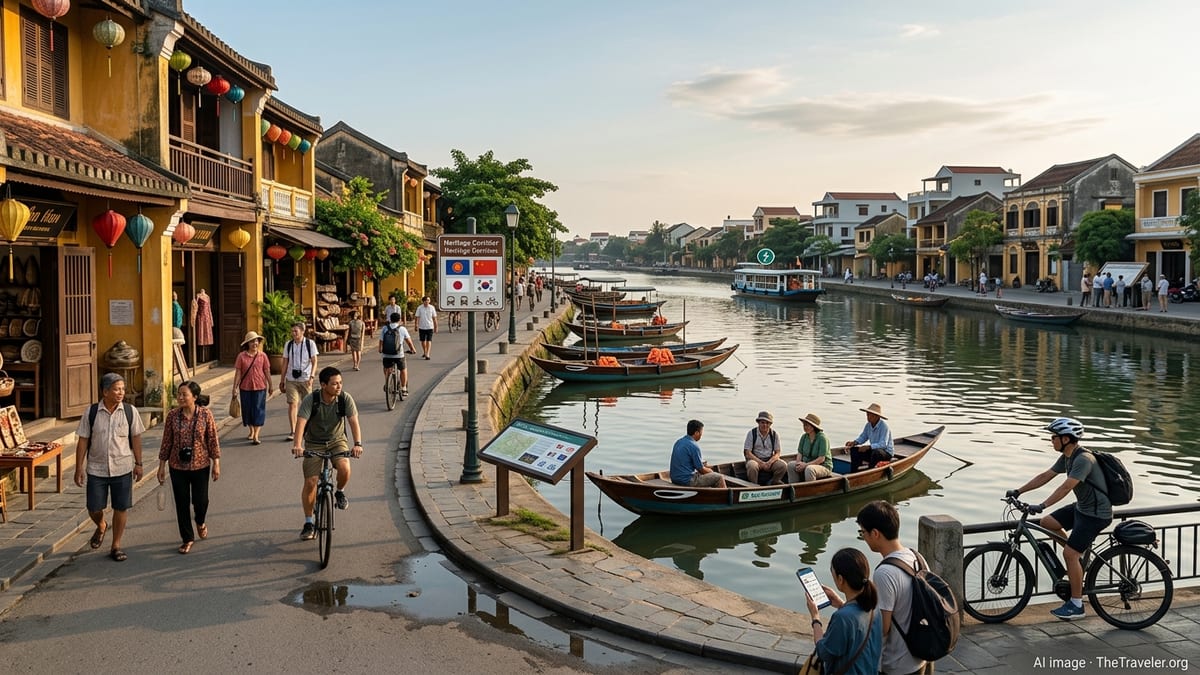
From National Pilots to a Regional Smart Travel Vision
Publicly available ASEAN documents show that tourism and transport plans for 2026 to 2030 increasingly frame the region as a single, connected destination, with a strong emphasis on “accessible and seamless travel” and closer air and sea links between member states. This policy direction is emerging alongside national initiatives that apply biometrics, digital identity and contactless services to border control and airport operations.
Indonesia has become an early reference point with its biometric “seamless corridor” at major airports, replacing conventional counters with walk-through lanes that verify passengers using facial recognition linked to pre-enrolled travel data. Reports indicate the system is designed to allow eligible travelers to clear immigration without stopping, as background checks are completed before arrival.
Thailand, Singapore and Malaysia are pursuing related projects that digitize arrival procedures and automate identity checks. Thailand’s main airports are rolling out biometric systems aligned with a “One ID” concept, while Singapore continues to expand multi-modal biometric clearance at automated lanes, using facial and iris recognition to process travelers more quickly. Malaysia, for its part, is modernizing immigration systems through a national digital platform that integrates border management and data sharing.
Against this backdrop, regional business forums and ASEAN working groups are exploring how these national programs could interconnect so that travelers enroll once and then move across multiple borders using the same digital identity credentials, forming the basis of a smart travel corridor spanning Thailand, Indonesia, Malaysia, Singapore, the Philippines and other member states.
Biometric Airports and Contactless Immigration Take Hold
The core building blocks of a smart travel corridor are already visible in airport upgrades across Southeast Asia. At Bangkok’s Suvarnabhumi Airport, airport operator information describes a biometric system that matches travelers’ faces to their documents at key checkpoints, aiming to create a more touch-free journey from check-in to boarding. Technology providers highlight similar deployments in other Thai airports, pointing to a broader shift toward smart airport infrastructure.
Singapore’s Changi Airport has for several years been a test bed for fast, automated processing, and immigration authorities now promote multi-modal biometric systems that use iris and facial recognition at automated lanes for eligible travelers. Official guidance indicates that once travelers are enrolled on a first trip, subsequent entries and exits can be processed largely through biometrics, reducing the need for repeated manual document checks.
Indonesia’s seamless corridor goes a step further by turning immigration into a short walk rather than a queue, with cameras in the corridor capturing biometric data and matching it to pre-submitted passport details and advance risk checks. Coverage in industry and regional outlets describes the initiative as the first country-level deployment of such corridors, with initial lanes in Jakarta and Surabaya and the potential to expand to more airports.
Malaysia is moving in parallel with a National Integrated Immigration System that digitizes visa, border and enforcement processes. Public material on the platform suggests that it is designed to support more automated clearance and could, in time, interface with regional systems. Together, these developments indicate that much of the hardware and software needed for an ASEAN-wide smart corridor is already being installed at the national level.
Toward a Unified ASEAN Smart Travel Corridor in 2026
Regional policy tracks are increasingly aligned with the technological shift at airports and borders. The ASEAN Tourism Sectoral Plan 2026–2030, endorsed at ministerial level earlier this year, places strong weight on promoting Southeast Asia as a “single destination” and improving intra-ASEAN connectivity. Accompanying transport and digital economy plans highlight contactless services, e-visas and shared digital infrastructure as tools to make cross-border travel smoother and more predictable.
Earlier pandemic-era initiatives, such as the ASEAN Travel Corridor Framework and a pilot ASEAN Digital Gateway and Travel Wallet launched in 2021, demonstrated how shared standards for health and travel data could support coordinated reopening. Those efforts are now evolving toward broader concepts of safe and seamless travel that combine digital identity, biometrics and pre-clearance in ways that can outlast the public health emergency.
Industry groups, including global airline associations and travel technology firms, have recently reported successful trials of digital identity journeys across multiple airports in the Asia-Pacific, showing that passengers can link passport data to a reusable digital profile and then move through check-in, bag drop, security and boarding using only biometrics. Observers note that these proofs of concept give ASEAN governments a template for building an interoperable system that allows different national platforms to “talk” to each other.
In practice, an ASEAN smart travel corridor in 2026 would likely begin with selected routes and traveler categories, such as business travelers or frequent visitors between major hubs like Bangkok, Jakarta, Kuala Lumpur, Singapore and Manila. Over time, more airports and eligible nationalities could be added, with the goal of making regional trips feel closer to domestic flights for enrolled travelers.
What Travelers Can Expect Across Southeast Asia
For travelers, the most visible change in 2026 is expected to be fewer paper forms and less time spent in queues. Thailand has already shifted to digital arrival procedures in place of earlier paper arrival cards, and several ASEAN states are expanding e-visa platforms that allow visitors to apply and receive approvals online, often with QR codes or digital confirmations used at the border instead of printed documents.
As biometric smart gates, tunnels and corridors become more common, eligible passengers will be able to walk through airports while cameras capture their face or iris and match it to pre-enrolled data. In many cases, boarding passes may become largely virtual, with airport and airline systems recognizing travelers automatically at boarding gates. Published coverage of early deployments indicates reductions in processing time and shorter peak-hour queues at immigration.
Regional integration of digital payments and contactless transit systems is also set to complement the smart travel push. ASEAN finance and transport discussions have highlighted the role of interoperable QR payments and contactless cards on urban transit and intercity networks, a change that would make it easier for visitors to move from airport rail links to metro lines and buses without needing multiple tickets or unfamiliar payment apps.
However, the roll-out is unlikely to be uniform across all ten ASEAN members. Larger hubs with higher passenger volumes and more resources, such as Singapore, Thailand, Indonesia and Malaysia, are poised to lead the implementation of advanced biometric corridors, while smaller economies may initially focus on e-visas, digital forms and incremental automation at checkpoints.
Balancing Seamless Travel With Privacy and Inclusion
Alongside the optimism about faster, more convenient trips, regional discussions are paying greater attention to issues of data protection, cybersecurity and inclusion. Biometric smart corridors require the collection and processing of sensitive personal data, and ASEAN frameworks on digital data governance and privacy are being cited as important reference points for how travel systems should operate.
Some technology providers emphasize approaches that limit centralized storage of biometrics, using encrypted templates or on-device verification to reduce the risk of large-scale data breaches. Policy papers from regional and international organizations also point to the need for clear consent mechanisms, options to opt out, and robust oversight of how travel data is shared between agencies and across borders.
Accessibility is another consideration. Indonesia’s seamless corridor, for example, initially prioritizes seniors and travelers with disabilities, illustrating how biometric systems can be configured to support groups that may find traditional queues and manual checks more challenging. ASEAN tourism strategies also reference universal design principles and inclusive tourism, suggesting that future smart corridor deployments may include dedicated assistance lanes and multilingual digital guidance.
As 2026 progresses, observers expect ASEAN’s smart travel initiative to become a central test case for how a diverse group of neighboring countries can knit together national biometric and digital identity programs into a shared travel space. The outcome will shape not only airport experiences but also the competitiveness of Southeast Asia’s tourism industry in a world where passengers increasingly expect contactless, data-driven journeys from booking to arrival.