


More news on this day
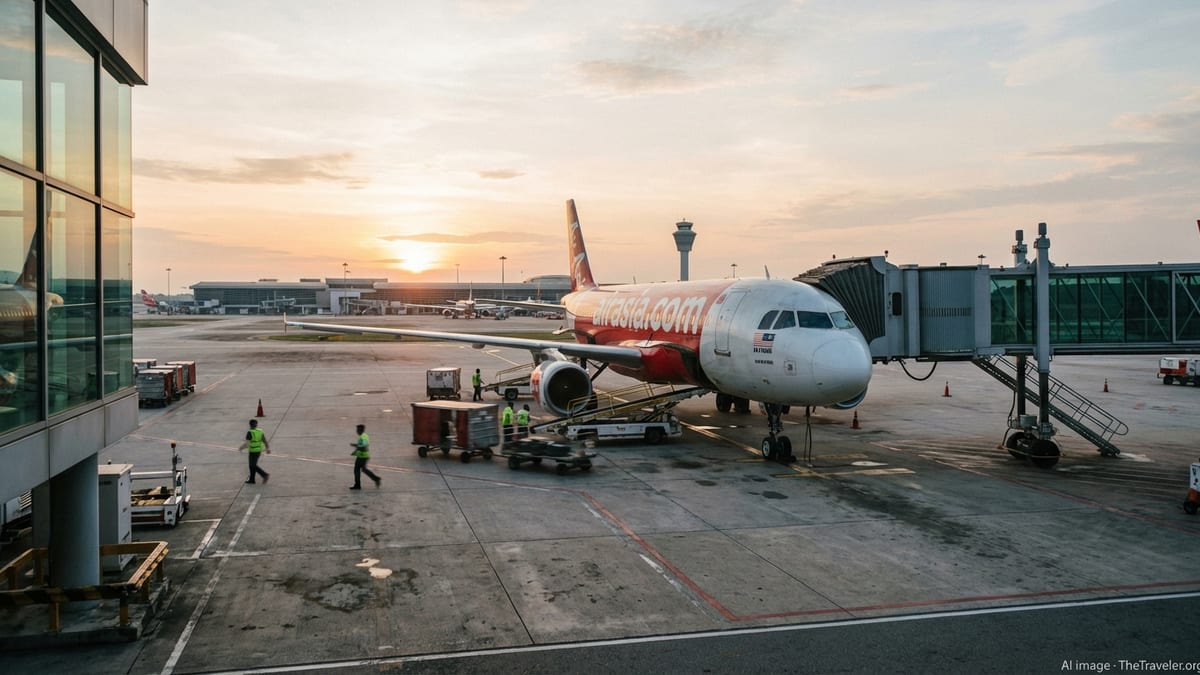
Travel links between Southeast Asia and Central Asia are facing new turbulence as AirAsia X removes all Kuala Lumpur–Tashkent flights from its schedule for the entire month of June 2026, forcing thousands of international travelers to rethink summer plans built around one of the region’s most affordable long haul connections.
Get the latest news straight to your inbox!
What The June Suspension Covers
According to route analysis published by specialist schedule trackers, AirAsia X has cancelled all Kuala Lumpur–Tashkent services from 1 June to 30 June 2026. Listings that previously showed the long haul low cost carrier operating into the Uzbek capital now indicate no flights for the whole of June, before the route is scheduled to reappear in early July with multiple weekly frequencies.
In May 2026, the airline is reported to be running three weekly rotations on the corridor, with plans to step up to four weekly services once operations resume in July. The June pause therefore amounts to a one month blackout rather than a permanent withdrawal, but it coincides directly with early northern summer holidays when demand from both leisure travelers and diaspora communities typically rises.
Publicly available fare search tools still display non stop options between Kuala Lumpur and Tashkent on other carriers, but AirAsia X has disappeared from June timetables. For price sensitive travelers who had planned to rely on the Malaysian low cost operator, this effectively removes the cheapest long haul option on the route during a key travel window.
The suspension also follows a period of expansion for AirAsia X in Central Asia, where Tashkent was highlighted alongside Almaty and Istanbul in company communications as part of a broader network rebuild. The abrupt one month gap has therefore drawn particular attention among aviation watchers tracking the carrier’s shifting strategy for 2026.
Why June 2026 Matters For Malaysia–Central Asia Tourism
The Kuala Lumpur–Tashkent link has quickly become a pillar for tour operators stitching together Malaysia and Central Asia itineraries. Package designers in both regions have been promoting multi country trips that combine Kuala Lumpur’s urban and island attractions with overland journeys along Uzbekistan’s Silk Road cities such as Samarkand, Bukhara and Khiva, using the nonstop flight as the primary bridge.
Early summer is especially important. June sits on the shoulder of Central Asia’s prime sightseeing season, when temperatures are warm but not yet at peak heat in desert regions, while school holidays begin in key origin markets in Southeast Asia, South Asia and parts of the Middle East. A one month suspension in this period hits group tours, educational trips and independent travelers who planned far in advance around specific departure days.
Malaysia’s position as a convenient hub has also helped funnel traffic from Australia, Indonesia and Singapore to Central Asia through Kuala Lumpur. Many itineraries rely on seamless overnight or same day connections into AirAsia X’s Tashkent service. With those flights absent for June, travelers who would normally connect via Malaysia are being pushed to reroute through alternative hubs such as Dubai, Istanbul or Almaty, often at higher cost and with longer travel times.
On the Uzbekistan side, the pause removes a highly visible low cost entry point to Southeast Asia just as regional tourism bodies step up efforts to attract visitors from Muslim majority markets and long haul leisure segments. While national carrier Uzbekistan Airways and other airlines continue to offer services, the loss of a budget competitor is likely to be felt most sharply at the entry level of the market.
How AirAsia X Is Reshaping Its 2026 Network
The temporary withdrawal from Tashkent comes against a backdrop of wide ranging schedule adjustments across the AirAsia Group as it responds to rising fuel prices and evolving demand patterns. Travel notices and company updates in recent months describe a series of route suspensions, frequency cuts and realignments across short and long haul operations, including selected services in East Asia, India and Australia.
For AirAsia X specifically, 2026 is shaping up as a pivotal year. The long haul low cost arm is preparing to launch a new Kuala Lumpur–Bahrain–London Gatwick link from late June 2026, positioning Bahrain as its first hub outside Asia and using the Gulf to connect Southeast Asia with Europe. Industry commentary suggests that aircraft and crew resources are being carefully redeployed to support this expansion while keeping overall capacity aligned with financial targets.
Network briefings and financial disclosures also highlight the airline’s emphasis on reactivating higher yielding routes and building strategic connectivity through key partner hubs. Tashkent, Almaty and Istanbul have all been named as part of this strategy, but the June pause on the Uzbek route indicates that not every market will receive uninterrupted service as the airline reshapes its schedule around new priorities and external cost pressures.
Analysts tracking airline schedules note that short term suspensions are becoming a more common tool for carriers seeking to balance fuel costs, aircraft availability and seasonal demand. In that context, the one month break in Kuala Lumpur–Tashkent operations appears to be part of a broader pattern rather than an isolated decision, even if the impact on travelers booked for June remains substantial.
What Travelers With June Tickets Should Expect
Passengers already holding AirAsia X tickets on Kuala Lumpur–Tashkent flights in June 2026 are likely to face rebooking, credit or refund processes managed through the airline’s standard disruption policies. The carrier’s published FAQs on flight suspensions describe options such as full refunds, travel credits or complimentary changes to alternative services, subject to availability, for routes affected by schedule changes.
In practice, travelers report that most communication from the airline about schedule disruptions arrives via email or app notifications, sometimes weeks or months before departure, and that changes may not always appear immediately in booking systems. Given the complete removal of June Tashkent flights from public timetables, affected passengers are being advised by consumer advocates and online travel communities to monitor their reservations closely and initiate contact with the airline or their booking agent if no update has been received.
For those determined to keep their Central Asia plans, one option will be to accept refunds or credits from AirAsia X and rebook on alternative carriers operating between Kuala Lumpur and Tashkent or via third country hubs. However, seat availability and fares for June are expected to tighten as displaced passengers compete for remaining capacity, meaning that the earlier travelers act, the better their chances of securing workable replacement itineraries.
Travel insurance policies that include coverage for airline schedule changes may offer an additional safety net for some passengers, although terms vary widely between providers. Policyholders are being encouraged in public guidance to document any cancellations or reroutings and to retain all correspondence and receipts to support potential claims related to extra costs such as hotel nights or replacement flights.
Planning Alternatives For Malaysia–Central Asia Trips
International travelers still hoping to link Malaysia and Central Asia in June 2026 have several alternatives, albeit often at higher prices than the original low cost nonstop. Full service carriers continue to operate from Kuala Lumpur to major Gulf and Turkish hubs, from which onward connections to Tashkent and other Central Asian cities are available on regional and national airlines.
Another option is to route via regional gateways such as Almaty or Istanbul, using a mix of regional and long haul services. Some tour operators have already begun adjusting itineraries to incorporate these hubs, promoting them as additional destinations in their own right while absorbing the loss of the direct Kuala Lumpur–Tashkent link for June.
Travel planners are also advising flexibility on exact dates and entry points. Shifting a trip into early July, when AirAsia X’s Tashkent flights are currently scheduled to resume, may restore access to lower fares for those whose plans are not tied to specific June events. Others may consider starting their Central Asia journey in Kazakhstan, Kyrgyzstan or even the Caucasus, then reaching Uzbekistan by rail or short haul flights.
For travelers originating in Europe or the Middle East, it may prove simpler to decouple Malaysia from the same itinerary. With AirAsia X preparing to ramp up services through Bahrain and London and other carriers maintaining strong links to Kuala Lumpur, some visitors are expected to split what had been a single combined trip into two separate journeys, one focused on Malaysia and another on the Silk Road region once air links stabilize.