


More news on this day
Lufthansa Group is accelerating one of Europe’s most ambitious fleet renewal programs, positioning Frankfurt and Munich as twin global hubs built around next-generation long-haul aircraft, upgraded premium cabins and a sharper focus on fuel efficiency and climate targets.
Get the latest news straight to your inbox!
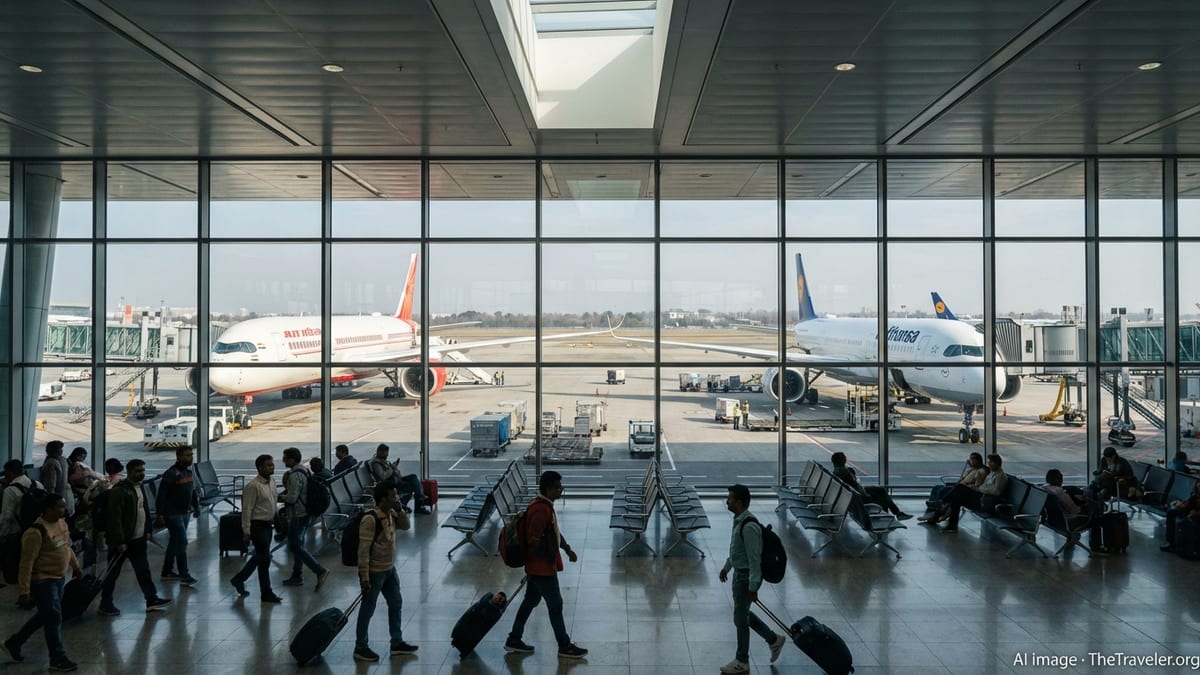
New Long-Haul Orders Underscore Multi-Billion-Euro Expansion
Lufthansa Group has added another major aircraft order to its already extensive pipeline, reinforcing plans to grow and modernize long-haul operations at its core hubs in Frankfurt and Munich. According to recent company disclosures, the Group now has 232 new aircraft on firm order, including 107 next-generation long-haul jets across the Airbus A350 and Boeing 787-9 families.
A fresh commitment for 20 additional long-haul aircraft, split evenly between A350-900s and 787-9s and scheduled for delivery between 2032 and 2034, extends Lufthansa’s renewal strategy well into the next decade. Publicly available information indicates that these aircraft are intended to replace older, less efficient types such as the remaining A330 and A340 fleets, while also supporting measured growth on key intercontinental routes.
While Lufthansa Group has not yet specified the exact allocation of the latest order between individual airlines and hubs, analyst commentary and past deployment patterns suggest that A350s will continue to be concentrated in Munich, with 787-9s anchored in Frankfurt. This hub-specific fleet strategy is designed to streamline maintenance and crew training while increasing flexibility to add capacity on high-demand routes.
The long-haul orderbook builds on previous commitments made between 2019 and 2024 for 34 A350-900s, 15 A350-1000s and 39 787-9s, supplemented by leasing agreements for additional A350 and 787 aircraft. Combined, these decisions amount to a structural reshaping of Lufthansa’s intercontinental fleet, shrinking average aircraft age and setting the stage for expanded premium offerings at both German hubs.
Frankfurt Strengthens Role as Boeing and Dreamliner Powerhouse
Frankfurt, traditionally Lufthansa’s largest and most diverse hub, is emerging as the main base for Boeing widebodies in the Group’s long-term plan. The airport already hosts the carrier’s 747-8i flagship and a growing fleet of 787-9s, including newly delivered aircraft fitted with Lufthansa’s next-generation Allegris cabin product.
Publicly available reports show that the first 787-9 with Allegris entered service from Frankfurt in late 2025, initially deployed on routes such as Frankfurt to Toronto. Additional Dreamliners with the same configuration are slated to follow, creating a cluster of high-density, premium-equipped aircraft optimized for key North American and Asian markets.
The opening of Frankfurt Airport’s new Terminal 3 in the south in April 2026 is expected to further enable long-haul growth. Airport and airline planning documents describe the facility as a key enabler for decongesting existing terminals and reorganizing traffic flows, which in turn should allow more efficient banks of departures and arrivals for long-haul connections.
As older four-engine aircraft are progressively retired, the combination of 787-9s, forthcoming 777-9s and retrofitted 747-8is is set to define Frankfurt’s long-haul profile. The hub’s role as a Boeing-heavy base complements Munich’s Airbus focus, while still offering Lufthansa Group room to shift individual frames and types as market conditions evolve.
Munich Emerges as Showcase for A350 and Allegris Luxury
Munich is being developed as the Group’s principal Airbus widebody hub and a showcase for Lufthansa’s newest premium product. Company filings and industry coverage indicate that the airline already operates a substantial fleet of A350-900s from Munich, with more units to be delivered in the coming years and A350-1000s planned to join later in the decade.
The launch of the Allegris cabin on A350-900 aircraft from Munich in 2024 marked a turning point for Lufthansa’s onboard product. The configuration introduces a reimagined long-haul experience across four classes, including a new First Class, a more private and varied Business Class layout, upgraded Premium Economy and refreshed Economy seating. The carrier has stated in public materials that at least 78 widebodies across its fleet will ultimately receive Allegris, pointing to a multi-year retrofit program centered on both hubs.
Munich’s status as a premium gateway is reinforced by a recently announced expansion of Terminal 2, jointly developed by Lufthansa Group and Munich Airport. The project is framed as the next chapter of a longstanding partnership and is designed to support additional long-haul aircraft, more transfer capacity and a refined ground product for connecting passengers.
Strategically, concentrating A350 operations in Munich allows Lufthansa to capitalize on the aircraft’s range and fuel efficiency on routes to North America and Asia while presenting a distinct, Airbus-led identity. Observers note that this complements Frankfurt’s Boeing profile and fits a broader trend among global network carriers to differentiate hub specializations while maintaining interchangeable standards of service.
Fleet Modernization Tied to Climate and Noise Reduction Goals
Lufthansa Group repeatedly links its fleet expansion to a parallel objective of reducing emissions and noise per passenger kilometer. Sustainability fact sheets for 2024 and 2025 highlight a steady introduction of A320neo-family, A220, A350-900 and 787-9 aircraft alongside the phase-out of older models, including a notable removal of more than 20 aging aircraft from the fleet in 2025 alone.
Company materials indicate that the Group expects around 45 new aircraft to be delivered in the 2026 financial year. These include short-haul A220 and A320neo jets for European and feeder services, as well as additional A350 and 787-9 aircraft intended for long-haul growth. Each new generation jet offers a double-digit percentage reduction in fuel burn and CO₂ emissions compared with the aircraft it replaces, contributing to Lufthansa’s published 2030 and 2050 climate ambitions.
The Group is also promoting the use of sustainable aviation fuel as part of its decarbonization strategy, although SAF still accounts for a small fraction of total fuel consumption. By pairing SAF initiatives with accelerated fleet renewal, Lufthansa aims to signal progress on emissions reductions even as overall seat capacity at Frankfurt and Munich grows.
Noise reduction is another focus around both hubs, where local regulators and communities closely track aircraft movements. The latest long-haul and narrowbody types entering the fleet meet or exceed current international noise standards, and the Group emphasizes that newer aircraft can help mitigate the impact of expanded operations on surrounding areas.
Short-Haul Feeder Upgrades Support Dual-Hub Strategy
The long-haul expansion at Frankfurt and Munich is being underpinned by a parallel refresh of short- and medium-haul capacity. A growing number of A220 and A320neo-family jets are being deployed across the Group’s European network, improving fuel efficiency on feeder routes that channel passengers into intercontinental banks.
Regional subsidiaries are also being reshaped to align with the dual-hub strategy. Lufthansa City Airlines, for example, began operations under the Lufthansa City brand from Munich in 2024 and officially launched services from Frankfurt in early 2026, operating feeder flights that are designed to dovetail with long-haul departure waves. Over time, this carrier is expected to take on a larger share of intra-European flying that supports the premium long-haul network.
At the same time, older regional aircraft are being withdrawn, including a planned reduction at Lufthansa CityLine, as the Group consolidates operations around more efficient types and a smaller number of regional brands. This restructuring is intended to lower unit costs and simplify scheduling while preserving connectivity to secondary cities.
Combined, the short-haul fleet renewal and regional network restructuring are central to Lufthansa Group’s effort to turn Frankfurt and Munich into tightly integrated, next-generation hubs. With hundreds of new aircraft on order and major infrastructure projects underway, the coming decade is set to test how effectively Europe’s largest aviation group can balance growth, premium positioning and environmental commitments.