


More news on this day
Bahrain is moving in step with regional heavyweights such as the United Arab Emirates, Saudi Arabia and Qatar by introducing emergency visa relief, new pathways for long-stay remote workers and streamlined entry rules, as governments across the Gulf respond to severe and ongoing travel disruption linked to the wider Middle East conflict in 2026.
Get the latest news straight to your inbox!
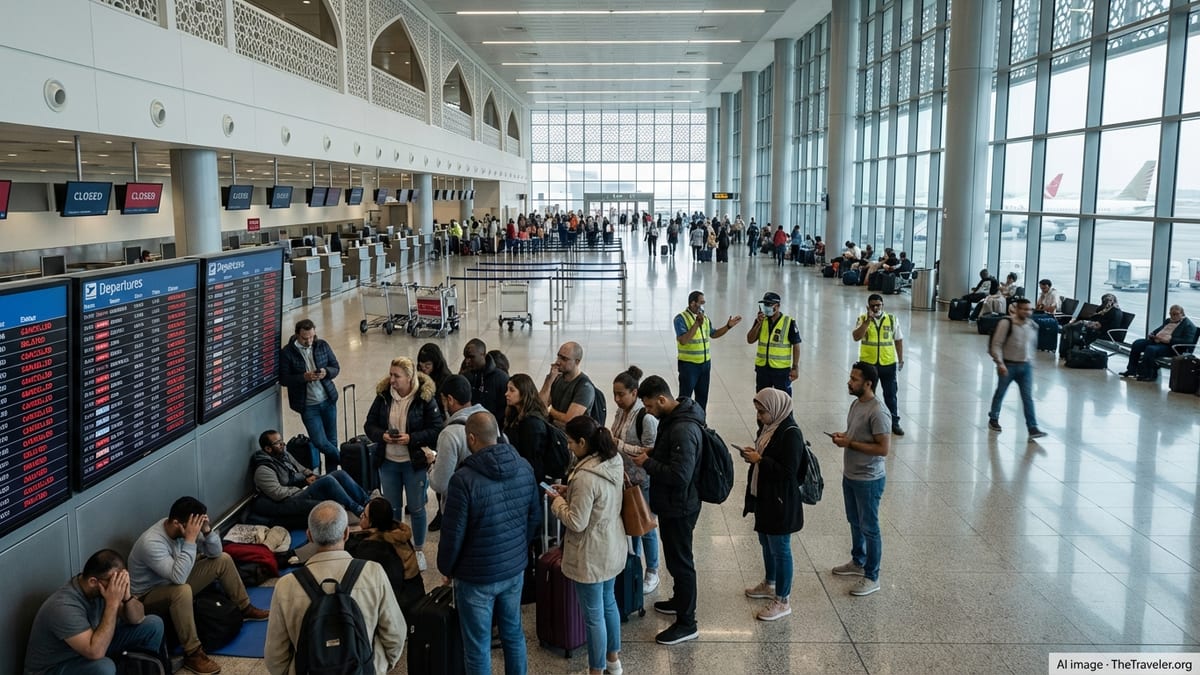
Emergency Visa Extensions Amid Regional Flight Chaos
Across the Gulf, authorities are racing to manage unprecedented numbers of stranded visitors after airspace closures, missile incidents and shifting front lines disrupted major aviation hubs from Dubai and Abu Dhabi to Doha, Kuwait City and Bahrain. Publicly available travel advisories and airline statements describe large-scale rerouting, cancellations and capacity reductions that have left tourists, business travelers and expatriate residents unable to exit or re-enter on schedule.
In response, new emergency visa measures have been rolled out or extended in several Gulf Cooperation Council states. Published immigration trackers and corporate mobility bulletins indicate that the United Arab Emirates has implemented temporary relief allowing certain residents stuck abroad, whose permits expired around the onset of the crisis in late February 2026, to re-enter without first obtaining a fresh entry visa. Similar guidance notes describe automatic one-month extensions for expired or expiring visit visas inside the country, linked to the eventual reopening of airspace.
Saudi Arabia and Qatar have likewise introduced stopgap solutions focused on travelers caught in the region when air routes suddenly closed. Specialist immigration analyses reference temporary permissions for holders of lapsed visit visas in Saudi Arabia and the use of online services in Qatar to extend short-stay permissions without in-person visits to immigration offices. Taken together, these measures are intended to prevent visitors from being penalized for overstays that were effectively forced by canceled flights and closed borders.
Against this backdrop, recent regional briefings show Bahrain aligning with its neighbors by granting limited-time automatic extensions to foreign visitors whose short-term visas expired during the worst of the disruption. Commentaries tracking the “visa overstay crisis” across the Gulf report that Bahrain initially applied a one-month grace period for stranded tourists and business travelers, during which overstay fines were paused and departures could be regularized once flights resumed in and out of Bahrain International Airport.
Bahrain’s New Role as a Flexible Gulf Hub
Bahrain’s adjustments reflect an increasingly competitive regional landscape in which smaller states position themselves as nimble, traveler-friendly alternatives when larger hubs face capacity constraints. Travel industry advisories note that Bahrain’s airport has been affected by the same airspace and security concerns as its neighbors, yet the kingdom has sought to differentiate itself by moving quickly on practical visa relief and entry processing clarity.
Recent immigration updates describe Bahrain’s introduction of streamlined procedures for stranded travelers to switch from expiring visit visas to short-term residence or self-sponsorship options, without leaving the country. Commentators on global mobility trends highlight that Bahrain has for several years allowed certain categories of residents, including property owners and higher-income professionals, to obtain residency on a self-sponsored basis, giving them greater autonomy over their immigration status even when employers or flight schedules change.
During the current crisis, these existing self-sponsorship channels are being repositioned as part of the country’s emergency toolkit. Publicly accessible guidance from relocation and tax advisory firms points to a growing emphasis on flexible, renewable permits that can bridge the gap between tourism and long-term residence, particularly for globally mobile professionals now stranded or re-routed through the Gulf.
Bahrain’s shift is also being read as a signal to airlines, multinational employers and digital nomads that the kingdom intends to remain open for business despite the wider conflict. While safety advisories from foreign governments continue to urge caution for non-essential travel across the Middle East, Bahrain is presenting its updated visa framework as a way to maintain a functioning corridor for essential corporate travel, regional relocations and controlled tourism flows once flights are available.
Digital Nomad and Remote Work Residency Options Evolve
Long before the current conflict escalated, Gulf states were quietly competing for location-independent workers, entrepreneurs and remote corporate staff. The 2026 crisis has accelerated that trend by highlighting the value of flexible, multi-year residency pathways that are less dependent on frequent border crossings and short-term visit visas.
In the UAE, public government portals and legal commentaries describe a maturing ecosystem of so-called digital nomad or remote work visas, alongside Golden Visas and other investment-linked routes. These schemes typically allow eligible professionals to live in the country for one year or more while working for employers or clients based abroad, reducing the need for repeated visa runs and providing more predictable access to banking, housing and healthcare.
Saudi Arabia and Qatar have concentrated more on premium residence programs and special economic zones, but regional immigration briefings suggest that both are now exploring ways to adapt existing investor or entrepreneur visas for remote professionals seeking a stable base during the conflict. Analysts note that with airspace over the Strait of Hormuz and parts of the Gulf intermittently restricted, long-stay visas inside relatively secure hubs have become more attractive than short, recurrent trips through multiple risk zones.
Bahrain is increasingly referenced in digital nomad guides and relocation reports as an emerging option in this space. While the country has not yet branded a visa explicitly as a “digital nomad” permit, recent guidance from residency specialists points to a mix of self-sponsorship, long-stay visit categories and property-linked residence options that effectively serve the same function. For remote workers who can demonstrate sufficient income and health insurance, these pathways create a legal framework to remain in Bahrain for extended periods while working online for overseas clients.
Seamless Entry, E-Visas and On-Arrival Relief
Alongside emergency extensions and long-stay pathways, Gulf states are pushing ahead with digitization of entry processes to keep borders moving even as security checks intensify. Travel industry overviews note that prior to the 2026 crisis, the UAE and Qatar had already built extensive e-visa and pre-clearance platforms, while Saudi Arabia rapidly expanded its e-visa system in support of tourism initiatives.
Recent updates suggest that these tools are now being leveraged to deliver what regional tourism boards describe as “seamless entry” within current constraints. For example, online portals in several countries have added simplified workflows for stranded travelers to request short-term extensions, convert expiring visas into new categories, or upload documentation showing canceled flights, all without physically visiting an immigration office. Airlines and travel agents report that this digitization helps them rebook passengers and adjust itineraries without jeopardizing legal status.
Bahrain’s contribution to this regional digital push includes enhancements to its e-visa platform and greater transparency around eligibility for visa on arrival. According to travel advisories and aviation-focused reporting, the kingdom has clarified that nationals of many countries who previously relied on standard short-stay visas can receive limited relief at the border when presenting evidence of disruption linked to the conflict, such as canceled tickets or rerouted itineraries. This approach is framed as a way to avoid penalizing travelers whose plans were derailed by factors beyond their control.
Gulf-based travel consultancies also describe coordinated messaging across the region aimed at reassuring passengers that overstays caused by airport closures or suspended routes will not automatically result in blacklisting or bans, provided travelers regularize their status once routes reopen. In this environment, Bahrain’s adoption of emergency grace periods and digitally managed extensions places it within a broader bloc of Gulf states working to preserve their reputation as globally connected transit and tourism hubs.
Tourism and Mobility Outlook for the Remainder of 2026
Looking ahead, analysts of global mobility expect that visa relief and digital residency initiatives introduced during the crisis may become semi-permanent features of the Gulf immigration landscape. Reports from consulting firms tracking the region suggest that once emergency measures are in place, governments often use the opportunity to test new technology, refine eligibility rules and gather data that can inform longer-term reforms.
In tourism terms, the near-term focus remains on managing risk and ensuring that any reopening is gradual and coordinated with security assessments. Airlines serving the Gulf continue to operate reduced schedules, and foreign ministries in Europe, North America and Asia maintain elevated travel advisories for parts of the Middle East. However, the existence of more flexible visas and residency options in Bahrain, the UAE, Saudi Arabia and Qatar positions these states to capture demand quickly once conditions stabilize.
For digital nomads and globally mobile professionals, the crisis has underlined the importance of having at least one secure, medium-term base rather than relying exclusively on short-stay tourism visas. Bahrain’s decision to align with its larger neighbors on emergency visa relief, while foregrounding its evolving self-sponsorship and long-stay options, suggests that the kingdom intends to compete more directly for this segment. Observers note that as remote work normalizes and geopolitical shocks become more frequent, jurisdictions that can combine strong digital infrastructure with predictable, humane immigration rules are likely to emerge as winners.
Within that wider shift, Bahrain’s 2026 updates indicate that the Gulf is moving toward a more integrated model of crisis-responsive mobility: one that blends emergency visa waivers, digital-by-default entry systems and residency pathways tailored to remote workers and frequent flyers. For travelers weighing future routes through the region, these changes are reshaping not only how long they can stay, but also how resilient their plans can be in the face of fast-moving disruption.