


More news on this day
Asia’s cruise recovery is shifting into a higher gear as Royal Caribbean International extends the upcoming Singapore season of Navigator of the Seas, turning the ship’s 2026 debut into a year-round deployment and signaling rising confidence in regional demand.
Get the latest news straight to your inbox!
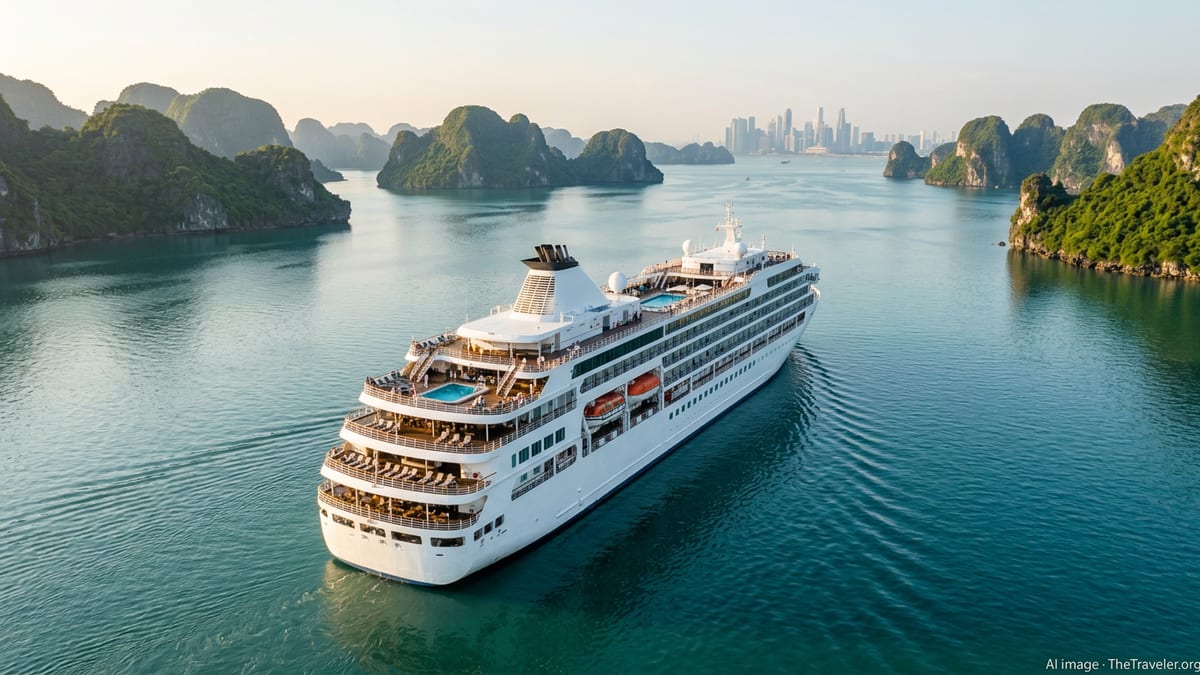
Navigator of the Seas Secures Year-Round Singapore Homeport
Royal Caribbean is preparing to bring Navigator of the Seas to Singapore from October 2026 and, according to deployment information shared with the trade and recent customer communications, the line has now extended the program into a full year-round homeporting arrangement through October 2027. The move effectively transforms what was initially framed as a seasonal deployment into a cornerstone presence in Southeast Asia.
Schedules circulated to the travel trade show a mix of short sailings from Singapore, including two and three night weekend getaways, as well as four and five night itineraries that combine Penang, Phuket and Langkawi. Longer repositioning voyages linking Japan, South Korea, Hong Kong, Vietnam and Singapore are also featured around the start of the season, underscoring the ship’s role in connecting Northeast and Southeast Asia.
The extension aligns Navigator of the Seas with Singapore’s strategy to strengthen its position as a year-round cruise gateway. Publicly available deployment documents describe the ship’s 2026 to 2027 program as one of Royal Caribbean’s most varied in Asia to date, designed to appeal both to first-time cruisers from the region and repeat guests seeking new routes.
Capacity wise, Navigator of the Seas brings thousands of additional lower berths into the regional market during a period when cruise lines are rapidly rebuilding their Asia portfolios. The shift from a limited season to a continuous year in Singapore indicates that advance booking demand has been strong enough to justify a longer commitment.
Signals of an Accelerating Asia Cruise Boom
The Navigator extension is part of a broader pattern in which major brands are restoring and expanding their Asia operations after several years of pandemic disruption. In recent months, cruise lines have unveiled new Southeast Asia seasons from Singapore and other ports, including fresh programs that run across the 2026 to 2027 period and beyond.
Industry coverage points to a sharp rebound in passenger numbers across key Asian homeports, with Singapore, Shanghai and Hong Kong all working to regain or surpass their pre-2020 volumes. As travel restrictions have eased, ships are returning in greater numbers, and itineraries are lengthening from simple weekend trips to more complex regional voyages that combine multiple countries.
Analysts following the sector note that the return of large, amenity-rich ships such as Navigator of the Seas, coupled with increased deployment by rival brands, is intensifying competition and broadening consumer choice. The trend is especially notable in Southeast Asia, where ports in Malaysia, Thailand and Vietnam are appearing more frequently on cruise schedules between late 2025 and 2027.
Market watchers suggest that Asia’s expanding middle class, improving air connectivity and supportive port investment are all contributing to an environment in which year-round deployments are once again viable. The Navigator announcement is being interpreted as one of the clearest signals yet that the region’s cruise boom is not only resuming but accelerating.
What Navigator’s Singapore Season Offers Travelers
Navigator of the Seas belongs to Royal Caribbean’s Voyager class and is positioned as a ship that blends resort-style features with itineraries tailored to regional preferences. Promotional materials emphasize family-friendly amenities, outdoor spaces suited to warm-weather sailing and a mix of dining and entertainment that aims to appeal to both local guests and international visitors using Singapore as a fly-cruise hub.
The published 2026 to 2027 schedule from Singapore focuses heavily on short escapes that fit within school holidays and long weekends in markets such as Singapore, Malaysia, Indonesia and India. Two and three night cruises are expected to be particularly popular with first-time cruisers, while four and five night routes featuring beach destinations in Thailand and Malaysia are designed for guests seeking slightly longer breaks.
Longer one way voyages between Japan and Singapore, routed via ports such as Nagasaki, Jeju, Hong Kong and central Vietnam, add a more destination-intensive option. These sailings tap into growing interest in slow travel within Asia and offer an alternative to traditional land-based itineraries, especially for travelers looking to visit several countries in a single trip.
Travel advisors in the region have highlighted that a year-round presence allows for better advance planning, group allocations and charter opportunities. With dates stretching from late 2026 into late 2027, corporate groups, extended families and international tour operators have more flexibility to secure blocks of cabins across different seasons.
Singapore’s Role as a Regional Cruise Hub Strengthens
Singapore has spent years cultivating its status as Asia’s leading cruise hub, supported by modern terminals, efficient air links and a strong tourism ecosystem. The decision to keep Navigator of the Seas based in the city-state for a full year adds another high-profile ship to a roster that already includes regular deployments from several global lines.
Tourism data published by regional authorities and industry bodies in recent seasons highlight rising cruise calls and passenger throughput at Singapore’s cruise terminals. Operators have been gradually increasing capacity since 2022, and forecasts for 2026 and 2027 suggest continued growth as more brands restore pre-pandemic schedules.
In this context, Navigator of the Seas functions as both a symbol and a driver of Singapore’s ambitions. Year-round deployment can translate into more hotel stays before and after cruises, additional spending in local attractions and dining, and a larger volume of regional fly-cruise passengers using Changi Airport as their gateway.
The ship’s varied set of itineraries also reinforces Singapore’s connectivity with nearby ports, spreading economic benefits to destinations such as Penang, Langkawi and Phuket. As more lines follow suit, the network of cruise-ready ports across Southeast Asia is expected to become denser and more integrated.
Growing Competition Across the Asia-Pacific Cruise Landscape
While Royal Caribbean’s extended Navigator program stands out, it is unfolding against an increasingly competitive backdrop. Other major brands are rolling out expanded Asia-Pacific deployments over the 2026 to 2027 period, with new ships and refreshed itineraries aimed at both regional and long-haul markets.
Recent program announcements from rival cruise lines for Southeast Asia, Japan and broader Asia-Pacific routes indicate that capacity is returning not just to pre-crisis levels but, in some cases, surpassing them. These plans include homeporting in Singapore, new turnaround operations in ports such as Yokohama and Hong Kong, and more frequent sailings linking Southeast Asia with Australia and New Zealand.
Industry commentators observe that this expansion is likely to prompt greater product differentiation, with lines emphasizing ship features, onboard experiences and destination variety to stand out. Navigator of the Seas, with its balance of short and longer itineraries from a well-connected hub, is positioned as Royal Caribbean’s answer to that emerging competitive landscape in Asia.
For travelers, the net effect is a wider array of choices and a stronger incentive for cruise lines to keep pricing, amenities and itineraries attractive. For ports and tourism boards across the region, the accelerating cruise boom heralded by moves such as the Navigator extension represents both an opportunity for growth and a prompt to continue investing in infrastructure and visitor experience.