


More news on this day
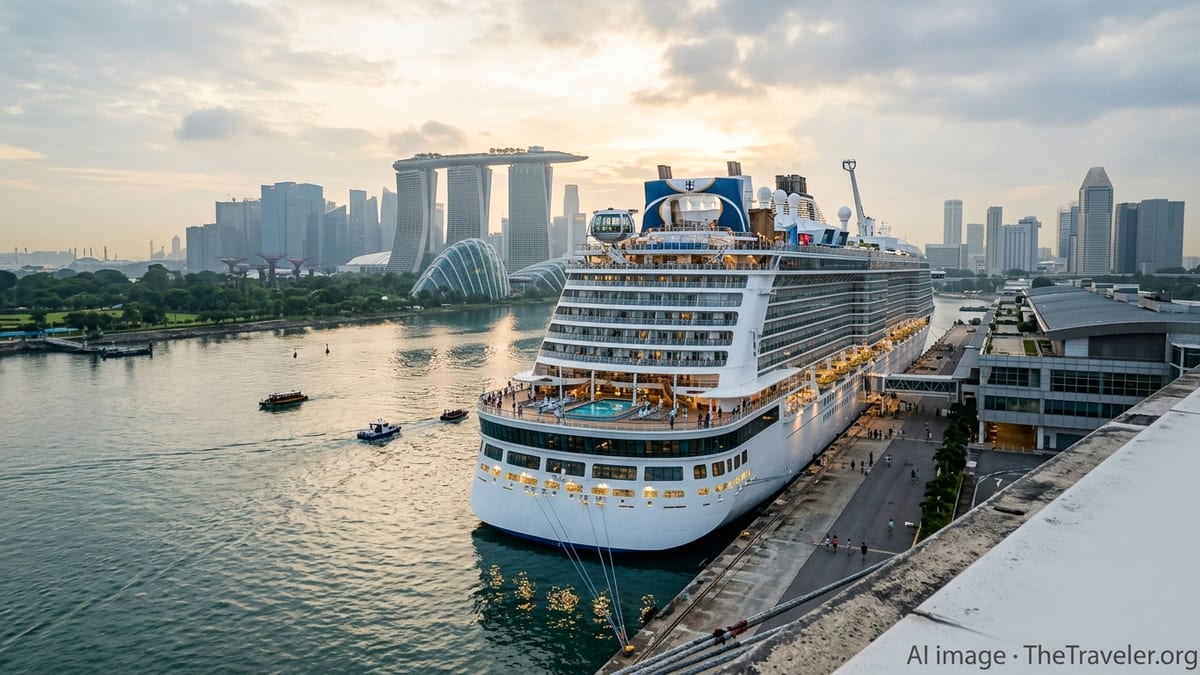
Royal Caribbean’s move to extend Navigator of the Seas’ operations from Singapore is emerging as a high-profile symbol of Asia’s rapidly accelerating cruise comeback, with new capacity and longer deployments converging on the region’s busiest hub port.
Get the latest news straight to your inbox!
Extended Singapore Season Underscores Strategic Pivot
Royal Caribbean’s deployment plans show Navigator of the Seas shifting into an extended seasonal homeport role in Singapore from late 2026 through early 2027, after years focused largely on North American and Caribbean itineraries. Public deployment documents and toolkit materials list a string of three to twelve-night sailings from Singapore across Southeast and Northeast Asia, including voyages to Penang, Phuket, Langkawi, Hong Kong and Tokyo.
The extension builds on earlier schedules that already placed Navigator in Asia from October 2025 to March 2026, primarily on short Penang and Phuket getaways. The newer schedules add longer regional cruises and repositioning sailings between Singapore and Japan, strengthening the ship’s presence on Asia routes beyond a one-off season.
Singapore tourism authorities have highlighted Navigator’s arrival and extended operations as part of a broader strategy to deepen partnerships with major cruise brands. Recent industry briefings note that the ship will be one of several high-capacity vessels homeporting in the city over the next few years, alongside returning ships such as Quantum of the Seas and new entrants from luxury and premium lines.
The decision aligns with Royal Caribbean Group’s wider growth trajectory, as recent financial filings point to rising global occupancy and robust forward bookings into 2026. Asia and the broader Asia Pacific region are cited as key components of the company’s long term expansion, particularly as capacity returns to and surpasses pre pandemic levels.
Asia Cruise Demand Accelerates After Rapid Rebound
Industry data shows that the extended Navigator deployment is being timed to capitalise on an unusually strong rebound in Asian cruise demand. Analysis from Cruise Lines International Association indicates that the Asian market grew at double digit rates in 2024, following a sharp resurgence in 2023 as borders reopened and health protocols eased.
Within that recovery, Southeast Asia has emerged as one of the most dynamic sub regions. New economic impact studies estimate that cruise activity in Southeast Asia generated around 10 billion US dollars in total impacts in 2024, accounting for a notable share of global cruise related output. Passenger volumes have been particularly strong on short regional itineraries linking Singapore with Malaysia and Thailand, routes that feature prominently in Navigator’s schedule.
Cruise market reports also indicate that Asia Pacific recorded one of the largest year on year capacity increases among all cruise regions heading into 2026. Growth is being led by a mix of homegrown Asian operators and global brands, including Royal Caribbean and other large Western lines that are either returning ships to the region or lengthening existing deployments.
This surge in capacity reflects a broader shift in travel patterns. Source market studies show that outbound cruise demand from key Asian economies is rising, while international travellers from North America and Europe are increasingly considering Asia itineraries as part of longer haul vacations. The combination of regional and long haul interest is supporting more ambitious deployment decisions such as extending Navigator’s Singapore program.
Singapore Consolidates Position as Asia’s Cruise Hub
Navigator of the Seas’ longer stay reinforces Singapore’s status as a primary homeport and transit hub for Asian cruising. Official tourism statistics show Singapore capturing almost half of Southeast Asia’s total cruise passenger visits in 2024, ahead of any other port in the region.
Singapore authorities report that cruise tourism generated multi billion dollar economic benefits across Southeast Asia in 2024, with the city state acting as a key embarkation point and air sea transfer hub. Passenger throughput at Singapore’s cruise terminals has climbed back toward pre pandemic levels, supported by investments in terminal upgrades and streamlined immigration and health processes.
Recent policy statements outline plans to further enhance cruise infrastructure, including studying the development of an integrated cruise and ferry terminal to handle anticipated future growth. The city is also positioning itself as a venue for major maritime and passenger terminal events in 2026 and 2027, aiming to attract cruise line executives, port operators and tourism boards from across the region.
Within this context, the extended Navigator season strengthens Singapore’s appeal as a year round cruise gateway even if specific ships rotate in and out between northern and southern hemisphere deployments. Each additional homeported vessel increases hotel stays, air arrivals and spending on pre and post cruise experiences, underpinning the wider visitor economy.
Itinerary Mix Targets Regional and Long‑Haul Travelers
The published Navigator of the Seas schedules from Singapore showcase a diversified itinerary portfolio intended to appeal to both regional holidaymakers and international visitors. Short two to five night sailings focus on high demand destinations such as Penang, Phuket and Langkawi, which have historically performed well with families and first time cruisers from Southeast Asia.
Alongside these short breaks, longer ten to thirteen night itineraries connect Singapore with Vietnam, Hong Kong, Taiwan, South Korea and Japan, including repositioning voyages between Singapore and Tokyo. These extended sailings are designed to attract more seasoned cruisers and long haul travellers seeking multi country itineraries that combine sea days with marquee Asian ports.
Deployment materials describe Navigator as offering many of the brand’s signature amenities, including upgraded pool decks, specialty dining, family friendly attractions and nightlife. The combination of onboard features and port variety positions the ship to compete strongly in an increasingly crowded market, particularly among travellers comparing cruises with land based tours.
Travel trade partners in the region are beginning to package these itineraries with city stays in Singapore and Tokyo, responding to rising interest from travellers in North America, Australia and Europe who view cruises as a convenient way to sample multiple Asian destinations on one trip.
Competitive Pressures and Future Outlook
While Navigator’s extended Singapore program underscores Royal Caribbean’s ambitions, it also arrives amid intensifying competition in the Asian cruise sector. Regional cruise companies and international brands are deploying new or refurbished tonnage across China, Japan, Southeast Asia and Australia, pushing capacity higher in several markets at once.
Industry publications note that Asia Pacific’s capacity increase into 2026 is among the highest globally, driven by new builds entering service and ships shifting back to Asian routes after several years based elsewhere. This expansion places pressure on operators to differentiate through onboard experiences, pricing strategies and port combinations.
For Singapore, the challenge will be to maintain its lead as the preferred homeport while neighbouring countries invest in their own cruise terminals and tourism infrastructure. Market observers point to continued collaboration between cruise lines, tourism boards and port authorities as essential to sustaining growth and dispersing economic benefits across the region.
For Royal Caribbean, Navigator of the Seas’ prolonged presence in Singapore serves as a test case for deeper, more permanent integration of Asia into the brand’s global deployment pattern. If strong demand continues, analysts expect further adjustments that could see additional ships or longer seasons allocated to Asian homeports, reinforcing the region’s role in the global cruise network.