


More news on this day
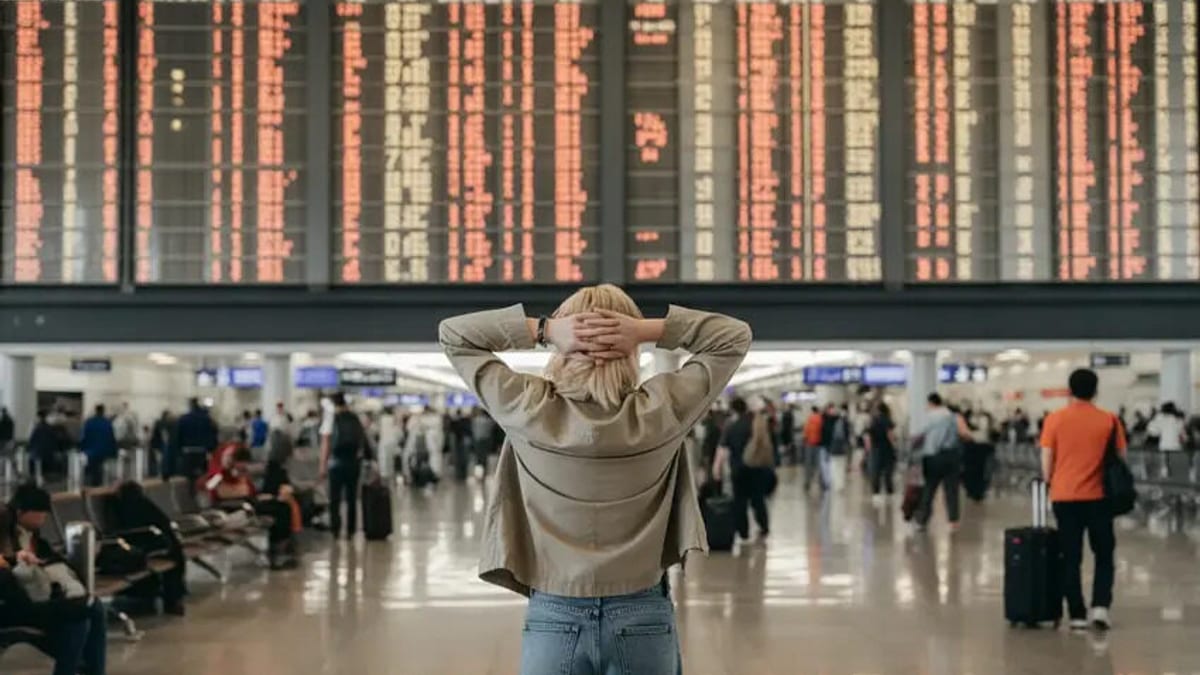
Passengers across Asia faced another bruising travel day as flight tracking data showed more than one hundred cancellations and close to one thousand delays rippling through major hubs in Japan, China, India and the United Arab Emirates, underscoring how weather, airspace constraints and geopolitical tensions are converging to disrupt peak-season aviation.
Get the latest news straight to your inbox!
Wave of Disruptions Hits Asia’s Busiest Corridors
Across Asia’s core aviation markets, a fresh bout of operational turbulence translated into approximately 134 flight cancellations and more than 900 delays in a single 24 hour period, according to aggregated figures from airport boards and tracking platforms reviewed on Monday. The disruptions were concentrated on high density routes linking Northeast Asia, the Indian subcontinent and the Gulf, where even minor schedule changes tend to cascade quickly.
Travel data indicates that Japanese and Chinese gateways have been particularly exposed, with carriers trimming frequencies, swapping aircraft types and in some cases scrubbing entire rotations when tight turnarounds became untenable. On China to Japan routes, analysts have already been tracking elevated cancellation rates around peak holiday periods, and the latest figures show that volatility has not yet fully eased.
In India, where domestic traffic has been surging to record levels this year, delays at metro airports such as Delhi and Mumbai fed into long queues, missed connections and stressed airport infrastructure. Industry specialists note that when congestion aligns with transient weather or airspace constraints, on time performance can deteriorate sharply across a wide swath of the network.
The United Arab Emirates, a central bridge between Asia, Europe and Africa, continues to feel the knock-on effects of earlier airspace restrictions linked to regional security tensions. While capacity at Dubai and Abu Dhabi has been ramping back up, the system remains sensitive to sudden route changes, technical stops and crew timing limits, all of which can push scheduled operations beyond their buffers.
Regional Airspace and Geopolitics Keep Pressure on Schedules
Publicly available advisories show that airspace over parts of the Middle East has been repeatedly constrained in recent months following missile activity and broader regional conflict, prompting reroutes for long haul services connecting Asia with Europe and North America. Carriers overflying the Gulf have been adding extra track miles and occasional refuelling stops, which increases block times and erodes schedule resilience.
In the UAE, regulators previously ordered temporary suspensions at Dubai International, Dubai World Central and Abu Dhabi after security incidents, and international consultancies have warned of lingering congestion at these hubs as traffic rebounds. Even as authorities restore normal routing options, published guidance for corporate travellers still flags the risk of last minute cancellations and protracted rebooking windows, particularly for itineraries relying on tight connections.
The shockwaves extend into South and East Asia. Flights departing India and China that rely on Gulf hubs for onward connectivity have faced irregular operations whenever slots in Dubai or Abu Dhabi are compressed. When an inbound aircraft lands late or crew approach duty time limits, airlines often have little choice but to delay or cancel a subsequent leg, amplifying the disruption for passengers many time zones away from the source of the problem.
Security driven airspace changes are colliding with more routine operational hazards, such as summer thunderstorms and low visibility events at coastal and island airports in East Asia. Recent coverage has highlighted how even short lived closures or holding patterns at regional fields can force aircraft to divert, further tightening margins for carriers attempting to maintain network integrity.
Japan, China and India Struggle With Capacity and Weather Constraints
Japan’s large metropolitan airports have entered the busy summer period juggling strong inbound tourism demand and a still adjusting schedule of regional services. Travel industry reports note that Chinese mainland to Japan routes, which were already seeing elevated cancellation rates during the May holidays, continue to experience uneven operations as airlines fine tune capacity deployment and respond to shifting demand and cost pressures.
Chinese carriers have in parallel been coping with weather related disruptions at key coastal hubs and inland megacities, with localized storms triggering sequences of rolling delays. When flights depart out of slot or arrive late into already congested facilities, knock on effects can be felt across domestic trunk routes for the remainder of the day, limiting the ability of airlines to recover performance quickly.
India’s aviation system, one of the fastest growing in the world, faces a different but related strain. Infrastructure upgrades at several large airports have not fully kept pace with demand, and runway or terminal works can temporarily reduce declared capacity. Combined with monsoon weather patterns that introduce visibility and wind constraints, this leaves limited room to absorb irregular operations before schedules begin to unravel.
Analysts observe that these structural and seasonal factors help explain why a seemingly modest number of outright cancellations can coincide with hundreds of delays, as airlines prioritize operating as many flights as possible even when departure times slide significantly. For travellers, the experience can be almost as disruptive as a cancellation, particularly when missed connections or crew curfews come into play.
UAE Hubs Work to Restore Reliability Amid Lingering Backlogs
In the Gulf, Dubai International and Abu Dhabi International remain central to the current disruption narrative. Official traffic updates from Dubai in May pointed to a strong rebound in passenger numbers and a progressive restoration of airspace within the UAE, yet they also acknowledged that regional rerouting constraints continue to complicate planning for airlines and air navigation providers.
Dubai’s main hub, which handled more than 22 million transfer passengers annually before the latest crisis according to published figures, has been gradually increasing flight movements as routing capacity improves. Airport operators indicate that they are working with airline partners to unlock additional slots and optimize connection banks, but chronic lateness on certain flows remains a challenge, especially on long haul sectors brushing against curfew windows at origin or destination airports.
Travel advisories from government agencies and passenger rights organizations still caution that Middle East operations are vulnerable to renewed airspace closures. These notices highlight that passengers may face repeated rescheduling, extended layovers and, in some cases, re-routing via secondary hubs in Europe, Central Asia or Africa if primary corridors are suddenly restricted.
The resulting pattern is one of gradual normalization punctuated by localized spikes in disruption. When those spikes line up with already busy travel days, as seen this week, the cumulative effect is visible in the region wide tallies of cancellations and delays that have unsettled travelers across Asia.
Passengers Confront Missed Connections and Uneven Protection
The immediate impact of the latest wave of disruptions has been felt in long queues at transfer desks, overflowing customer service lines and digital backlogs on airline apps across Asia and the Gulf. Social media posts and passenger forums from cities such as Dubai, Riyadh, Shanghai and Tokyo describe multi hour delays, abrupt gate changes and unexpected overnight stays triggered by missed onward flights.
Consumer advocates point out that the patchwork of passenger protection regimes across Asia and the Middle East can leave travellers with very different rights depending on the carrier, routing and jurisdiction. While European regulations specify compensation thresholds tied to delay length and distance for flights involving EU carriers or airports, many Asian markets rely on carrier specific policies or general consumer law, which may not always guarantee hotel coverage or cash refunds during large scale operational crises.
Government agencies in some jurisdictions have published reminders urging travellers to check their itineraries frequently, register for airline alerts and consider additional insurance coverage, particularly for trips that transit conflict affected regions. Advisory notes also emphasize that many standard travel insurance policies exclude disruptions linked to war or security incidents, limiting the scope for reimbursement when airspace closures are involved.
For now, the combination of 134 cancellations and 913 delays logged across Japan, China, India and the UAE serves as a snapshot of a broader, more fragile recovery in global aviation. With summer peak traffic building and geopolitical risks still elevated, both airlines and passengers may need to brace for further periods of historic travel chaos before the region’s skies fully stabilize.