


More news on this day
Travel across one of Britain’s busiest north–south rail corridors has been thrown into chaos after a rear-end collision between two passenger trains on the Midland Main Line near Bedford killed a driver and left dozens of people injured.
Get the latest news straight to your inbox!
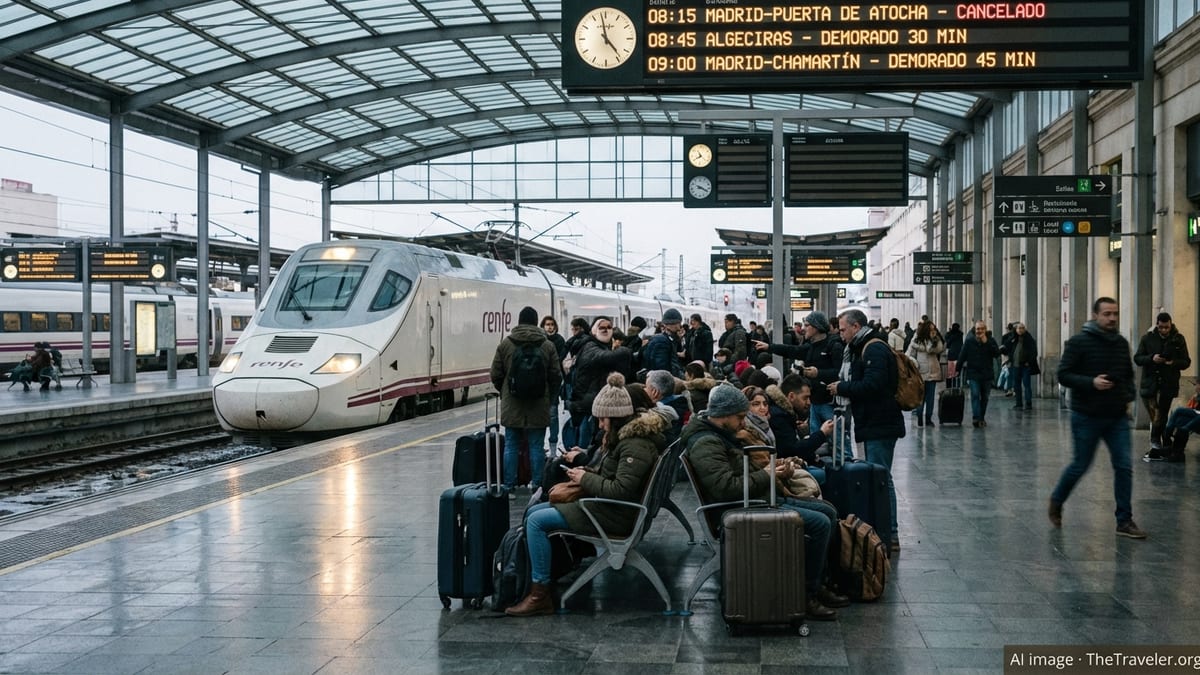
Crash on Midland Main Line disrupts major UK rail artery
Reports indicate that the collision occurred on the evening of 19 June on the Midland Main Line just south of Bedford, a critical route linking the East Midlands and Luton Airport with London St Pancras. Two southbound East Midlands Railway services, both heading toward the capital, were travelling on the same line when one train struck the rear of another at low to moderate speed.
Initial accounts from national and regional outlets describe a significant emergency response, with rail services immediately suspended between Bedford and London as rescue teams worked along the embankments and adjacent roads. Images shared by passengers showed carriages leaning at angles and windows shattered, with travelers evacuating onto the trackside under the guidance of railway staff.
Early tallies from publicly available information suggest that around 80 to 100 passengers required medical attention, with a subset of those described as seriously or critically injured. The driver of the rear train was confirmed to have died at the scene or shortly afterward, making the incident one of the most serious collisions on the British mainline network in recent years.
The location of the crash, close to key junctions feeding services to Luton Airport and London, meant that disruption spread quickly across multiple operators and routes. Evening peak trains were cancelled or diverted, and passengers heading to and from the capital faced severe delays well into the night.
Investigations focus on signalling, speed and train protection
Specialist investigators from Britain’s national rail safety bodies have been dispatched to the crash site to reconstruct the final minutes before the impact. Publicly available coverage indicates that attention is centering on how a following train was able to enter an occupied section of track behind another passenger service, despite the layers of protection that normally prevent rear-end collisions on main lines.
Technical commentary in railway industry reports highlights a number of potential factors that investigators are likely to examine, including the status and sequence of lineside signals, any temporary speed restrictions in place, and the performance of automatic warning and train protection systems. Modern British mainlines are designed so that a train passing a red signal is a rare and thoroughly investigated event, and accidents of this kind have become uncommon in recent decades.
Experts also point to the configuration of the route south of Bedford, where fast and stopping services share tracks on a busy corridor that carries intercity trains, commuter services, and airport-bound traffic. Any reduction in capacity, whether from engineering works or technical faults, can compress timetables and place additional emphasis on signalling and control systems to maintain safe separation between trains.
It is expected that investigators will retrieve data from on-board recorders, examine radio communications between drivers and control centers, and survey the track, signalling equipment, and rolling stock. A full formal report, including safety recommendations, typically follows months after such an incident, but early bulletins may highlight any immediate concerns relevant to ongoing operations on the Midland Main Line.
Severe disruption for passengers heading to London and Luton Airport
The crash has had a swift impact on travel plans for thousands of passengers using the Midland Main Line, particularly those connecting to and from Luton Airport and East Midlands destinations. Train operators have warned of continued short-term disruption, with some services cancelled and others starting or terminating short of their usual end points while the line is partially closed for recovery and inspection.
Passengers travelling over the weekend and into the new week have been advised through public channels to check live departure boards and journey planners before setting out, as timetables are subject to late changes while infrastructure assessments continue. Replacement road transport has been deployed on some sections, but capacity is limited compared with normal peak-hour mainline operations.
The crash has also prompted renewed attention to journey planning resilience, particularly for air travelers. Those connecting to early morning flights from Luton or returning on late-night services have been encouraged to leave additional time, consider alternative rail routes into London where available, or use coach and bus links if trains remain disrupted.
While operators have begun restoring some services, published advice indicates that journey times may remain extended due to temporary speed restrictions, altered stopping patterns, and the possible need to route trains over less congested tracks. Advance ticket-holders are being offered flexibility on travel dates in line with industry disruption policies.
Safety record under scrutiny after rare mainline collision
Britain’s rail network is often cited in international comparisons for having a strong modern safety record, with relatively few fatal collisions on main lines in the past two decades. The events south of Bedford have therefore drawn particular attention from both the public and rail professionals, as they appear to involve two scheduled passenger services on a busy, signal-controlled mainline.
Historical data compiled in public reports shows that previous serious rail accidents in the United Kingdom have frequently involved factors such as signal overruns, infrastructure failures, or human error compounded by complex track layouts. In response to earlier collisions, the network has steadily introduced additional layers of protection, including train protection systems and, in some corridors, the gradual roll-out of more advanced European-standard signalling.
The Bedford incident is likely to accelerate debate about the pace of modernisation on crowded intercity routes, and about how quickly advanced in-cab signalling and automatic train control can be deployed across remaining parts of the mainline network. Commentators in specialist rail publications have already raised questions about whether current systems provide sufficient safeguards against low-speed rear-end impacts in high-traffic areas.
Until investigators publish definitive findings, safety specialists are urging caution about drawing firm conclusions from fragmentary early information. Nonetheless, the collision has underscored how dependent the broader travel and tourism economy is on reliable, high-capacity rail links into London, and how a single failure point on a main line can reverberate through airport access, domestic tourism, and daily commuting.
What travelers should expect in the days ahead
For travelers planning journeys through Bedfordshire and the wider East Midlands corridor, the immediate priority is understanding how long repairs and inspections will affect timetables. Recovery of damaged rolling stock, track realignment, and detailed safety checks must be completed before full line speeds can resume, and this process can take several days even when infrastructure damage appears limited.
Publicly available travel advice suggests that service patterns will gradually improve as one track at a time is handed back to operators, often with reduced speeds and fewer trains per hour. Passengers may see rolling short-notice alterations as freight paths are rearranged and operators juggle crews and train sets dislocated by the crash.
Travelers with flexibility are being encouraged in official passenger information channels to avoid the busiest peak periods, particularly into and out of London St Pancras, and to consider alternative city pairs where possible. For many, that may mean using other London terminals or adjusting travel dates to sidestep the immediate aftermath of the incident.
As the investigation progresses, regular rail users and visitors alike will be watching for clear communication about both the cause of the collision and any follow-up safety measures. For now, the crash near Bedford stands as a stark reminder of the critical role played by signalling, train protection, and operational discipline on Britain’s mainline railways, and of the far-reaching effects when that system is disrupted.