


More news on this day
Travelers across Asia are facing another bruising wave of disruption as a mix of Asian and global airlines cancel scores of flights through major hubs in Malaysia, Indonesia, Hong Kong and Taiwan, severing connections on popular routes to San Francisco, Jeddah, Kuala Lumpur, Chennai, Bali, Bangkok and beyond.
Get the latest news straight to your inbox!
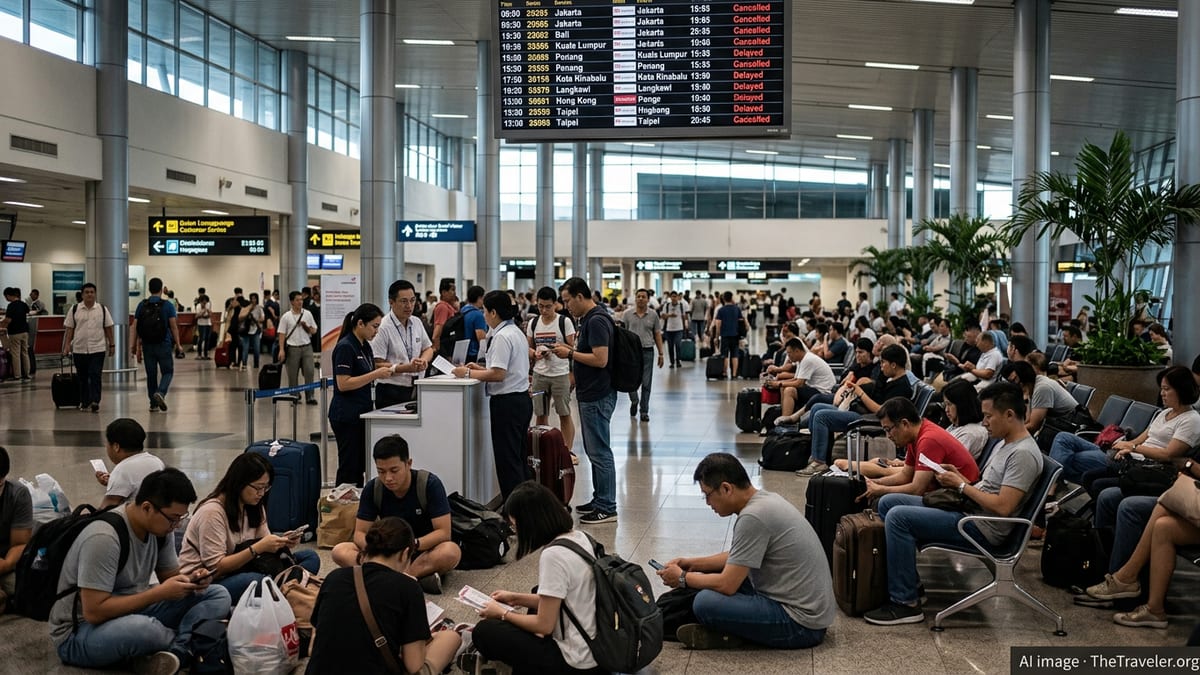
Regional Cuts Ripple Across Major Asian Hubs
Published coverage and real time tracking data indicate that more than 80 flights have been scrapped or consolidated in recent days across multiple Asian gateways, compounding delays linked to earlier schedule cuts and airspace constraints. The latest round affects carriers including AirAsia, Batik Air, Garuda Indonesia, Cathay Pacific, United Airlines and Saudia, with additional regional operators adjusting frequencies or pulling entire rotations on weaker days.
Recent industry analysis shows that airlines based in Malaysia and Indonesia have been trimming planned schedules as fuel costs and airspace detours squeeze margins, with low cost brands and secondary routes particularly exposed. A May to June 2026 outlook from an Asian aviation trade publication notes that several carriers in the region have opted to remove flights from timetables rather than operate thinly booked services at higher operating cost.
In Hong Kong, Cathay Pacific has already begun paring back parts of its Asia Pacific network from mid May through the end of June, cutting a small but noticeable share of frequencies and consolidating departures on selected city pairs. That shift, layered on top of earlier long haul changes, is now feeding through to connecting traffic and leaving some passengers without same day alternatives when a flight is pulled.
Taiwan and surrounding airspace have also seen periodic congestion as rerouted traffic skirts sensitive Middle East corridors, adding block time and reducing schedule flexibility. While not every adjustment results in an outright cancellation, the tighter margins in crew and aircraft utilization are leaving airlines with less room to recover when one sector goes off schedule.
Long Haul Links to San Francisco and Jeddah Under Strain
The disruption is being felt most acutely on long haul and religious travel corridors, where aircraft utilization is tight and passenger demand is highly directional. Available data on day of operations show repeated instances of delays and rolling schedule changes on services linking Asian hubs to North America and the Middle East, including routes that feed San Francisco and Jeddah.
Transpacific links via Hong Kong and other North Asian hubs are particularly vulnerable when a single cancellation breaks a chain of onward connections. Travelers booked on itineraries combining Cathay Pacific or other Asian carriers with United and partner airlines to reach San Francisco have reported being pushed to next day departures or rerouted through alternative gateways such as Tokyo, Seoul or Singapore when their original flights disappeared from schedules.
On the other side of the region, connections into Jeddah for religious travel are also experiencing knock on effects from tighter Middle East airspace and evolving operational plans. Publicly available schedules and airline notices show that some carriers have reduced or re timed flights into Saudi Arabia, forcing passengers from Southeast Asia and South Asia to rebuild itineraries or accept extended layovers in Kuala Lumpur, Jakarta or Gulf hubs.
Even when flights into Jeddah and other Saudi gateways remain technically operational, irregular operations on feeder legs can strand passengers at origin points across Malaysia and Indonesia. For travelers with fixed dates around pilgrimage seasons, the loss of a single sector can make it difficult to arrive on time even if alternative routings exist on paper.
Low Cost Networks in Malaysia and Indonesia Face Pressure
Low cost carriers in Southeast Asia are again in the spotlight as repeated adjustments highlight the fragility of some regional networks. Consumer forums and traveler reports in recent weeks describe a pattern of rolling cancellations and time shifts on AirAsia services linking secondary cities and leisure destinations, including routes touching Kuala Lumpur, Bali and Bangkok.
In Malaysia, official consumer reporting from earlier periods already noted that operational cancellations were more prevalent among certain carriers, including Batik Air, compared with full service competitors. That trend appears to be resurfacing as airlines juggle aircraft availability, maintenance slots and demand ahead of the peak northern summer season, with some Kuala Lumpur to Bali and Kuala Lumpur to domestic leisure routes temporarily disappearing from public timetables before later reappearing at different times.
Indonesia is seeing similar strains. Garuda Indonesia and smaller competitors have been recalibrating their domestic and short haul international offerings after several years of financial restructuring. When a Jakarta or Denpasar departure is removed or retimed with limited notice, passengers connecting onward to Chennai, Bangkok or other cities on separate tickets can find themselves effectively stranded, even if their onward flight technically operates as scheduled.
The combination of narrow connection windows, constrained fleets and strong leisure demand has created a situation where any schedule tweak reverberates through popular Southeast Asian itineraries. Travelers attempting to string together low cost segments across Malaysia, Indonesia and Thailand are especially exposed when one airline cancels while others do not offer free re accommodation.
Cathay, United and Partner Changes Disrupt Asia to North America Itineraries
Schedule consolidation by Cathay Pacific and its partners is also reshaping how passengers move between Asia and North America, particularly for those using Hong Kong, Bangkok or Kuala Lumpur as connection points. Public scheduling information and traveler accounts describe a tightening of frequencies on certain Hong Kong links to Southeast Asia such as Bangkok and Kuala Lumpur, alongside adjustments on long haul routes.
For passengers booked from Asia to San Francisco, these changes can manifest as last minute rebookings onto different routings or overnight stays in hub cities when a Hong Kong sector is cancelled. Even where United Airlines and other North American carriers maintain their own non stop services, the loss of a feeder leg in Asia can break the journey, leaving travelers to negotiate new arrangements, often at busy transfer times.
The pressure is not confined to a single alliance. With Cathay, United and other partner airlines all optimizing capacity for the coming months, passengers who built complex itineraries via online travel agencies or mileage redemptions may find that one part of their journey has been quietly moved or removed. Without proactive monitoring, that change is often only discovered when online check in fails or a confirmation email lands close to departure.
Reports from multiple hubs suggest that airport hotel bookings around Hong Kong and major Southeast Asian gateways have risen on days where multiple flights are consolidated. In practical terms, that means some travelers are involuntarily converting what was planned as a smooth same day transit into an unplanned overnight stop.
What Travelers Need to Do Now
With schedules in flux across so many carriers and markets, the main advice emerging from recent disruptions is to treat any Asia itinerary involving multiple connections or mixed airlines as tentative until it has been rechecked close to departure. Airline and airport data show that day of operations changes remain elevated compared with historical norms in key hubs such as Kuala Lumpur, Jakarta, Bangkok and Hong Kong.
Travel specialists note that the current pattern of cancellations is often driven by network wide optimization rather than acute safety issues, which means changes can appear weeks or days in advance as airlines adjust seasonal plans. Passengers who act quickly when a schedule change notice appears are more likely to secure workable alternatives or refunds before remaining inventory tightens.
For those planning upcoming trips to destinations such as Bali, Bangkok, Chennai, Jeddah or San Francisco via Asian hubs, building longer connection buffers and favoring single ticket itineraries on one carrier or alliance can reduce the risk of being stranded. Separate tickets stitched together across low cost and full service airlines leave travelers bearing more of the risk when one segment is cancelled.
Given the cross border nature of the current disruptions, travelers are also encouraged to monitor both departure and arrival airport conditions on the day of travel and to keep essential items, medications and a change of clothes in carry on bags. With more than 80 flights impacted across the region and schedules still being fine tuned into early summer, the risk of unexpected overnights or lengthy delays remains elevated for journeys touching Asia in the coming weeks.