


More news on this day
Thousands of travelers across Asia are facing extensive disruption today as at least 290 flights are reported canceled and 3,781 delayed, with airports in Japan, Singapore, Hong Kong, the United Arab Emirates, the Philippines, Malaysia and other markets struggling to keep operations moving.
Get the latest news straight to your inbox!
Typhoons Over Japan Spark Regionwide Disruptions
Reports from regional aviation trackers indicate that the worst of the disruption on June 25 is centered on Japan, where a combination of Typhoon Mekkhala and Tropical Storm Higos has forced widespread schedule changes. The storms are bringing strong winds and heavy rain to key domestic and international gateways, driving precautionary cancellations and extended ground delays.
Naha Airport in Okinawa is among the hardest hit facilities, with dozens of flights scrubbed as ground and air operations slow for safety checks between weather bands. Nearby island airports such as Miyako and Ishigaki have also seen services reduced or rescheduled, affecting links to Tokyo and major East Asian hubs.
Tokyo’s Haneda and Narita airports are experiencing heavy knock on congestion as airlines consolidate flights and reassign aircraft, with ripple effects for services across East and Southeast Asia. Passengers bound for or transiting through the Japanese capital are encountering long queues at rebooking counters and significant delays in both departures and arrivals.
The severe weather comes during a busy travel period, amplifying the impact on leisure travelers heading to Japan and on business passengers moving between major Asian financial centers. With aircraft and crews displaced by the storms, even routes outside the direct path of the systems are seeing schedule changes.
Impact Spreads to Singapore, Hong Kong, UAE and Southeast Asia
Publicly available disruption data shows that the flight chaos has quickly radiated beyond Japan to other major hubs including Singapore, Hong Kong and Dubai. Airlines operating dense networks through these cities are facing a mix of weather related knock ons and operational constraints as delayed aircraft arrive late or out of sequence.
In Southeast Asia, Manila, Kuala Lumpur and Jakarta have reported growing queues of delayed departures as inbound aircraft from Japan and China arrive behind schedule. Some carriers are opting to combine lightly booked services or trim frequencies for the day, which contributes to the rising cancellation tally.
Dubai, a critical connector for traffic between Asia, Europe and the Middle East, is also feeling the strain. While weather conditions in the Gulf are largely stable, late running arrivals from Japan and other Asian points are compressing turnaround times and putting pressure on slot availability, creating further knock on delays for onward flights.
Travel industry outlets note that this is the second major wave of regional disruption in June, following earlier large scale delay and cancellation events linked to weather and airspace congestion in China and Southeast Asia. Together, these incidents are highlighting how quickly operational stress in one part of the network can cascade across multiple countries in a single day.
Airlines Hit: Cathay Pacific, ANA Wings, JTA, Air China and Others
Among the airlines feeling the sharpest impact are carriers with strong footprints in Japan and cross regional Asian networks. Japan Transocean Air and ANA Wings, which operate many of the domestic and short haul routes into and out of Okinawa, Miyako and Ishigaki, have been particularly exposed to cancellations around Naha and other southern Japanese airports.
Cathay Pacific is seeing indirect effects across its schedules linking Hong Kong with Tokyo, Osaka and other Japanese cities, as well as onward services to Southeast Asia and the Middle East. Even when flights are not formally canceled, extended delays are disrupting connections for travelers bound for Manila, Singapore, Dubai and beyond.
Air China and other mainland Chinese airlines are contending with a combination of weather related constraints and broader operational pressures, including air traffic control limitations over busy corridors. When flights between China and Japan depart late or are canceled entirely, this has immediate consequences for passengers connecting onward to Southeast Asia or the Gulf.
Low cost and regional carriers serving secondary routes in the Philippines, Malaysia and Indonesia are also being forced to adjust. Some are trimming frequencies to Japan and Hong Kong for the day, while others are re timing services in an effort to keep aircraft and crew rotations viable within regulatory duty limits.
Travelers Face Long Waits, Missed Connections and Limited Options
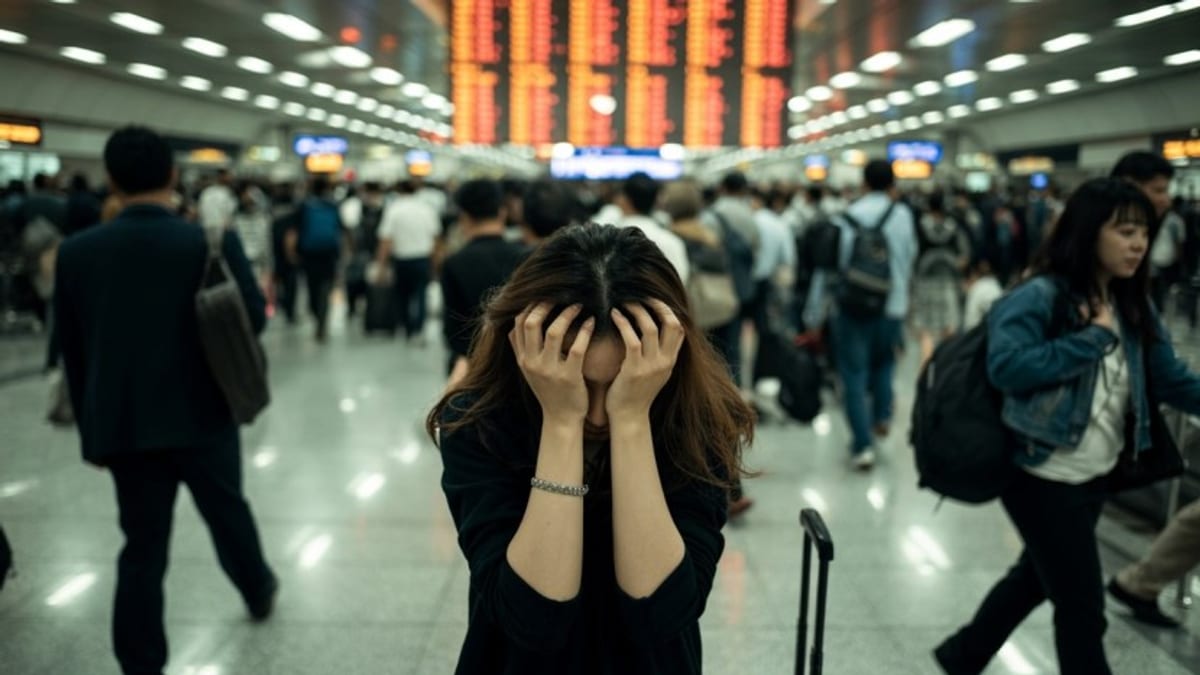
For passengers on the ground, the day’s statistics translate into crowded terminals, missed connections and, in some cases, unexpected overnight stays. Travelers in Tokyo and Naha bound for destinations such as Manila, Singapore or Dubai are discovering that a canceled or heavily delayed first leg can wipe out their onward options for the same day.
In Manila and other Southeast Asian hubs, local media and social posts describe long queues at airline service counters as customers seek rebooking, refunds or hotel accommodation. With so many flights simultaneously affected, alternative seats on later departures or competing carriers are becoming scarce on busy trunk routes.
Those holding separate tickets on different airlines are particularly vulnerable, as missed connections may not be protected by through tickets or alliance agreements. Consumer advocates regularly advise travelers on complex itineraries to build in longer connection times during storm seasons in Asia to reduce the risk of being stranded mid journey.
Travelers already en route are also contending with aircraft being diverted or held on the ground while storms pass or while destination airports clear backlogs. This can lead to additional uncertainty even for flights that ultimately operate, as actual arrival times diverge sharply from those originally scheduled.
What Passengers Can Expect in the Coming Days
Meteorological projections and airline advisories suggest that disruptions could persist beyond the peak of today’s storms, as carriers work through displaced aircraft, out of position crews and strained airport resources. Even after Typhoon Mekkhala and Tropical Storm Higos move away from Japan, residual turbulence in the schedule is likely to be felt for at least another day on some routes.
Aviation analysts note that airlines typically prioritize restoring core domestic and high demand international services first, with thinner secondary routes sometimes seeing longer suspensions or reduced frequencies. This means that passengers traveling to or from regional airports such as Naha, Miyako or smaller Philippine and Malaysian cities may face a slower return to normal service levels.
Travelers with upcoming flights touching Japan, Hong Kong, Singapore, the UAE or other affected countries are being encouraged through airline channels and airport notices to monitor their flight status closely and to check in online where possible. Many carriers are also waiving change fees for customers willing to shift their plans by a day or reroute around the most heavily impacted hubs.
For now, the combination of severe tropical weather and network wide operational pressures has created one of the most challenging days for Asian aviation in recent months, with the full impact on passenger journeys likely to be tallied only after delayed and diverted flights finally reach their destinations.