


More news on this day
Air travel across Asia and adjacent Gulf connections saw a sharp one-day disruption on September 14, 2026, with published flight-tracking tallies showing 165 cancellations and 3,258 delays across multiple major hubs, including Tokyo Haneda, Guangzhou, Jakarta, Delhi, Kuala Lumpur, and Dubai.
Get the latest news straight to your inbox!
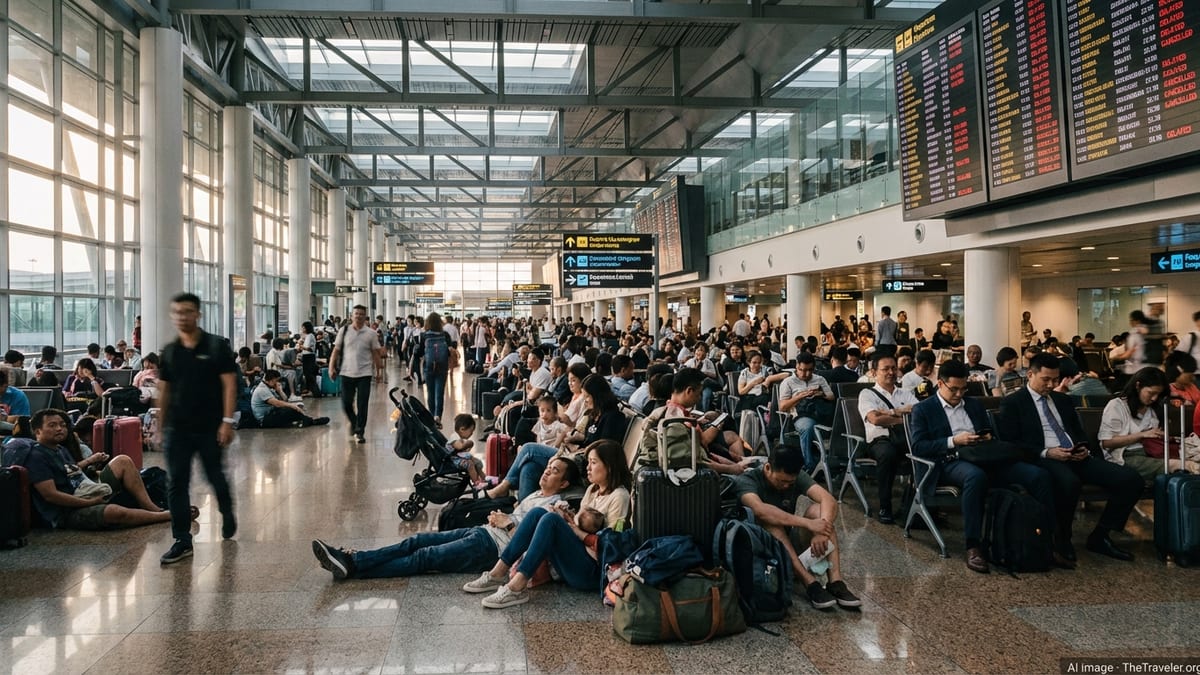
What the numbers show and when the disruption hit
Publicly available flight-tracking snapshots for September 14, 2026, point to a broad, multi-country operational squeeze rather than an isolated airport incident. Coverage describing the disruption cites a real-time compilation time of 1:40 p.m. Eastern Time, a detail that matters because delay and cancellation totals can shift quickly over the course of a day as airlines swap aircraft, re-time departures, or consolidate flights.
The same published tallies frame the day as a network-wide event spanning Japan, China, India, Southeast Asia, and Gulf gateways. While “Asia” can be a catch-all, the affected nodes listed in coverage include airports that function as major domestic hubs, long-haul connectors, and key transfer points for onward travel to Europe, North America, and Australia.
For travelers, the scale of delay volume is often more disruptive than the cancellation count. A cancellation is decisive and triggers rebooking workflows, while thousands of delays can create rolling missed connections, late-night hotel runs, and baggage misalignment that spreads into the next day’s schedule.
Airports most affected: Haneda, Guangzhou, Jakarta, Delhi, Kuala Lumpur, Dubai
Published disruption breakdowns put Tokyo Haneda at the top of the delay list, with 561 delayed flights reported alongside a small number of cancellations in the same snapshot. That is notable for an airport widely associated with high punctuality, and it underlines how congestion and knock-on scheduling issues can overwhelm even high-performing hubs on a bad day.
In mainland China, Guangzhou Baiyun was also highlighted with heavy disruption, including 419 delays and 12 cancellations in the same reporting. Shanghai Pudong appeared on the list as another pressure point with 269 delays and 6 cancellations, indicating that both the Pearl River Delta and Yangtze River Delta air corridors were contending with irregular operations.
In Southeast and South Asia, Jakarta Soekarno-Hatta and Delhi Indira Gandhi were both flagged with high delay counts and some cancellations, a combination that can be especially punishing for passengers because these airports carry dense banks of regional departures where short turn times amplify small schedule slips. Kuala Lumpur International was also included among the impacted hubs, and Dubai International appeared in the same disruption set, reflecting how Gulf transfer traffic can be affected when upstream Asia departures arrive late or miss departure slots.
Airlines under strain: delays, cancellations, and the domino effect
Airline-level disruption figures cited in published coverage point to significant irregular operations across a mix of full-service and low-cost carriers. China Eastern was listed with one of the highest delay counts in the snapshot, while Air China, Batik Air, Vietnam Airlines, and Saudia were also highlighted among carriers showing notable disruption totals.
Even when a traveler’s flight is not canceled, delays can trigger a cascade that changes the trip’s fundamentals: misconnects, reissued boarding passes, seat reassignments, and last-minute aircraft swaps. That effect is magnified on multi-leg itineraries, particularly when a domestic segment feeds a long-haul departure that cannot be held due to slot constraints or crew duty limits.
Operational factors referenced across coverage for this disruption set include aircraft availability bottlenecks, crew scheduling constraints, planned maintenance needs, airport congestion, localized weather impacts, and air traffic control restrictions. Individually these issues occur daily, but in combination they can produce a synchronized slowdown across multiple hubs that depend on tight arrival and departure banks.
What travelers should do right now: status checks, rebooking, and documentation
For anyone traveling in the region or connecting through affected hubs, the most practical step is to verify flight status through the airline’s app and a live flight tracker before leaving for the airport. When disruption is widespread, gate and timing changes can occur repeatedly, and the “last update” time on a status page can be as important as the status itself.
Where cancellations occur, travelers typically face a choice between rebooking, refund routes, and in some cases rerouting via alternate hubs. Same-day reroutes can be faster if you expand your search to nearby airports in the same metro area, but feasibility depends on immigration requirements, baggage handling, and whether the new routing requires a transit visa or a fresh security screening.
It also helps to keep a clean record of what happened: screenshots of the airline’s status updates, boarding pass details, and receipts for necessary out-of-pocket expenses. In fast-moving disruptions, this documentation can support reimbursement requests where airline policies, card benefits, or travel insurance coverage apply.
Why these one-day spikes matter for the rest of September 2026
A single day of 3,258 delays can bleed into subsequent schedules because aircraft and crews end the day out of position. The after-effects often show up the next morning as late first-wave departures, reduced spare aircraft availability, and longer recovery times for routes that require specific aircraft types.
Travel performance reporting in the region has also emphasized how sensitive networks can be when demand is strong and airport capacity is tight. While monthly performance can remain relatively resilient overall, a sharp disruption day is a reminder that hub-and-spoke operations depend on timing precision, and when multiple nodes slow down at once, recovery can take longer than travelers expect.
For passengers with time-sensitive connections in the second half of September, the practical takeaway is to build buffer where possible: earlier departures, longer connection windows, and flexible booking options. In a network operating close to capacity, small interruptions can become major itinerary changes quickly, especially at the busiest hubs.