


More news on this day
Air travel across Asia is facing another wave of disruption, with recent operational data pointing to more than 200 cancellations and over 6,600 flight delays centered on major hubs in Jakarta, Bangkok and other regional airports in the second half of August 2026.
Get the latest news straight to your inbox!
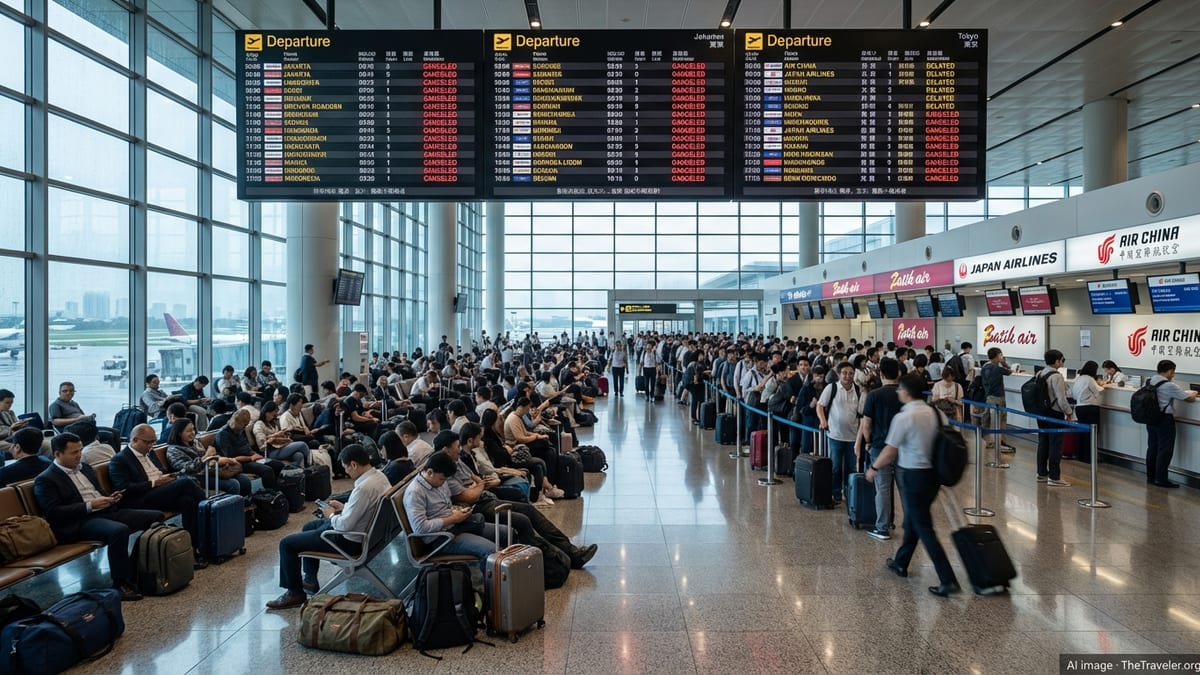
Data Shows Spike in Cancellations and Delays Across the Region
Operational statistics from several major Asian hubs indicate that cancellations and delays have climbed sharply through mid and late August. At Jakarta Soekarno Hatta International Airport, daily cancellation tallies repeatedly exceeded 150 flights, peaking at 212 cancellations on 16 August 2026, according to airport performance data tracked over the month. Similar patterns of disruption are visible on surrounding dates, with more than 170 cancellations logged on multiple days.
Bangkok’s Suvarnabhumi Airport has also experienced sustained disruption. Performance data compiled for the last 30 days show thousands of cancelled departures at the Thai capital’s primary international gateway, with individual days in the final week of August registering close to 200 cancellations. Aggregated over the month, cancellation totals at Bangkok alone number in the several thousands, with some travel-industry analyses placing regional totals well beyond 6,000 delayed flights for August.
Independent aviation and travel trackers that compile day by day statistics across Asia highlight 212 cancellations and 6,639 delays as a representative snapshot of conditions on one of the worst mid August days, when multiple hubs struggled simultaneously. On that day, Bangkok’s twin airport system and Jakarta’s main international gateway were joined by other crowded hubs across Thailand, Indonesia, China, Japan and the Gulf in reporting heavy disruption.
These figures suggest that the current wave of disruption is not confined to a single airport or carrier. Instead, it reflects a regional pattern in which several large hubs, led by Jakarta and Bangkok, have operated at or close to capacity on many days, leaving little room to absorb weather or operational shocks without cascading delays.
Jakarta and Bangkok at the Center of Monsoon Season Strain
The latest spike in cancellations and delays coincides with both seasonal weather and structural pressure on airport infrastructure. In Indonesia, Jakarta’s Soekarno Hatta is one of the busiest airports in Southeast Asia, handling hundreds of flights each day across multiple terminals. Publicly available performance tables for August show that even on days without major storms, the airport regularly recorded more than 150 cancellations, signaling very tight operational margins.
In Thailand, travel advisories and compensation-focused analyses point to persistent disruption centered on Bangkok’s two main airports. Reports highlight a three day window from 21 to 23 August in which 2,459 flights were affected by delays and cancellations across Bangkok and 16 other airports in the region, producing knock on effects as aircraft and crews rotated through network schedules. These localized issues aligned with a broader pattern of Asia wide disruption that reached a peak on several mid August dates.
Weather has been a recurrent contributing factor. Aviation news outlets covering the region attribute much of the August disruption to heavy monsoon rain and the effects of Typhoon Dolphin, which brought temporary runway closures, holding patterns and rerouting across parts of Japan, southern China and Southeast Asia. While not every hub was directly under severe weather at the same time, the cumulative effect of storms was to repeatedly slow traffic flows at key nodes, particularly in and out of Bangkok and Jakarta.
However, industry commentary suggests that weather alone does not explain the scale of cancellations and delays. Several analyses note that passenger demand at major Asian hubs has recovered faster than infrastructure and staffing levels, especially in air traffic control and ground handling. This imbalance means that when storms or technical issues arise, airports with already stretched resources take longer to recover, leaving schedules vulnerable for days.
Airlines and Passengers Grapple With Repeated Schedule Changes
The disruption has been felt unevenly across airlines, with some carriers operating dense schedules through congested hubs experiencing repeated schedule changes. Regional coverage in August documents large numbers of delays and cancellations across Chinese, Gulf and Southeast Asian airlines on several key days, with certain carriers accounting for dozens of cancelled services during a single 24 hour period.
Low cost and regional airlines, which often operate tight turnarounds and rely on high aircraft utilization, appear particularly exposed when disruptions cascade. Passenger reports circulating on travel forums throughout August describe late notice cancellations, rerouted itineraries and schedule consolidations in which lightly booked services are combined into a smaller number of flights. While these anecdotal accounts do not cover the entire market, they echo the pattern visible in statistical summaries: once weather or congestion disrupts a hub, follow on cancellations may continue for several days as airlines attempt to rebuild schedules.
For passengers in Jakarta, Bangkok and other affected cities, the impact has included long queues at check in counters and rebooking desks, missed connections at major transit hubs and last minute changes in departure times. Some long haul travelers transiting through the region reported one or more separate disruptions on both their inbound and outbound legs where connections passed through monsoon affected airports.
Despite the volume of affected flights, most large carriers have continued to operate substantial portions of their schedules, and core trunk routes between major Asian cities remain in service. However, the reliability of departure times on specific days has fluctuated significantly, especially when storm systems or operational bottlenecks emerged during already busy travel periods such as weekends and late August holiday peaks.
What Travelers Flying via Jakarta or Bangkok Should Expect
Travelers planning journeys through Jakarta, Bangkok and other busy Asian hubs in the coming days and weeks are being advised by consumer advocates and travel analysts to anticipate potential knock on effects from the August disruption. While not every day is experiencing the same level of strain, historical data for the month show that delays and cancellations can escalate quickly when storms coincide with peak traffic periods.
Guidance from traveler rights organizations suggests several practical steps. Passengers are encouraged to monitor flight status closely through airline websites and apps, and to check real time information provided by airport and independent flight tracking services before heading to the airport. When possible, selecting longer connection windows and earlier departures in the day may offer more options if rebooking becomes necessary.
For itineraries that pass through multiple Asian hubs, some travel advisors recommend building in additional flexibility on the most weather sensitive segments. That can include avoiding tight late evening connections during monsoon season or choosing routings that reduce the number of separate regional hops required to reach a destination, even when the initial fare is slightly higher.
Published guidance from airlines and regulators also reminds passengers that when flights are significantly delayed or cancelled, options such as rebooking on a later service or applying for refunds may be available under each carrier’s conditions of carriage and applicable local regulations. Travelers are encouraged to document boarding passes, delay notifications and receipts for incidental expenses in case they pursue reimbursement or compensation after the journey.
Regional Outlook as Asia Heads Toward the Late Monsoon Period
Looking ahead, aviation analysts following Asia’s summer operations expect some continued volatility in schedules while monsoon conditions persist and passenger traffic remains high. August’s figures, including reference points such as 212 cancellations and 6,639 delays in a single day across multiple hubs, are being cited by industry commentators as evidence that many airports in the region are operating very close to their practical limits during peak season.
Several reports suggest that airports and air navigation service providers in the region are working on medium term capacity upgrades, including additional runways, expanded aprons and enhanced air traffic control technology. However, most of these projects are multi year undertakings and will not significantly change the operating environment before the current monsoon season ends.
In the near term, the pattern observed in late August is likely to remain a reference scenario for travelers and airlines alike. On days when weather cooperates and traffic volumes are moderate, on time performance at hubs such as Jakarta and Bangkok can resemble pre disruption norms. On other days, particularly when heavy rain or visibility issues reduce runway throughput, cancellation and delay numbers can quickly climb back into the hundreds across Asia’s network of interconnected airports.
For now, the latest data underline that Asia’s air travel recovery, while robust in terms of passenger numbers, continues to test the resilience of airport systems. Travelers planning trips through Jakarta, Bangkok and neighboring hubs during the remainder of the monsoon period may benefit from building extra time and flexibility into their plans as the region works through another challenging stretch of the 2026 travel season.
Jakarta Soekarno Hatta operational performance data Bangkok Suvarnabhumi airport performance overview Asia flight disruption analysis August 2026 Bangkok and regional delay impact report