


More news on this day
With U.S. travel spending projected to set fresh records in 2027, major airlines are racing to lock in demand with a new wave of transatlantic and transpacific routes that will give American travelers more nonstop options to Europe and Asia than ever before.
Get the latest news straight to your inbox!
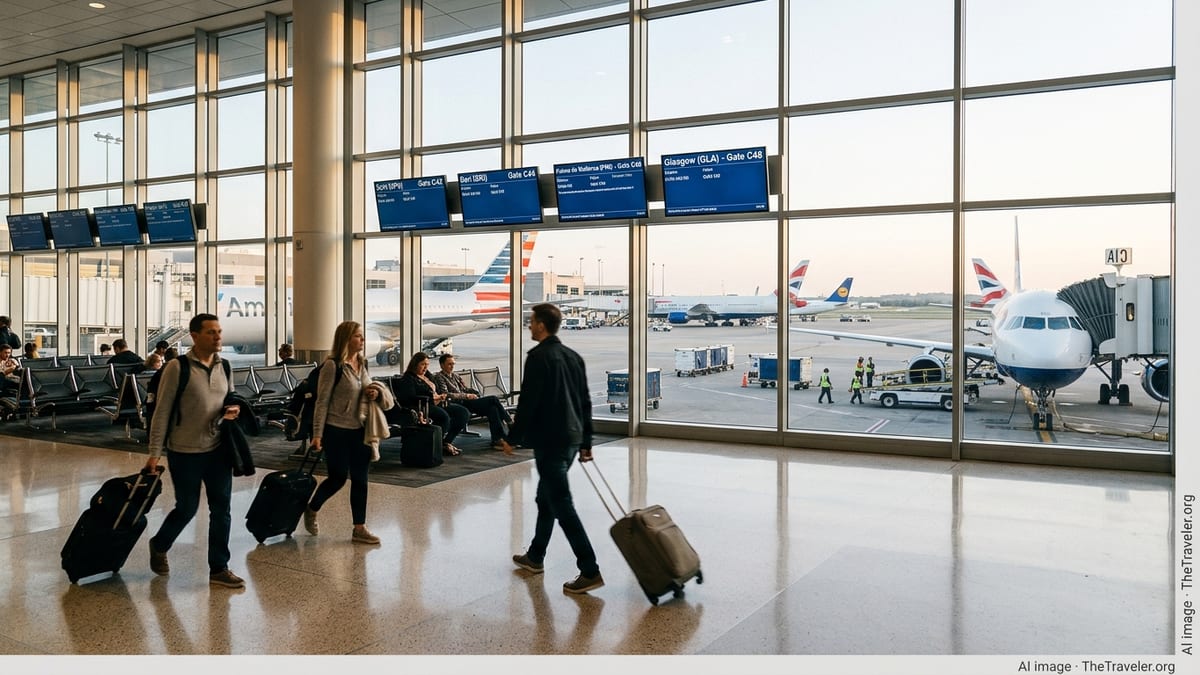
Forecasts Show U.S. Travel Demand Surging Into 2027
Publicly available industry forecasts point to steady growth in U.S. travel over the next two years, setting the stage for an aggressive round of international route launches in 2027. Data from the U.S. Travel Association indicates that total travel spending is expected to reach about 1.37 trillion dollars in 2026 and climb to roughly 1.42 trillion dollars in 2027, even after adjusting for inflation. The same forecast highlights that domestic trips will remain the backbone of the market, while outbound international travel continues to gain momentum.
Government projections also suggest a continued rebound in cross-border movements. The National Travel and Tourism Office’s most recent outlook anticipates that international arrivals to the United States will keep rising through 2027, while separate tourism economics data shows U.S. air trips and overseas travel volumes surpassing pre‑pandemic benchmarks over the second half of the decade. Together, these indicators point to a market where U.S. residents are flying more often and are increasingly willing to book long‑haul journeys.
Airline planners have been reacting to these trends by shifting capacity into long‑haul networks that historically deliver higher yields. Analysts note that carriers learned during the post‑pandemic recovery that summer demand for Europe and steadily improving interest in Asia could support more point‑to‑point flying from multiple U.S. hubs. That experience is now being translated into larger, multi‑year expansion plans built around 2027 schedules.
United Leads with Record-Breaking 2027 Europe and Asia Expansion
United Airlines has positioned itself at the center of the 2027 long‑haul buildout with what the company describes as the largest international network expansion in its history. According to the carrier’s August 25, 2026 announcement, United plans to add 10 new international cities beginning as early as March 2027, including eight destinations across Europe and Asia that are not currently served nonstop by any other U.S. airline. The new cities are scheduled to be served from United’s primary hub at Newark Liberty International Airport and other key gateways.
United’s filing shows that the 2027 schedule will also carry forward new summer 2026 routes from Newark to secondary European destinations such as Split, Bari, Glasgow and Santiago de Compostela, effectively turning seasonal experiments into recurring links. The airline argues that its strategy of combining primary capitals with emerging leisure markets has allowed it to claim the broadest transatlantic footprint among U.S. carriers. By 2027, that footprint will stretch further into Central and Eastern Europe while also adding more access points into Asia.
On the Asia side, the expansion is designed to complement United’s existing strength in the Pacific, particularly from West Coast hubs. While precise start dates vary by route, the 2027 plan introduces additional nonstop links into key Asian gateways and secondary cities, backed by larger long‑range aircraft and growing partnerships with regional carriers. Industry observers view the move as a signal that airlines expect corporate travel to Asia, which lagged leisure demand early in the recovery, to show more robust growth later in the decade.
American, Delta and Alaska Target New European Gateways
United is not alone in betting on a 2027 travel boom. Coverage from travel industry outlets and airline announcements compiled in late August 2026 show that American Airlines, Delta Air Lines and Alaska Airlines have each unveiled new nonstop services from the United States to Europe for the 2027 summer season. The combined effect is a dense web of new options from both coastal and interior hubs, often linking U.S. cities to European destinations with limited or no previous nonstop service.
American’s plans include new flights from Philadelphia to Vienna, Reykjavik and Porto, according to the airline’s route update pages and trade press reports. The carrier is set to become the only U.S. airline flying nonstop to the Austrian capital when service begins in May 2027, while the Reykjavik and Porto links tap into strong demand for both Nordic and Iberian leisure travel. Additional growth is planned from other American hubs such as Charlotte, which is adding Barcelona to its roster of European cities, reinforcing the airline’s strategy of building transatlantic connectivity beyond its traditional coastal gateways.
Coverage from European and U.S. travel media also highlights new 2027 routes from Alaska Airlines and Delta. Alaska is expanding its reach into key European leisure markets from West Coast hubs, while Delta is expected to deepen its network from Atlanta, New York and other primary bases. These routes often connect major U.S. metropolitan areas with Mediterranean and Northern European destinations that have seen rapid growth in American visitation since 2019. Airlines are pairing these launches with upgraded cabins and new-generation aircraft in an effort to capture premium leisure travelers who are willing to pay more for direct service.
Asia-Pacific Reconnects as U.S. Carriers Add Long-Haul Links
The transpacific market, slower to recover than transatlantic flying in the early 2020s, is emerging as a key growth frontier for 2027. Industry reports compiled in August 2026 describe a steady stream of new and restored nonstop services between the United States and major Asian hubs, as well as selective forays into secondary cities. New flights launching in 2026 have paved the way, offering direct options to destinations including Taipei, Tokyo, Manila and other Pacific gateways, with schedules designed to continue or expand into 2027.
Delta’s 2027 plans illustrate how U.S. carriers are using targeted long‑haul additions to rebuild their Asia networks. The airline has already announced new nonstop service between Los Angeles and Manila, scheduled to start on March 28, 2027 on Airbus A350‑900 aircraft, which will make Delta the only U.S. carrier flying that route nonstop. Separate announcements around enhanced service for global events such as CES 2027 in Las Vegas underscore how the carrier is using high‑profile periods to add Asia‑facing capacity, including more flights from key business markets.
U.S. carriers are also leveraging partnerships with Asia‑Pacific airlines to extend their reach behind new gateway cities. By aligning schedules and frequent‑flyer benefits, they are positioning new 2027 routes not only as point‑to‑point links but also as access points to broader regional networks. This approach is particularly visible in markets where bilateral traffic rights and airport capacity constraints limit the number of U.S. carrier frequencies, making coordination with local partners an important part of growth strategies.
Strategic Bets as Capacity Shifts Toward Long-Haul Leisure
Behind the flurry of new route announcements lies a strategic recalibration that prioritizes long‑haul leisure and mixed business‑leisure demand. Forecasts from the U.S. Travel Association and other research providers suggest that domestic travel growth will moderate as the market matures, while outbound international travel by U.S. residents and inbound tourism both continue to climb. Airlines are responding by shifting widebody aircraft into transatlantic and transpacific flying where yields remain relatively strong, especially in premium cabins.
Network planners also appear to be taking a more experimental approach, using seasonal summer schedules to test emerging destinations and then extending or repeating successful routes into subsequent years. United’s decision to bring back its 2026 European additions for summer 2027, and American’s choice to introduce new points such as Vienna and Reykjavik, fit this pattern. When routes perform well, they help justify further expansion into nearby markets, reinforcing the broader shift toward diversified long‑haul networks.
At the same time, the 2027 buildout underscores persistent risks. International growth is sensitive to macroeconomic conditions, currency fluctuations and geopolitical developments, any of which could dampen demand. Yet the scale of the announced expansions suggests that U.S. airlines see structural changes in traveler behavior, including greater flexibility for remote work and a willingness to combine business and leisure trips, as enduring drivers of overseas demand.
For now, the convergence of bullish travel forecasts and ambitious airline scheduling points to a 2027 summer in which American travelers will see more nonstop options to both marquee capitals and lesser‑known regional cities across Europe and Asia. The coming year of ticket sales will show how much of that new capacity the market is ready to absorb.
U.S. Travel Association travel forecast
U.S. Department of Commerce NTTO travel and tourism forecasts
United Airlines 2027 international expansion announcement