


More news on this day
A fresh wave of operational turmoil is sweeping across Asian and Middle Eastern skies, with publicly available tracking data indicating at least 325 flight cancellations and 3,513 delays in recent days across Qatar, China, Indonesia, India and Türkiye, snarling schedules at major hubs from Doha and Shenzhen to Makassar, Mumbai and Istanbul and disrupting operations for carriers including IndiGo, Hainan Airlines, Japan Airlines, AirAsia and others.
Get the latest news straight to your inbox!
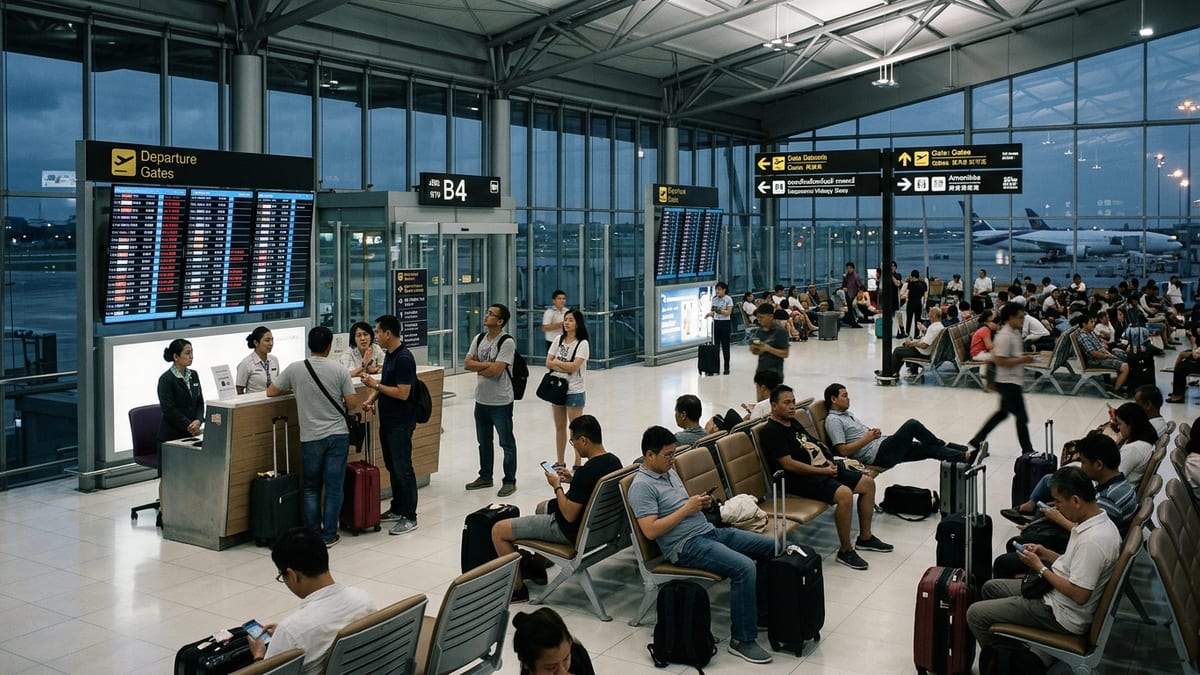
Regional Turbulence Fuels a New Round of Disruptions
Recent disruption figures compiled from flight-tracking and passenger-rights platforms point to another difficult stretch for travelers across Asia and the Gulf region. While exact tallies vary by source and time window, multiple trackers and consumer reports show hundreds of cancellations layered on top of thousands of delays, particularly at large connecting hubs in Qatar, China, Indonesia, India and Türkiye.
Doha’s Hamad International, one of the region’s busiest transfer points, has seen waves of schedule changes since early 2026 as airlines adapt to shifting airspace constraints, aircraft rotations and security-related adjustments. Similar patterns are emerging at major Chinese gateways, where congestion and knock-on effects from rerouted long haul services are contributing to elevated delay levels on both domestic and international routes.
In Southeast Asia, Indonesian airports such as Makassar’s Sultan Hasanuddin have periodically appeared among the region’s more disrupted fields, according to published coverage, with domestic carriers juggling dense schedules and weather-sensitive operations. In India and Türkiye, Mumbai and Istanbul have remained under pressure as heavy traffic, infrastructure constraints and regional airspace issues converge.
Key Hubs Under Strain: Doha, Shenzhen, Makassar, Mumbai, Istanbul
At Doha, publicly available airport departure boards and traveler accounts show recurring instances of short-notice schedule changes, rolling delays and isolated cancellations on routes linking the Gulf hub to South Asia, East Asia, Europe and North America. Regional analysts note that even modest reductions in capacity or last-minute aircraft substitutions can rapidly cascade across such an interconnected network, leaving passengers facing missed connections and overnight stays.
In China, large coastal hubs including Shenzhen are contending with a mix of factors: high volumes of domestic traffic, a growing slate of international services and the continuing need to adjust routings around constrained airspace in neighboring regions. Flight-disruption dashboards covering Asia have repeatedly highlighted Chinese airports among the highest for combined daily delays and cancellations, reflecting the sheer scale of operations as much as specific bottlenecks.
Further south, Makassar has featured in several recent disruption summaries as airlines refine domestic routing and restructure less profitable links. For passengers, that has translated into last-minute timetable revisions, retimed departures and occasional route suspensions on secondary city pairs. Similar pressures are visible in Mumbai and Istanbul, where peak-hour slot saturation and high seasonal demand can leave little room for recovery once schedules start to slip.
IndiGo, Hainan, Japan Airlines, AirAsia and Others Feel the Impact
The knock-on effects of these disruptions are being felt across a broad spectrum of airlines operating in and through the affected hubs. Low cost and full service operators alike are contending with longer routings, tighter aircraft utilization and airport congestion, all of which reduce their ability to absorb operational shocks.
India’s IndiGo, which runs one of the densest short haul networks in Asia, is particularly exposed when bottlenecks emerge at major Indian cities and at connecting points in the Gulf. Publicly available schedule data and consumer-rights analyses indicate that even small disruption spikes at hubs like Mumbai can ripple through domestic banks of departures and arrivals, resulting in rolling delays across the day.
Chinese carrier Hainan Airlines and Japanese operators such as Japan Airlines are likewise navigating volatile conditions as they balance resurgent international demand with shifting regional air corridors. Reports tracking Asia-Pacific aviation trends suggest that schedule padding and strategic frequency reductions have become common tools for managing reliability, but these measures also reduce flexibility when weather or airspace events trigger additional disruption.
AirAsia, which has previously issued travel notices for several Southeast Asian routes, has continued to adjust its timetable in response to demand, regulatory changes and operational constraints. Travelers on point-to-point routes involving Indonesian and Malaysian airports report a mix of outright cancellations and same-day retimings, often accompanied by offers of refunds or alternative dates.
Underlying Causes: Airspace Constraints, Weather and Operational Pressures
The latest disruption wave does not stem from a single cause. Aviation analysts point instead to a convergence of structural and short term pressures, ranging from regional airspace restrictions and shifting overflight permissions to thunderstorms, seasonal monsoon patterns and ongoing fleet and crew realignments after earlier conflict-related closures.
In the Gulf and adjacent regions, airspace adjustments have lengthened many routings between Europe and Asia, increasing block times and narrowing turnaround windows. This has left little slack in daily aircraft rotations operated by carriers that rely heavily on tightly banked hub schedules. Any further delay from weather, congestion on the ground or late-arriving inbound aircraft can quickly spill over into missed connections and onward delays.
Across parts of China, India and Southeast Asia, heavy seasonal weather and localized congestion have compounded these structural issues. Busy multi-runway hubs are particularly sensitive, as small slowdowns in departure or arrival rates during peak periods can quickly translate into mounting queues and reactionary delays. For travelers, the practical effect is a higher likelihood of delayed departures, longer time spent on the tarmac and, in some cases, last-minute cancellations when crews or aircraft go out of allowed operating hours.
What Passengers Can Expect and How to Navigate the Chaos
With disruption indicators remaining elevated at several major Asian and Middle Eastern airports, travelers connecting through Doha, Shenzhen, Makassar, Mumbai, Istanbul and other busy hubs are likely to face continued uncertainty in the near term. Consumer-advocacy and passenger-rights organizations advise building more buffer time into itineraries, especially for self-connecting journeys that are not covered under a single ticket.
Public guidance from regulators and aviation agencies across key markets underscores that passengers whose flights are canceled are generally entitled to a refund for the unused portion of their ticket, and in many cases to rerouting on the next available service. The exact remedies, including potential care such as meals and accommodation during long delays, depend on the jurisdiction, airline policy and whether the disruption is judged to be within the carrier’s control.
For those planning upcoming travel, monitoring live flight status through airline apps and independent trackers, checking airport operations on the day of departure and staying alert to schedule-change notifications remain essential steps. As airlines recalibrate networks in response to demand and operational realities, industry observers expect intermittent flare-ups of disruption to persist, even as overall connectivity across Asia and the Gulf continues to recover.