


More news on this day
San Francisco International Airport is facing a fresh bout of severe operational turbulence, as a new wave of 214 disrupted flights ripples through United Airlines, regional partner SkyWest, and a string of long haul transpacific routes, leaving passengers across North America and the Pacific basin scrambling for replacement connections.
Get the latest news straight to your inbox!
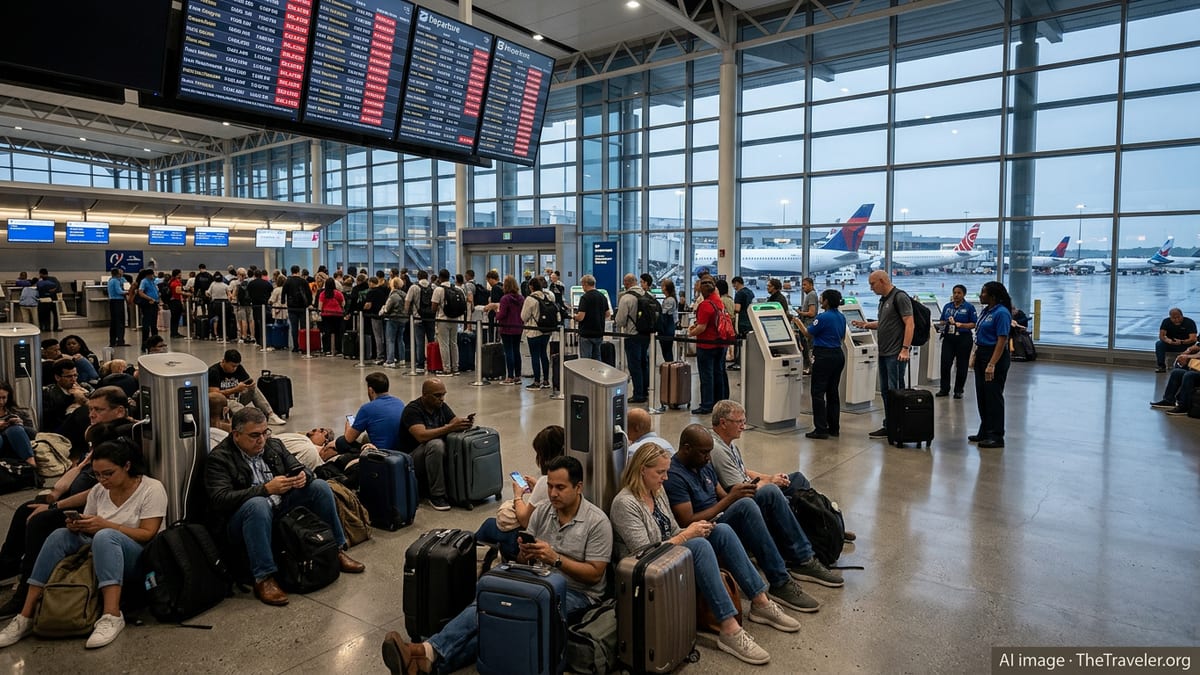
Ripple Effects Hit United, SkyWest and Transpacific Routes
Publicly available tracking data and schedule summaries indicate that San Francisco International Airport has entered another period of heavy disruption, with 214 departures and arrivals affected in a compressed window. The latest wave is concentrated on United mainline and its United Express partner SkyWest, while also touching several high demand transpacific services that link the West Coast hub to key cities across Asia and the Pacific.
The disruption totals combine outright cancellations with extended delays, creating a sharp reduction in available seat capacity. This is being felt not only on marquee long haul flights but also on the short haul regional network that feeds San Francisco from secondary cities. The resulting bottleneck is pushing missed connections higher and complicating recovery efforts throughout the day.
According to published coverage that draws on real time aviation tracking feeds, transpacific departures from San Francisco are among the hardest hit when the hub experiences cascading delays. Long haul aircraft arriving late from Asia and the Pacific face crew rest limitations and congestion at the airport, which in turn forces retimed departures and, in some cases, rolling cancellations.
Regional services operated by SkyWest under the United Express banner play a critical role in shuttling passengers from smaller markets into San Francisco’s long haul bank. When those shorter flights are canceled or heavily delayed, travelers bound for destinations such as London, Tokyo, or Sydney can find themselves stranded in outstations with limited alternative options.
Weather, Airspace Constraints and Scheduling Strain
Recent reporting on West Coast operations points to a familiar combination of stress factors behind the latest meltdown. Periodic coastal weather systems, including low ceilings and gusty winds, can significantly curtail arrival and departure rates at San Francisco, an airport that already operates near capacity in peak periods. Even modest slowdowns early in the day leave airlines with little room to recover as schedules progress.
Network analysts note that air traffic control initiatives, including flow restrictions in congested West Coast corridors, further compress available slots into and out of the Bay Area. When those measures coincide with heavy banked schedules from hub carriers, the result is a queue of aircraft waiting for takeoff and landing, many of them operating United or United Express services.
Operational documents from SkyWest outline how regional partners are particularly exposed when major hubs seize up. A small number of aircraft and flight crews rotate between multiple San Francisco turns each day, so a delay or diversion on one leg quickly propagates through several subsequent flights. By the time a system wide disruption tally reaches more than 200 flights, a substantial portion can be traced to these knock on effects across the regional fleet.
At the same time, summer schedule decisions by large network airlines have squeezed additional flying into already tight hubs. Capacity increases are intended to capture strong demand for both domestic and transpacific travel, but they also reduce the operational slack needed to absorb irregular operations, making episodes like the current San Francisco disruption more likely and more severe.
Stranded Passengers Face Missed Connections and Limited Alternatives
Accounts shared in public forums and social media portray a familiar scene for travelers caught in the San Francisco disruption. Long queues form at United customer service desks as passengers attempt to rebook itineraries that involve both regional and long haul legs. With many transpacific flights operating only once per day, even a single cancellation can push rebooked departures back by 24 hours or more.
Regional passengers find themselves in a particularly difficult position when short haul feeders into San Francisco are canceled. In some cases, travelers based in smaller cities must be rerouted through alternative hubs such as Denver, Los Angeles, or Houston, adding connections and further risk of delay. Others are offered overnight hotel stays while waiting for the next available seat.
Reports indicate that same day alternatives for popular transpacific services out of San Francisco can quickly evaporate once disruption spreads across multiple airlines. Seats on competing carriers may sell out or be subject to fare restrictions that complicate involuntary rebooking. Travelers who are able to reach nearby airports, including Oakland and San Jose, sometimes have better luck finding last minute options, but that requires additional ground transport and time.
For those already on board delayed aircraft, rolling departure estimates can add to the frustration. Public flight status pages show cases where updated departure times are repeatedly pushed back in short increments as crews, aircraft, and air traffic control slots fail to line up. This pattern can leave passengers uncertain about whether to wait on a delayed flight or seek alternative arrangements.
Operational Pressures on United and Its Regional Partner
The latest San Francisco disruption highlights the operational pressures facing United and SkyWest at one of their most important hubs. Financial and regulatory filings describe how United relies on San Francisco as a key gateway to Asia and the Pacific, while SkyWest operates a large share of the hub’s domestic feed under the United Express brand. When the hub experiences extended irregular operations, both carriers must rapidly adjust networks and crew schedules.
SkyWest’s business model depends on meeting tight performance metrics for its major airline partners. However, its own disclosures acknowledge that weather, air traffic control constraints, airport construction, and security events at major hubs can force large blocks of cancellations and delays in a short span. San Francisco is specifically cited as one of the locations where a significant interruption can cascade through the carrier’s schedule.
United’s long haul operations face an additional layer of complexity. Transpacific services often run near full, are crew intensive, and involve aircraft that are scheduled for multi day rotations across continents. Disruption at one end can force aircraft substitutions, crew swaps, or even temporary equipment groundings at the other. Publicly available schedule data shows that these adjustments can echo through the network for several days after a major disruption event.
Both airlines are also navigating an industry wide pilot and crew availability crunch. Training pipelines and hiring have accelerated since the pandemic, but any spike in irregular operations increases crew duty time and rest challenges. When a hub disruption coincides with peak travel periods, carriers may have no option but to proactively cancel flights to keep remaining operations within regulatory limits.
What Travelers Through San Francisco Should Expect Next
As airlines work through the latest 214 flight disruption wave at San Francisco, published guidance suggests that travelers should prepare for continued instability over at least one to two operational cycles. Even after the immediate backlog of delayed flights is cleared, aircraft and crews will be out of position, which may result in additional timing changes and isolated cancellations.
Passengers booked on United, United Express operated by SkyWest, or long haul transpacific flights touching San Francisco are being advised in public facing materials to monitor flight status closely on the day of travel, arrive early, and build extra connection time into itineraries. Same day standby lists and waitlists are likely to be longer than usual as displaced travelers seek earlier departures.
Travel industry observers note that some carriers activate flexible travel policies and fee waivers when disruption at a major hub reaches this scale. These measures can allow affected passengers to change dates or routings without standard penalties, although specific eligibility rules vary by fare type and route. Travelers with nonessential trips may find it easier to voluntarily shift their plans by a day or two rather than attempt to push through the worst of the congestion.
For San Francisco International itself, the latest episode underscores the continuing challenge of balancing strong demand for both domestic and transpacific flying with the limitations of its airfield and surrounding airspace. Unless additional capacity or procedural changes ease pressure on the hub, further rounds of large scale disruption remain a distinct possibility during the peak travel months ahead.