


More news on this day
Thousands of air travelers across Asia are facing extended delays and unexpected overnight stays as a fresh wave of disruptions hits flights operated by China Eastern, Batik Air, Chengdu Airlines, Hainan Airlines and Japan Air Commuter, with 88 flights reportedly cancelled and 313 delayed across China, Japan, Indonesia and neighboring markets.
Get the latest news straight to your inbox!
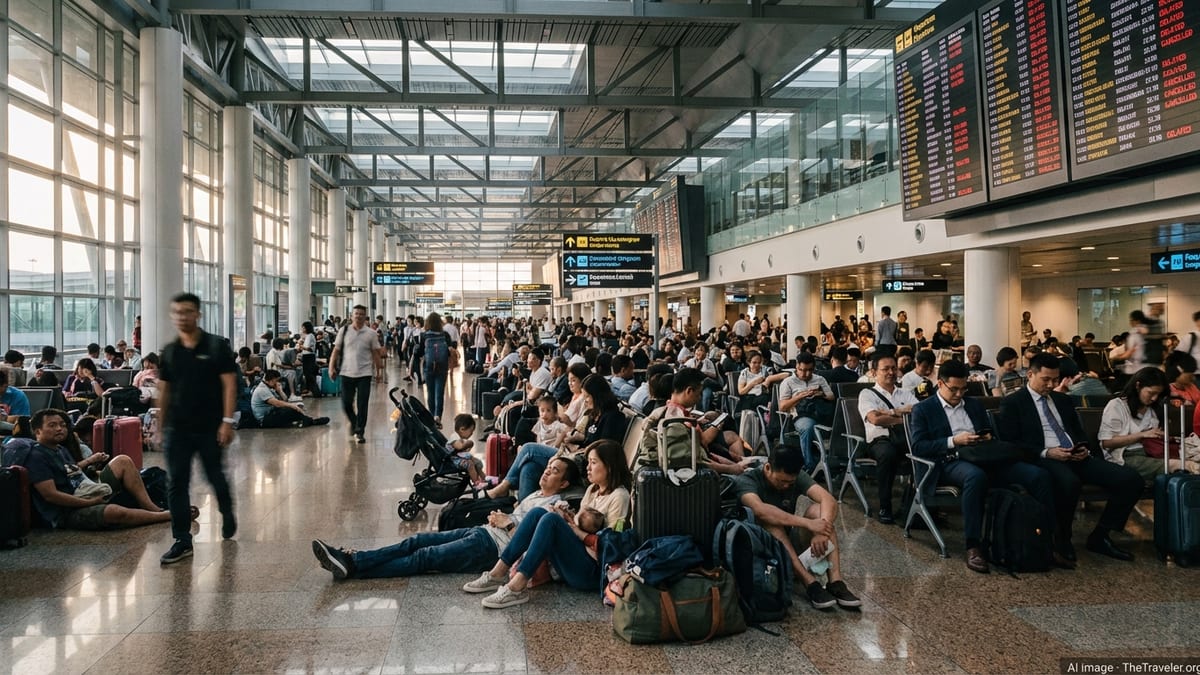
Major Hubs From Beijing to Bali Grapple With Gridlock
Operational data compiled from airline tracking platforms and disruption-monitoring services indicates that Beijing, Tokyo, Jakarta and Bali are among the hardest-hit hubs, with knock-on effects spreading to secondary airports across East and Southeast Asia. The combined total of 88 cancellations and 313 delays has translated into hours-long queues at check in and transfer counters, packed departure halls and congested baggage claims.
In China, Beijing Capital and other large gateways have seen repeated bouts of disruption this year linked to volatile weather systems and shifting airspace constraints, and the latest cluster of cancellations affecting China Eastern, Chengdu Airlines and Hainan Airlines appears to be part of that broader pattern. Publicly available data on recent irregular-operations days in mid May shows that Hainan Airlines and China Eastern were among the carriers experiencing elevated cancellation and delay rates at Beijing and Shanghai.
Jakarta and Bali have faced their own pressure points, with Batik Air frequently among the most disrupted operators during recent regional traffic surges. Data from late February and March showed Batik Air at or near the top of cancellation and delay tallies at key Indonesian and Malaysian hubs, and the latest event appears to extend that trend into the current travel period.
In Japan, regional operator Japan Air Commuter has also been swept up in the disruption. While the airline typically runs short domestic sectors, delays on these routes can cascade quickly, affecting passengers trying to connect onto longer-haul services from Tokyo and other major airports.
Operational Strains, Weather and Airspace Issues Converge
Airline and aviation analytics reports suggest that the current wave of disruption does not stem from a single cause, but from a convergence of factors that have repeatedly tested Asian carriers this year. Weather volatility across parts of China has led to large numbers of delayed and rerouted flights on several occasions, while periodic airspace restrictions in other regions have complicated long-haul scheduling and aircraft positioning.
In China, disruption-tracking services recently noted more than one hundred cancellations and well over a thousand delays in a single day across eight major airports, with Hainan Airlines and China Eastern among those most affected. These kinds of events can leave aircraft and crew out of position for subsequent rotations, increasing the risk that even minor schedule changes will tip into cancellations or lengthy delays on following days.
In Southeast Asia, Batik Air has been highlighted in multiple independent analyses as carrying a relatively high share of cancellations and late departures compared with some full-service peers. Industry observers point to tightly wound schedules, crowded airspace around Jakarta and Bali and rapid demand growth as factors that leave little margin when weather or air traffic control restrictions arise.
Japan’s regional network has also been under strain. When smaller operators adjust or cancel frequencies, passengers in outlying areas may have limited alternatives on the same day, which can force lengthy detours via major hubs such as Tokyo or Osaka, especially when seats on rival carriers are already heavily booked.
Stranded Passengers Face Long Queues and Limited Options
The immediate impact of the latest disruption has been felt in crowded terminals and long queues at customer service desks, as travelers seek rebooking, hotel vouchers or meal support. Social media updates from affected passengers at Beijing, Jakarta, Tokyo and Denpasar describe hours of waiting for new itineraries and confusion over which carrier is responsible for onward segments when multiple airlines are involved.
Consumer rights organizations and air-passenger advocacy platforms note that entitlements vary sharply depending on the country of departure and the airline’s home jurisdiction. Many of the carriers involved in the current wave of disruption are not covered by European-style compensation rules on most of their routes, which can limit cash payouts even when delays are lengthy. Instead, remedies often focus on rebooking at the earliest opportunity, basic care such as refreshments and accommodation, and refunds when flights are cancelled without acceptable alternatives.
For travelers connecting across multiple Asian hubs, the irregular operations have also raised the risk of missed long-haul departures. Reports from recent disruption days in China and Indonesia describe travelers missing onward flights to Europe and North America after initial segments on China Eastern, Hainan Airlines or Batik Air departed late, forcing last-minute itinerary changes and, in some cases, additional out-of-pocket expenses.
Families traveling during school holidays and business travelers on tight schedules appear to be among the worst affected. With many regional flights operating at high load factors, same-day reaccommodation is not always possible, turning a delay of several hours into an overnight stay or a complete re-routing through an alternative city.
Patterns of Repeated Disruption at Key Asian Carriers
The current cluster of 88 cancellations and 313 delays is only the latest in a series of disruption spikes involving some of the same airlines and hubs. Recent on-time performance reviews highlight China Eastern and Batik Air among Asia-Pacific carriers with some of the highest absolute numbers of cancelled flights over the past year, reflecting the scale of their operations and the pressure on busy domestic and regional networks.
Separate analyses of late February and March operations across Asia pointed to Batik Air, China Eastern and other regional carriers as leading contributors to daily cancellation and delay totals at major airports, particularly around Jakarta, Kuala Lumpur, Bangkok, Beijing and Tokyo. In China, additional reports indicate repeated days in 2026 where more than a quarter of scheduled services on certain routes were delayed or cancelled, underscoring the fragility of tight turnarounds at congested hubs.
Some carriers have responded by trimming frequencies on select routes, especially between China and Japan, where schedule reductions and route suspensions have been reported since late 2025. These cuts aim to rebuild resilience into timetables but can also reduce flexibility for passengers when things go wrong, as there are fewer alternative departures on the same airline later in the day.
Industry commentators suggest that without broader investments in additional aircraft, crew reserves and infrastructure, similar disruption clusters are likely to recur during periods of heavy demand or adverse weather, even if individual airlines refine their schedules.
Advice for Travelers Navigating Ongoing Irregular Operations
Travel analysts recommend that passengers planning to transit through Beijing, Tokyo, Jakarta, Bali and other busy Asian hubs in the near term build extra buffer time into itineraries and closely monitor flight status in the days leading up to departure. Airline apps, airport information boards and third-party tracking tools can provide early indications of schedule changes, although same-day disruptions remain a risk.
When booking complex journeys, some consumer advocates suggest favoring itineraries on a single ticket with longer minimum connection times, particularly when using carriers that have recently experienced high disruption rates. This can make it easier to secure through rebooking if one leg is cancelled or significantly delayed, and reduce the chance of being stranded mid-journey with separate, nonrefundable segments.
Passengers are also encouraged to keep boarding passes, receipts for meals, hotels and surface transport, and any written communication about cancellations or delays. These documents can be important when seeking refunds, travel insurance claims or goodwill gestures from airlines after the disruption has passed.
With Asia’s air traffic continuing to rebound and seasonal travel peaks approaching, the latest wave of cancellations and delays involving China Eastern, Batik Air, Chengdu Airlines, Hainan Airlines and Japan Air Commuter underscores how quickly localized operational issues can spill over into systemwide disruption across multiple countries and carriers.