


More news on this day
Air travel across Asia and parts of the Middle East is facing a fresh bout of disruption as aggregated tracking data indicates 329 flights cancelled and at least 3,483 delayed in and out of Singapore, Japan, Malaysia, Saudi Arabia, China, India and Indonesia, snarling operations for carriers including AirAsia, IndiGo, Saudia and others at busy hubs such as Tokyo, Kuala Lumpur and Mumbai.
Get the latest news straight to your inbox!
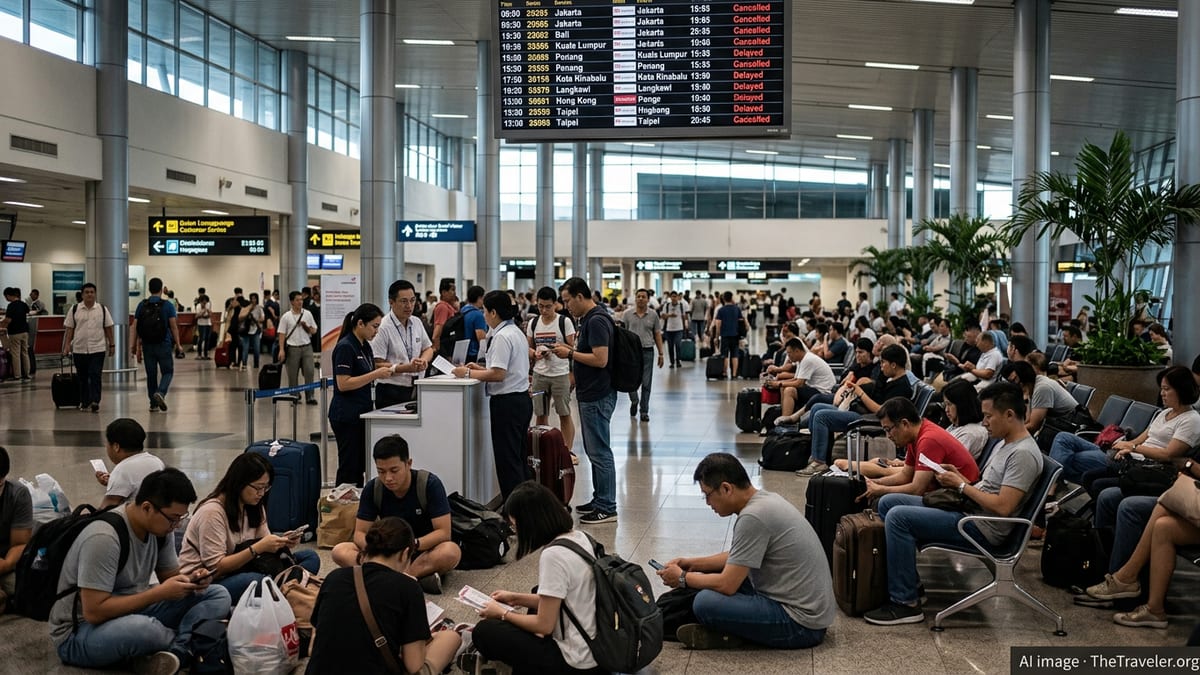
Widespread Disruptions From Northeast Asia To The Gulf
Publicly available flight-monitoring figures collated over the latest 24-hour period point to extensive operational strain across key Asian corridors. The combined tally of 329 cancellations and 3,483 delays spans domestic and international services, affecting everything from short low-cost hops to long-haul connections linking Asia with Europe and the Gulf.
Japan and China once again feature prominently, with Tokyo’s Haneda and Narita airports, together with major Chinese hubs, recording dense clusters of late departures and re-timed arrivals. Reports indicate that the disruptions are not confined to any single carrier or country, but instead reflect mounting pressure on airport infrastructure and airline schedules across the region.
In Southeast Asia, Singapore’s Changi Airport and Kuala Lumpur International are among the hardest hit, seeing dozens of delayed departures in quick succession and a noticeable uptick in same-day cancellations. Flight-tracking dashboards show knock-on effects radiating out to secondary airports in Indonesia, Thailand and India as aircraft and crews struggle to return to planned rotations.
Budget Carriers And Flag Airlines Equally Affected
The latest wave of disruptions is impacting both low-cost and full-service airlines. AirAsia, one of the region’s largest budget operators, appears prominently in delay and cancellation lists around Kuala Lumpur and Singapore, while Indonesia-focused units contend with tighter turnarounds at Jakarta and secondary cities. Reports from industry data providers suggest that reduced schedule buffers leave little room to recover from even minor upstream delays.
Indian low-cost giant IndiGo has also been swept up in the turbulence, with domestic sectors feeding into congested hubs such as Delhi and Mumbai proving particularly vulnerable. Previously published regulatory data has already highlighted how staffing constraints, new duty-time rules and airspace limitations have challenged on-time performance for fast-growing Indian carriers, a trend that appears to be resurfacing as demand remains strong.
Middle Eastern and Gulf-linked airlines are not immune. Saudi Arabia’s flag carrier Saudia features in disruption tallies on routes connecting Jeddah and Riyadh with major Asian cities, where altered routings and congested airspace add time and complexity to flight planning. According to recent regional aviation coverage, carriers operating between Asia and the Gulf continue to grapple with shifting overflight permissions and longer track miles on some corridors.
Tokyo, Kuala Lumpur, Mumbai And Other Hubs Under Strain
Tokyo stands out as a focal point, with Haneda and Narita handling dense schedules of domestic shuttles and regional international flights that leave minimal margin for delay. Aviation analysts quoted in specialist publications have repeatedly noted that any weather disruption, runway closure or air traffic control restriction in the Tokyo area can quickly cascade into a full-day logjam of late arrivals and missed connections.
Kuala Lumpur International Airport, a key base for AirAsia and a growing transit point between South Asia and Southeast Asia, is seeing elevated levels of both delays and cancellations in the current disruption window. Schedule-change notices and timetable adjustments reported in recent days show trimmed frequencies on selected Malaysia routes, which can compound disruption when remaining flights go out full and leave fewer rebooking options.
Mumbai’s Chhatrapati Shivaji Maharaj International Airport is similarly under pressure. With high utilization of runways and terminal infrastructure, even modest air traffic flow constraints or congestion at nearby airfields can create backlogs. Publicly available data for recent disruption days shows clusters of delayed departures in evening peak hours, often involving flights feeding long-haul services to the Gulf and Europe.
Other hubs across Indonesia, including Jakarta’s Soekarno Hatta, have reported rising numbers of late operations in line with the broader regional pattern. Secondary airports in countries such as Malaysia and India are also experiencing rotated delays as aircraft arrive behind schedule from major hubs and struggle to regain punctuality over the course of the day.
Operational Pressures Behind The Numbers
While precise causes vary by country and airport, current reporting points to a combination of factors driving the 329 cancellations and 3,483 delays. Weather volatility across parts of East and Southeast Asia, including thunderstorms and low-visibility periods, periodically constrains runway capacity and forces holding patterns or diversions.
At the same time, continuing airspace restrictions linked to geopolitical tensions have lengthened some routings between Asia, the Middle East and Europe. Aviation publications note that these extra track miles add fuel burn and compress schedule recovery windows, particularly for carriers running tight aircraft utilization across multiple daily sectors.
Staffing and maintenance capacity remain additional pressure points. Airlines across India, Southeast Asia and parts of Northeast Asia are still balancing rapid demand recovery with crew availability and fleet planning. Industry observers say that when fleets are operating at near peak utilization, any unplanned technical issue or crew shortage can quickly translate into a cancellation or a series of rolling delays.
What Travelers Are Experiencing On The Ground
For passengers at affected airports from Tokyo to Kuala Lumpur and Mumbai, the disruption is manifesting in long check-in queues, congested transfer desks and repeated gate-change announcements. Terminal displays at several major hubs have shown screens filled with amber and red status markers during peak periods as delay minutes accumulate through the day.
Travel-focused consumer outlets report that transit passengers are particularly exposed, with missed connections leading to overnight stays and onward itineraries being rebooked via alternative hubs. Those flying with low-cost carriers such as AirAsia may face limited same-day alternatives on heavily booked routes, while travelers on IndiGo, Saudia and other regional airlines can encounter lengthy waits for the next available seat.
Industry commentators suggest that disruption of this scale is likely to remain an intermittent feature of the Asian aviation landscape in the near term. With demand continuing to grow and infrastructure and airspace capacity slower to expand, episodes of mass delays and cancellations across multiple countries may recur, prompting airlines and airports to refine contingency plans and passengers to build more flexibility into their travel arrangements.