


More news on this day
Hundreds of passengers across Asia are facing major travel disruption as regional carriers including Batik Air, China Eastern, Hainan Airlines, ANA Wings and Chengdu Airlines scrub 81 flights and delay more than 300 others, snarling connections in key hubs from Jakarta and Kuala Lumpur to Shanghai, Beijing and Tokyo.
Get the latest news straight to your inbox!
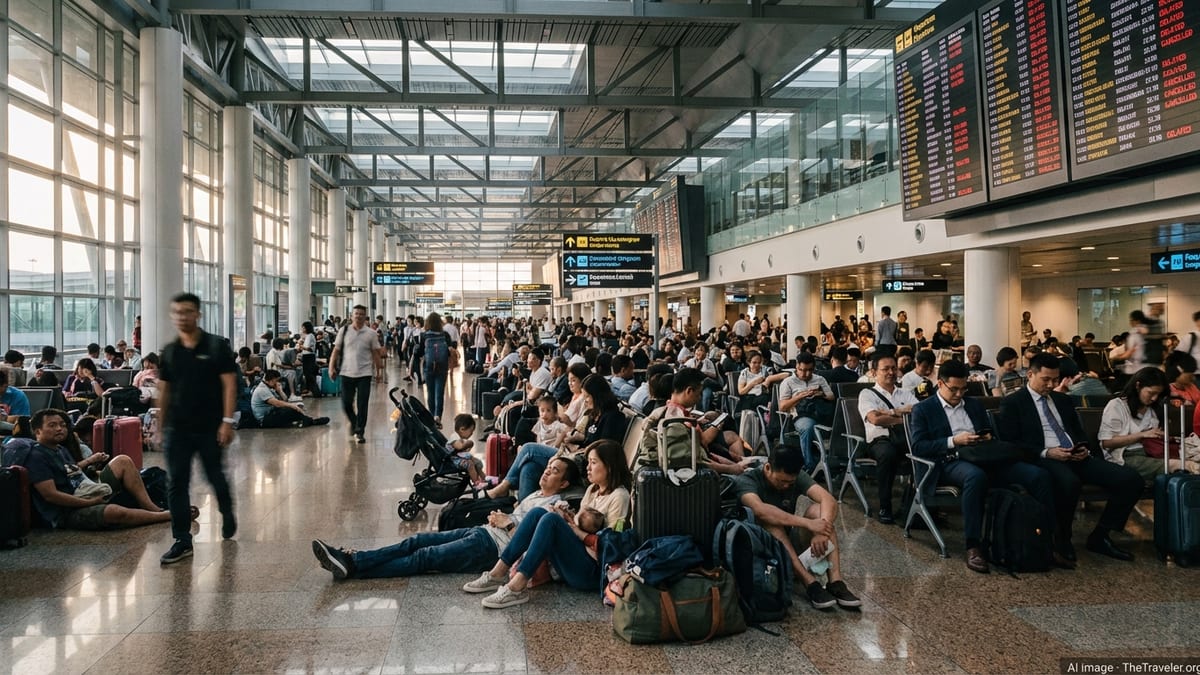
Airline Disruptions Hit Major Asian Gateways
Published operational data and airport status boards on 20 June show a spike in same-day cancellations and rolling delays affecting services operated by Batik Air, China Eastern, Hainan Airlines, ANA Wings and Chengdu Airlines. The disruptions are concentrated on short and medium haul routes that anchor regional connectivity between Southeast Asia, China and Japan.
Jakarta, Shanghai and Beijing are among the hardest hit hubs, with additional knock-on delays reported at airports in Singapore, Kuala Lumpur, Tokyo and other secondary Chinese and Japanese cities. Flight-tracking dashboards and airport announcements indicate at least 81 cancellations and about 311 delayed departures or arrivals linked to the five carriers over the course of the operating day.
The scattered pattern, stretching from Indonesia to Japan, suggests a combination of localised weather interruptions, aircraft rotation issues and tight fleet utilisation rather than a single underlying incident. Publicly available information does not point to one common technical fault or regulatory action affecting all of the airlines involved.
Still, the cumulative effect is significant for travelers, with morning disruptions propagating into afternoon and evening banked departures at some hubs, complicating connections and onward itineraries across several time zones.
Hubs From Jakarta to Shanghai See Knock-on Effects
In Indonesia, Batik Air’s network position as a key full-service operator on domestic and regional routes has amplified the impact of its cancellations and late departures. Disruptions on trunk routes into and out of Jakarta’s Soekarno-Hatta International Airport have left passengers struggling to rebook during peak midyear travel, in some cases facing multi-hour waits at check-in and transfer counters as schedules are reshuffled.
In China, a similar pattern has emerged at Shanghai and Beijing, where China Eastern, Hainan Airlines and Chengdu Airlines all play important roles on high-frequency domestic sectors and short international hops. Delayed departures on morning and mid-day waves have forced some aircraft to miss later rotations, feeding a cycle in which even flights still operating on the day are departing behind schedule.
Japan’s regional network has also felt the strain, particularly on routes served by ANA Wings, which often feed passengers into larger All Nippon Airways services at major airports. Travelers on shorter domestic legs are reporting extended waits at departure gates and adjustments to boarding times as crews and aircraft arrive late from previous sectors.
Although Singapore and Kuala Lumpur are not the original source of many of the cancellations, both hubs are experiencing secondary disruptions. With multiple Southeast Asian and Chinese airlines using the cities as interchange points for travel between China, Indonesia, Malaysia and Japan, delayed inbound flights are resulting in missed connections, re-accommodation challenges and congested transfer areas.
Passengers Face Long Queues, Missed Connections and Uncertain Timelines
Travelers caught up in the disruption describe familiar scenes for irregular-operations days in Asia: departure boards populated with red "delayed" indicators, queues stretching beyond check-in islands and limited spare capacity on alternative departures, especially on popular leisure and migrant-worker routes. As flights slip further behind schedule, seats on remaining services become harder to secure, particularly for same-day rebooking.
Passengers with complex itineraries linking multiple countries are among the most affected, because delays of even one or two hours at Jakarta, Shanghai or Beijing can cascade into missed long haul or regional connections elsewhere. Some travelers are being forced into overnight stays or multi-stop re-routes through secondary hubs when non-stop alternatives are unavailable.
Publicly available updates from airlines and airports highlight the operational strain that occurs when several carriers in the same corridor experience irregular operations at once. Even where individual delays are relatively modest, the concentration of schedule changes within a limited window of time can overwhelm ground-handling capacity, customer-service desks and available hotel inventory near airports.
Information asymmetry remains a challenge. While real-time flight status tools provide basic data on revised departure and arrival times, many passengers only discover cancellations or extended delays upon arrival at the airport, limiting their options to adjust plans in advance.
Operational and Seasonal Pressures Under Scrutiny
Analysts tracking Asia’s aviation recovery note that regional networks are operating close to peak capacity on many days, especially around school holidays and midyear vacation periods. Airlines such as Batik Air, China Eastern, Hainan Airlines, ANA Wings and Chengdu Airlines rely heavily on tight turnarounds and dense scheduling to maximise aircraft utilisation, leaving relatively little slack in the system if a rotation is disrupted.
Weather remains a perennial factor during the early summer period across much of East and Southeast Asia, with thunderstorms, heavy rain and low visibility routinely forcing temporary airport flow restrictions. When coupled with crew-rostering constraints and limited spare aircraft, a single weather event can result in cascading delays across several carriers sharing the same hub infrastructure.
Observers also point to the wider context of post-pandemic capacity rebuilding. Many carriers are still adjusting fleets, staffing levels and maintenance windows after several years of reduced flying. In practice, that can translate to reduced resilience when a day’s operations does not unfold as planned, particularly on multi-leg regional routes that double as both domestic lifelines and international connectors.
The day’s disruptions are likely to reinforce calls from passenger advocates for clearer real-time communication and more robust contingency planning, especially in markets where rail or road alternatives are limited. Where aviation is the primary mode for long-distance domestic and regional travel, concentrated bursts of cancellations and delays can bring significant economic and personal costs for travelers and businesses alike.
What Travelers Should Watch in the Coming Days
While the immediate operational picture is fluid, historical patterns suggest that airlines can take several days to fully recover regular schedules after a day with an unusually high number of cancellations and delays. Aircraft and crews often end the disrupted day away from their planned bases, requiring repositioning flights and further timetable adjustments before normal patterns are restored.
Passengers with travel booked on Batik Air, China Eastern, Hainan Airlines, ANA Wings and Chengdu Airlines over the coming days may wish to monitor their flight status frequently and allow additional buffer time for connections, especially when transiting Jakarta, Shanghai, Beijing, Singapore or Kuala Lumpur. Many carriers provide same-day rebooking options during irregular operations, but availability can tighten quickly once disruption sets in.
Travel insurers and consumer advocates typically advise keeping records of boarding passes, receipts and any written notifications of delays or cancellations, which may be relevant for compensation or reimbursement claims under local regulations or policy terms. Rules vary between jurisdictions and airlines, but documentation is often a prerequisite for any later claim.
For the region’s aviation sector, the latest wave of disruption will add to ongoing debate about how to balance rapid traffic growth with operational resilience. With Asia’s key hubs preparing for a busy second half of 2026, the performance of carriers on heavily trafficked regional corridors will remain closely watched by both travelers and industry observers.