


More news on this day
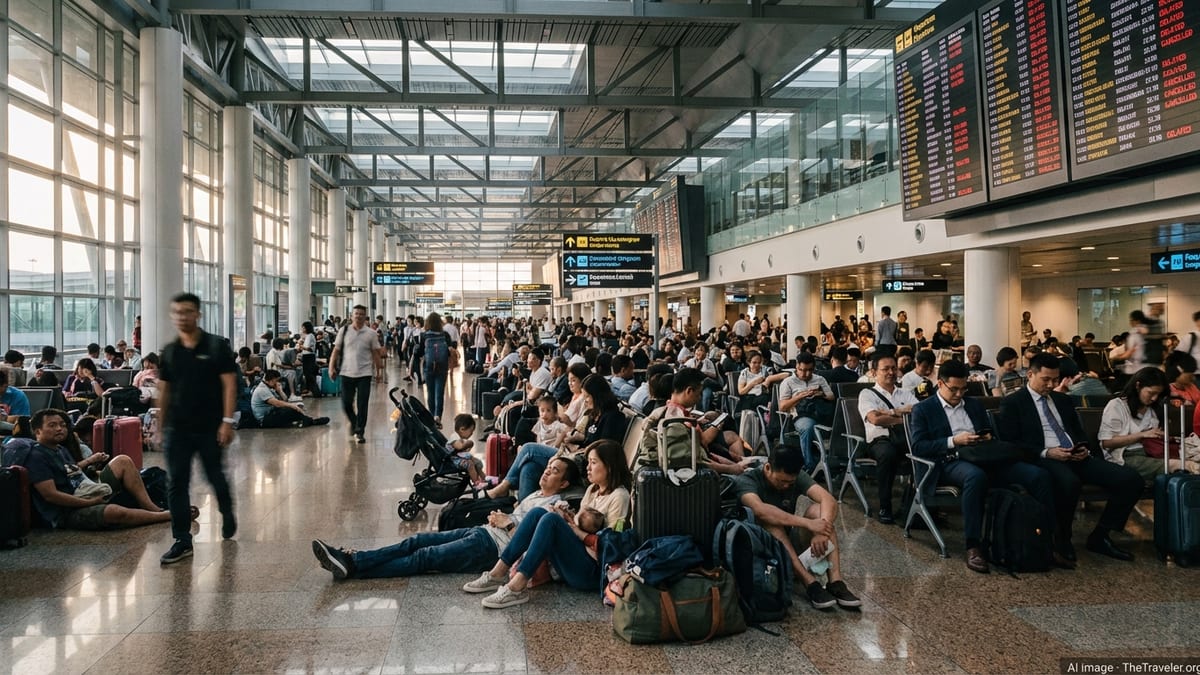
Hundreds of travelers across Asia faced missed connections and extended airport waits after flight-tracking dashboards showed widespread disruption across the region, with 3,744 delays and hundreds of cancellations recorded in a single snapshot of operations late Thursday into Friday local time.
Get the latest news straight to your inbox!
Where the disruptions are clustering and why it matters
Published coverage based on live aviation telemetry indicated the disruption was not limited to a single airport or country, but instead spread across multiple high-volume corridors where tightly timed aircraft rotations and connecting banks can magnify even moderate delays. A widely circulated snapshot of FlightAware data time-stamped September 17, 2026 (U.S. Eastern Time) put the total at 3,744 delays and 268 cancellations affecting major gateways including Shanghai, Tokyo, and Mumbai.
Flight-tracking dashboards are used by airlines, airports, and travelers to monitor systemwide performance in real time, but they represent a moving picture rather than a final, audited count. Even so, the scale of disruptions in this window suggested broad operational strain across multiple networks, which is typically more disruptive for passengers than an isolated weather event because rebooking options fill quickly.
Independent disruption monitoring also pointed to uneven performance across the continent. Flightradar24’s Asia airport disruption map, which combines delays and cancellations into a disruption index, has repeatedly shown that conditions can shift rapidly by hour and by airport, with some hubs improving while others degrade as aircraft and crews fall out of position.
How delays cascade across Asia’s interconnected networks
Large hubs in Asia often run on “banked” schedules, where waves of arrivals feed waves of departures for domestic and international connections. When inbound flights arrive late, outbound flights can be held for connecting passengers or depart without them, either way increasing the risk of misconnections and knock-on changes to itineraries.
Published reporting tied recent multi-airport disruption days to a mix of constraints including weather-related flow restrictions, air traffic sequencing, and airport congestion that slows turnaround times. In practical terms, a single aircraft that departs late in the morning can carry that delay across several legs, and if the final arrival pushes past crew duty limits, later flights may be delayed further or canceled outright.
Travel-industry coverage has also highlighted recurring seasonal stressors in the region, including monsoon impacts in South Asia and summer thunderstorm activity in parts of China and Japan. When combined with high demand periods and constrained airport capacity, these factors can produce short, sharp spikes in delay totals that ripple into the next day’s schedule.
Airlines and airports most exposed during disruption spikes
Across disruption spikes, the most visible pain points for travelers tend to be at high-traffic hubs that serve as transfer points for both short-haul and long-haul routes. Recent dashboards and coverage have frequently pointed to major China gateways, Japan’s Tokyo-area airports, and India’s largest metros as places where delays can quickly compound due to dense schedules and limited slack time.
Published coverage tied to the September 17, 2026 snapshot indicated that even carriers with low cancellation rates in the observed window were still seeing elevated delay percentages, a pattern that can be particularly challenging for connecting itineraries because passengers may spend hours waiting without the flight being formally canceled.
For travelers flying itineraries that include popular connection points, the practical risk is not only a late departure but a broken chain: checked bags misconnecting, onward flights departing before a delayed inbound lands, and last available seats on later flights being taken quickly as airlines re-accommodate multiple disrupted departures at once.
What travelers can do immediately at the airport and before leaving for it
During large-scale disruptions, the fastest path to rebooking is often through airline apps, websites, and airport self-service kiosks, especially when customer-service lines swell. Flight-tracking tools can help travelers confirm whether an inbound aircraft has arrived and whether delays are spreading across a carrier’s broader network, which can be useful when deciding whether to wait, rebook, or change routes.
For passengers with onward connections, one practical step is to check whether all legs are on the same ticket number, because re-accommodation obligations and options can differ if segments were booked separately. Travelers may also want to document key details such as scheduled and actual departure times, notifications received, and rebooking offers, as these records can help when requesting refunds, reimbursements, or required care where applicable.
Travelers should also pay attention to airport-specific advisories during disruption days because security queues, check-in lines, and gate changes can become unpredictable. In prior region-wide IT and operational disruption events, some airports shifted to manual processes that increased processing times, adding another layer of delay even before passengers reached the gate.
Passenger-rights rules vary by country, with India’s DGCA guidance among the most specific
Passenger protections across Asia vary widely, but India’s framework is among the most clearly codified and frequently referenced during major disruptions affecting Indian airports and India-linked itineraries. India’s Ministry of Civil Aviation and the Directorate General of Civil Aviation have published passenger-rights materials and reiterated requirements for airlines to provide facilities during delays and cancellations, including meals and refreshments during longer waits and accommodations in certain extended-delay scenarios.
Publicly available DGCA-related materials also emphasize transparency measures, including clearer display of passenger rights and standardized practices across airline digital channels and airport counters. These rules focus heavily on care and assistance, while compensation and refund outcomes can depend on the length of delay, the timing of notifications, and whether the disruption falls under conditions considered outside an airline’s control.
For travelers on itineraries transiting multiple countries, the applicable rules may depend on where the disruption occurs and which carrier operates the affected segment. In practice, many passengers will get the quickest resolution by using the airline’s rebooking tools first, then following up later for any care, reimbursement, or refund claims that their route’s rules may support.