


More news on this day
Hundreds of cancellations and thousands of delays across key hubs in Saudi Arabia, Indonesia, Kuwait, Malaysia and China are rippling through Asian aviation, with more than 500 flights reportedly grounded and over 5,000 running late at airports including Riyadh, Jakarta, Kuala Lumpur and Guangzhou, affecting carriers from low-cost operators such as Akasa to full-service airlines including Saudia and ANA.
Get the latest news straight to your inbox!
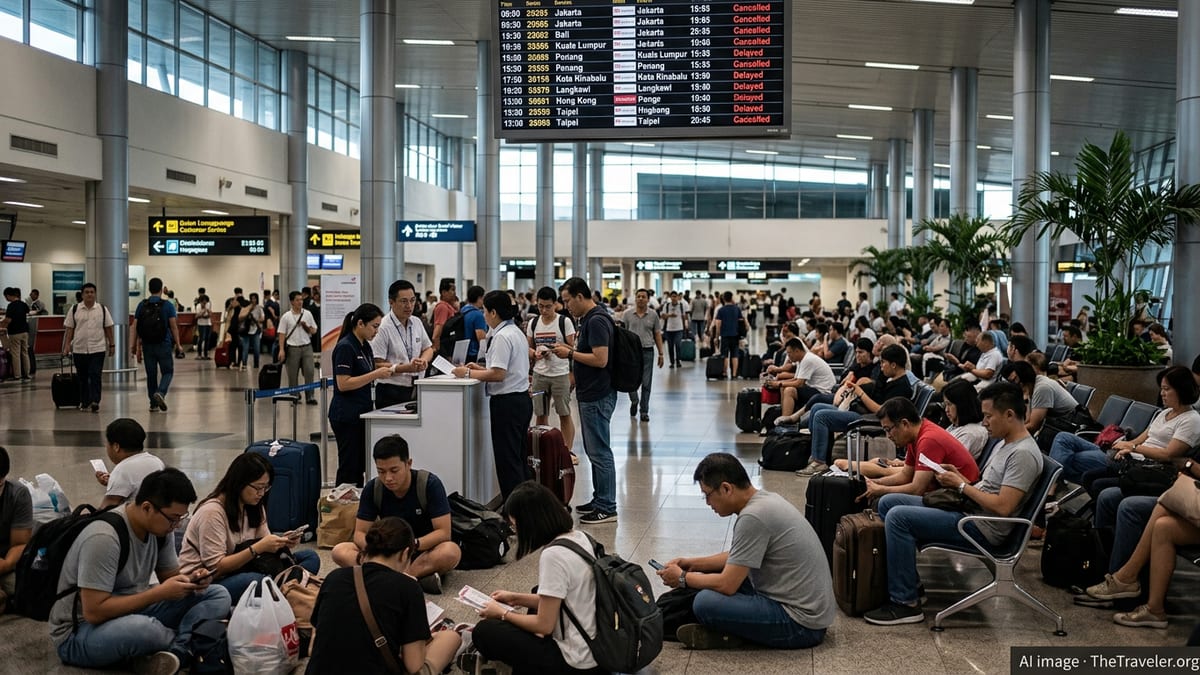
Wave of Cancellations Hits Key Middle East and Asian Hubs
Publicly available operational data and regional media coverage indicate that at least 534 flights have been canceled and around 5,351 delayed in recent days across major hubs in the Middle East and Asia, including Riyadh, Jakarta, Kuala Lumpur and Guangzhou. The disruptions are spread across full-service and low-cost carriers and are concentrated on busy regional and long haul corridors linking the Gulf, Southeast Asia, South Asia and East Asia.
Airports in Saudi Arabia have been among the most affected, with Riyadh’s King Khalid International Airport experiencing rolling schedule changes as airlines adjust to airspace constraints and shifting demand patterns. Saudia and other regional carriers have been trimming and retiming services on routes to Kuwait, Malaysia, Indonesia and China, while some services through Riyadh, Jeddah and Dammam have been periodically suspended or reduced.
In Southeast Asia, Jakarta’s Soekarno Hatta and Kuala Lumpur International Airport have seen clusters of cancellations on short haul and medium haul services. Indonesia’s domestic and regional network has been under particular strain, with operators having to merge frequencies, consolidate lightly booked flights and reroute traffic via alternative hubs to maintain basic connectivity.
China’s southern gateway of Guangzhou is also part of the disruption map, with regional schedules into Southeast Asia and the Gulf repeatedly adjusted. Capacity between Guangzhou and Kuala Lumpur, Jakarta and Riyadh has been especially volatile, contributing to rolling knock-on delays as aircraft and crews end up out of position for subsequent rotations.
Akasa, Saudia, ANA, UTair and Others Face Network Pressures
The current wave of irregular operations is hitting a wide spectrum of airlines, from fast growing budget carriers to long established national airlines. Indian low cost airline Akasa, which has been expanding into Gulf markets including Saudi Arabia, is one of the operators facing schedule pressure around Riyadh services, where even minor disruptions can cascade through tightly timed aircraft rotations serving Indian metros.
Saudia has been managing a complex matrix of operational constraints after earlier schedule suspensions on a number of regional routes. Published travel updates and airline advisories show that some services linking Saudi Arabia with destinations in Kuwait and other Gulf states have been subject to cancellations or limited frequencies, while flights into Southeast Asian hubs such as Jakarta and Kuala Lumpur have periodically been restructured or reduced.
Japanese carrier ANA is also present in the disruption picture through its wider Northeast Asia to Southeast Asia and Middle East network. Even when flights operate, upstream delays in Asian hubs such as Guangzhou or Southeast Asian cities can push departure and arrival times off schedule, particularly on multi leg itineraries that combine ANA services with partners or regional feeders.
Russian carrier UTair and regional Asian operators such as Kam Air have been contending with the same underlying challenges of congested airspace, evolving geopolitical restrictions and volatile demand. Networks that depend on overflight permissions or on connections through Riyadh, Kuala Lumpur or Guangzhou are particularly vulnerable, so a single cancellation can force airlines to rebook passengers onto already crowded alternatives or to hold aircraft until viable routings open up.
Geopolitics, Weather and Capacity Shifts Drive Disruptions
The pattern of cancellations and delays is linked to a combination of geopolitical tension, episodic adverse weather and structural capacity shifts. In the Middle East, changing airspace access over and around conflict zones has periodically forced airlines to reroute or trim services, adding flight time and cost and reducing operational flexibility for carriers serving Riyadh and other Saudi gateways, as well as Kuwait City.
In parts of East and Southeast Asia, seasonal storms and tropical systems have complicated operations into and out of major hubs. Weather related schedule changes at Guangzhou and other Chinese airports have led to late inbound aircraft arriving in Jakarta and Kuala Lumpur, in turn pushing departure times back and contributing to the high tally of delayed flights recorded across Asia in recent days.
At the same time, airlines in China, Southeast Asia and the Gulf have been rebalancing capacity in response to fuel prices and shifting demand. Recent schedule filings for Chinese carriers show meaningful reductions on several Southeast Asia routes, including flights between Guangzhou and Kuala Lumpur, which have been cut or consolidated over portions of the season. These structural adjustments reduce spare capacity in the system, making it harder for airlines to absorb sudden shocks such as airspace closures or storms.
Analysts tracking on time performance data note that many Asian airlines have been operating with slim schedule buffers as they rebuild networks following earlier downturns. When carriers operate near the limits of aircraft and crew utilization, even small disruptions at one hub can ripple quickly to others, which helps explain the wide geographic spread of the 534 cancellations and thousands of delays.
Passengers Face Missed Connections and Higher Travel Costs
For travelers, the most visible consequences of the current disruption wave are missed connections, enforced overnight stays and rising travel costs. Reports from passenger forums and local media highlight cases of travelers transiting Riyadh or Kuala Lumpur who have had long haul connections into Asia rescheduled at short notice, forcing them to rebook at higher fares or accept extended layovers.
At Jakarta and Kuala Lumpur, where low cost carriers play a major role in regional connectivity, cancellations have left some passengers with limited same day alternatives on key routes such as Indonesia to Malaysia or onward links to India and the Gulf. With school holidays and pilgrimage travel keeping load factors relatively high, spare seats on remaining flights are often scarce, and last minute walk up fares can be substantially higher than original tickets.
Travel industry observers note that some airlines are offering rebooking options or vouchers in line with their standard disruption policies, but the degree of flexibility varies widely between carriers. Passengers flying on separate tickets or via complex itineraries that involve airlines such as Akasa, Saudia and ANA on different legs are reporting particular difficulty securing smooth alternative routings when one segment is canceled or heavily delayed.
Consumer advocates in several markets are reminding travelers that compensation or refund rights depend on jurisdiction, ticket type and carrier policy. For example, protections for flights departing from the European Union differ significantly from those for services entirely within Asia or the Middle East, and many of the disrupted routes linking Riyadh, Jakarta, Kuala Lumpur and Guangzhou fall outside the scope of the most generous regulatory regimes.
What Travelers Can Do as Disruptions Continue
With cancellations and delays still elevated across several Asian and Middle Eastern hubs, publicly available guidance from airlines and airports emphasizes active trip management. Travelers booked on services touching Riyadh, Jakarta, Kuala Lumpur, Guangzhou or Kuwait City are being urged in published notices and travel advisories to monitor flight status closely in the 24 to 48 hours before departure and again on the day of travel.
Checking airline apps and airport information screens frequently, keeping contact details current in booking profiles and enabling notifications can provide early warning of schedule changes. Travel agents and corporate travel managers are also advising customers to build additional connection time into itineraries that rely on multiple carriers or that require transfers through disruption prone hubs.
Where possible, specialists recommend favoring through tickets on a single carrier or alliance, which typically simplifies rebooking if a flight is canceled. Passengers connecting between airlines such as Akasa, Saudia and ANA on separate tickets may find that each carrier treats disruption independently, limiting automatic protection and increasing out of pocket costs if plans go awry.
Given the scale of recent disruptions, some travel planners suggest that passengers with non essential trips consider flexible dates or alternative routings that bypass the most affected hubs in the short term. While this may mean longer journeys or slightly higher base fares, it can reduce the likelihood of being caught up in the cascading cancellations and delays that continue to challenge Asia’s recovering aviation network.