


More news on this day
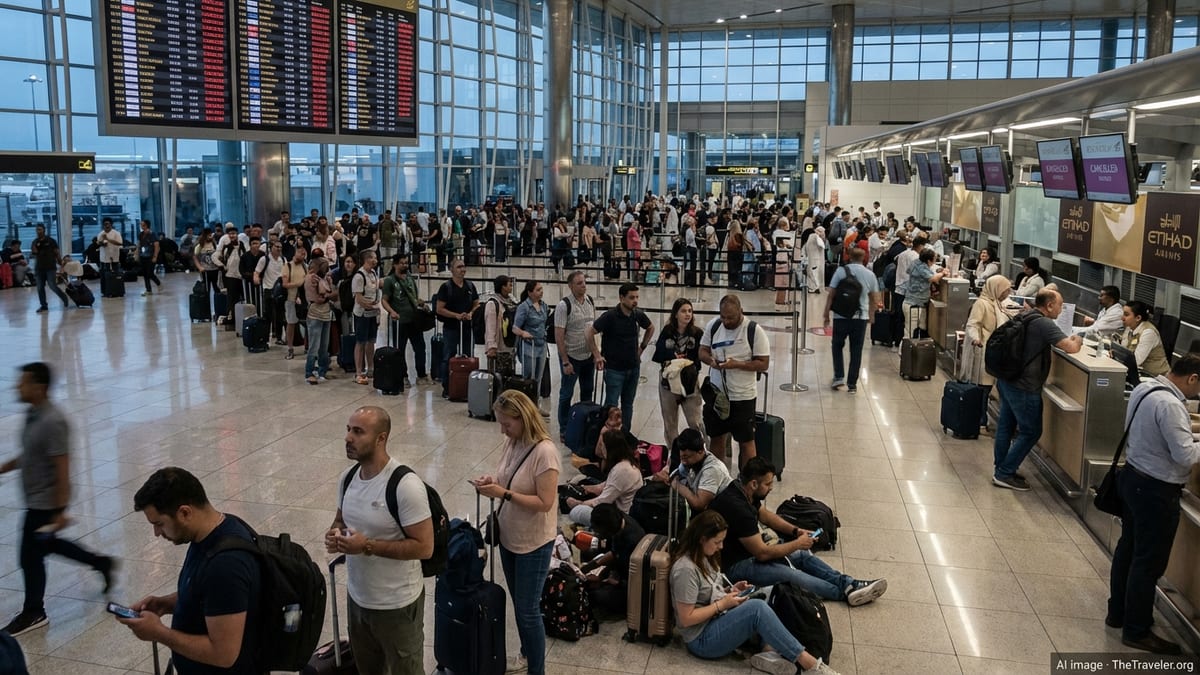
Hundreds of travelers have been left stranded across the United Arab Emirates as widespread disruption at Dubai, Abu Dhabi and Sharjah airports triggers the cancellation of 21 flights and delays to more than 630 services, affecting operations at Emirates, Etihad, FlyDubai, Air Arabia and several international carriers.
Get the latest news straight to your inbox!
Major Gulf Hubs Grapple With Cancellations and Long Delays
Dubai International, Abu Dhabi’s Zayed International and Sharjah International Airport have all reported extensive schedule disruption, with operational data and local media coverage pointing to a sharp spike in same day cancellations and rolling delays. Across the three hubs, 21 flights were canceled outright while more than 630 departures and arrivals faced significant delays, leaving terminals crowded and transit passengers facing missed connections.
The disruption is concentrated on regional and medium haul routes, but knock on effects are being felt as far as Europe and Asia as aircraft and crews become out of position. Publicly available flight tracking boards for the UAE’s primary airports show clusters of delayed services to destinations in India, Saudi Arabia, Bahrain and other Gulf states, compounding an already strained summer travel period.
Dubai International, consistently ranked among the world’s busiest hubs by international passenger traffic, is particularly exposed to cascading schedule problems. Even a relatively small proportion of cancellations in a single operating day can generate hours of delays across banked departure waves, especially for hub carriers that rely on tight connection windows.
Sharjah and Abu Dhabi, while smaller than Dubai, are also key transfer points for regional travelers. Their simultaneous disruption limits rerouting options within the UAE, making it more difficult for airlines to move affected passengers between nearby airports to keep trips on track.
Emirates, Etihad, FlyDubai and Air Arabia Among Affected Carriers
The latest operational updates show that the impact is spread across the UAE’s main homegrown airlines along with a roster of foreign carriers. Emirates and budget sister airline FlyDubai have recorded multiple delayed departures at Dubai International, particularly on high frequency routes to the Indian subcontinent and the wider Gulf region.
At Abu Dhabi’s Zayed International, Etihad Airways has adjusted departure times on several services after inbound flights arrived late, while at least one regional rotation was canceled following a disrupted outbound leg. Etihad has also cautioned passengers to check the status of their flights before leaving for the airport, as schedules remain fluid.
Sharjah based Air Arabia, which operates an extensive low cost network into the Middle East, North Africa and South Asia, has also seen selected cancellations and delays. The carrier had already been navigating a period of reroutings and schedule shifts on certain regional routes, and the latest operational issues are adding to a complex summer for budget travelers using Sharjah as a connection point.
In addition to the UAE headquartered airlines, regional and global carriers serving Dubai, Abu Dhabi and Sharjah have adjusted their operations. Some have temporarily consolidated frequencies or retimed flights in and out of the UAE to accommodate airspace restrictions and congestion, adding further variability for passengers booked on connecting itineraries.
Regional Airspace Constraints Amplify Airport Disruption
The wave of delays and cancellations across the UAE is unfolding against a backdrop of wider Gulf airspace constraints and security related adjustments. Over recent months, several airlines across Europe and Asia have announced temporary suspensions or reductions on routes transiting Gulf airspace, while others have adopted longer routings to avoid sensitive areas, lengthening flight times and narrowing aircraft availability.
Published aviation and travel advisories highlight that airspace closures and restrictions in parts of the wider region continue to reverberate through airline scheduling. With certain overflight corridors constrained, carriers have reduced schedule flexibility, making it more difficult to recover when disruptions occur at major hubs such as Dubai and Abu Dhabi.
Industry analyses of the ongoing situation note that even when UAE airports remain technically open and operational, the ripple effects of inbound delays caused by longer routings or upstream disruptions can quickly crowd departure banks. Aircraft arriving out of slot push back subsequent departures, while crew duty time limitations can force last minute cancellations when delays accumulate.
Travel data from earlier phases of the regional crisis shows that prolonged airspace challenges can lead to thousands of cancellations across Gulf airports in a matter of days, stranding passengers both in transit and at origin points. The present wave of 21 cancellations and more than 630 delays across the UAE is being viewed as part of this broader pattern of instability affecting Middle East aviation in 2026.
Passengers Face Long Queues, Missed Connections and Rebookings
For travelers on the ground, the most visible effects of the disruption are long queues at check in counters, transfer desks and airline service points. With multiple departures from the same airline banks delayed, ground staff are juggling rebooking requests, missed onward connections and accommodation needs for passengers facing extended layovers.
Reports from passengers transiting Dubai and Abu Dhabi describe hours long waits for updated flight information, particularly for those on multi segment itineraries routed through the UAE to Europe, North America or East Asia. In some cases, connecting flights departed before delayed inbound services could arrive, forcing travelers to be rebooked onto later departures or alternative routing through other hubs.
Families and budget conscious travelers using low cost carriers are among those hardest hit, as alternative options on the same day can be limited during the busy summer period. With many flights already operating near full capacity, securing seats on later services can require extended stays in transit hotels or overnight in terminal waiting areas.
Passenger advocacy organizations and travel industry commentators are urging affected travelers to document out of pocket expenses and keep all receipts for potential reimbursement under airline policies or applicable consumer protection rules, while also emphasizing the importance of monitoring real time flight status and registering for airline notifications.
What Travelers Flying From or Through the UAE Should Do Now
Travel experts and publicly available airline guidance suggest that anyone scheduled to fly into, out of, or through Dubai, Abu Dhabi or Sharjah in the coming days should treat their plans as subject to change. The combination of recent cancellations, extended delays and ongoing regional airspace pressures means that schedules may be adjusted at short notice.
Passengers are being advised to check their flight status repeatedly on the day of travel, rather than relying solely on the booking confirmation issued at the time of purchase. Many airlines serving the UAE offer mobile apps, text alerts and email notifications that can provide faster updates than airport display boards when gate assignments or departure times change.
Travel planners also recommend allowing longer connection windows when booking itineraries that route through UAE hubs, particularly for journeys involving separate tickets on different carriers. Where possible, holding all segments on a single ticket can make it easier to secure protected rebooking options if delays lead to missed connections.
With peak summer traffic continuing and regional conditions remaining fluid, industry observers expect intermittent disruption at UAE airports to persist. For now, hundreds of travelers remain stranded or significantly delayed as Dubai, Abu Dhabi and Sharjah work with airlines including Emirates, Etihad, FlyDubai, Air Arabia and others to gradually normalize operations after a challenging stretch of cancellations and schedule upheaval.