


More news on this day
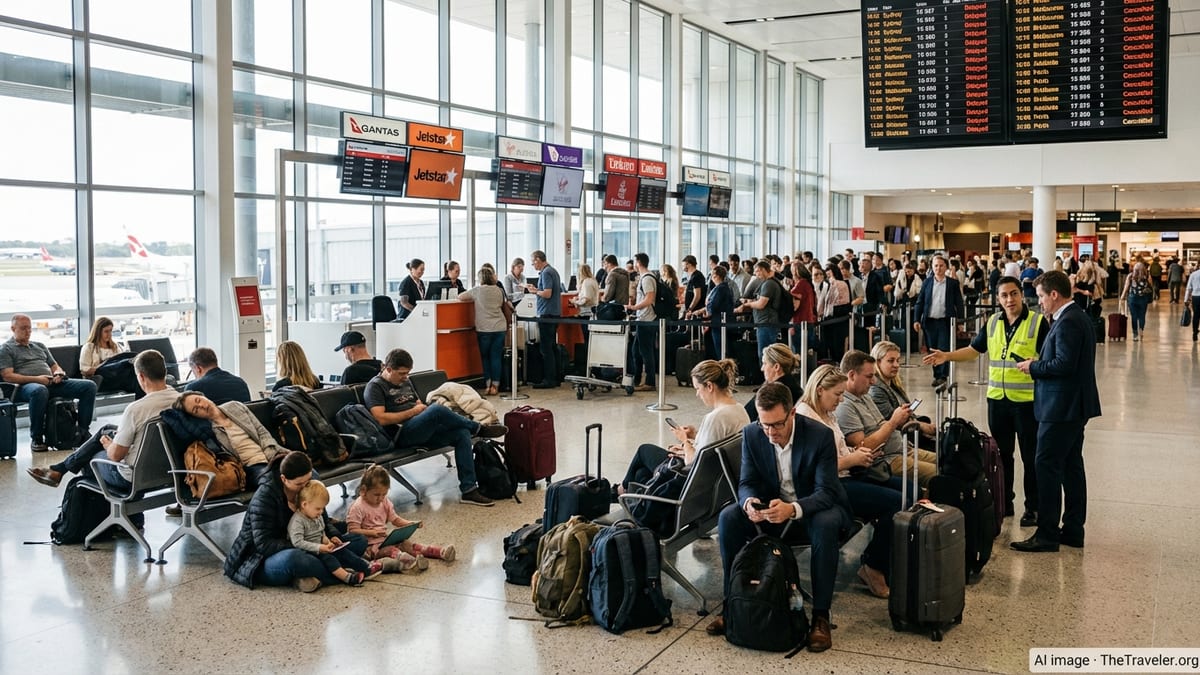
Hundreds of passengers have faced significant disruption across Australia’s east coast after a wave of delays and cancellations hit services at Sydney, Melbourne and Brisbane airports, affecting major carriers including Qantas and Virgin Australia and pushing the daily tally to an estimated 529 delayed flights and at least 15 cancellations.
Get the latest news straight to your inbox!
Severe Operational Disruptions Across Three Major Hubs
The latest wave of disruption unfolded during one of the busiest mid‑week travel periods, with flight-tracking data and media coverage indicating extensive knock-on delays across core domestic trunk routes linking Sydney, Melbourne and Brisbane. The combined impact left departure boards heavily backlogged and forced many services to depart significantly behind schedule.
Publicly available aviation statistics show that the Sydney–Melbourne corridor alone routinely handles hundreds of flights a month and is one of the country’s highest-frequency domestic routes. When weather, congestion or technical issues ripple through this network, they can quickly translate into widespread schedule blowouts across multiple airports on the same day.
Initial assessments suggest that more than 500 services experienced some form of delay, ranging from short holds at the gate to extended waits exceeding an hour. At least 15 flights were cancelled outright, removing capacity from already crowded routes and increasing pressure on remaining services.
Qantas, Virgin Australia and Other Carriers Under Strain
The disruption has been felt across several airlines, with Qantas and Virgin Australia shouldering a large share due to their dominant presence on the Sydney–Melbourne and Sydney–Brisbane routes. These airlines operate high-frequency shuttles between the three cities, meaning even minor schedule changes can cascade quickly when aircraft and crew are rotated throughout the day.
Data from recent on-time performance reports for Australian domestic services highlights that both Qantas and Virgin Australia have been navigating a challenging operational environment, with weather, air traffic control constraints and resourcing pressures contributing to periodic spikes in delays. The latest event appears to reflect a similar pattern, where multiple stress factors converged on the same day and overwhelmed buffer times built into timetables.
Low-cost and regional operators that share terminal and runway capacity with the largest carriers have also been caught up in the congestion, as arrival and departure slots were pushed back to accommodate late-running aircraft and manage safety margins. Passengers on connecting itineraries across different airlines were among the most vulnerable to missed flights and extended overnight stays.
Knock-on Effects for Travellers and Airport Operations
For travellers, the impact extended far beyond the published statistics. Reports from passengers describe long queues at check‑in and security, crowded gate areas and difficulty accessing up‑to‑date information as schedules were revised repeatedly throughout the day. Families, business travellers and tourists were all affected, with many facing disrupted plans at the start or end of holidays, or missing time‑sensitive meetings.
Airport operations at Sydney, Melbourne and Brisbane were also placed under strain. Ground handling teams were required to turn around aircraft at short notice, while baggage systems and catering services contended with compressed turnaround times and sudden gate changes. Terminal staff worked to reallocate passengers onto later flights where seats were available, a process that can become increasingly complex once multiple services on the same route have been pushed back or cancelled.
Accommodation near major airports reportedly saw increased demand as travellers who missed last departures sought last‑minute rooms. In some cases, standard airline disruption policies allowed for hotel and meal support when delays or cancellations were within the carrier’s control, although weather‑related and air traffic control issues typically fall outside those obligations.
Weather, Congestion and a Fragile Domestic Network
Australia’s east‑coast aviation system has long been recognised as both one of the busiest and one of the most sensitive to disruption. Sydney’s tightly regulated operating window, combined with frequent weather variations such as high winds, low cloud and storms, can trigger immediate ground delays. When arrival rates are reduced, airlines are often forced to hold aircraft on the ground at origin airports or in airborne holding patterns, leading to the sort of multi‑airport disruption seen in this latest episode.
Industry reporting in recent months has drawn attention to the cumulative impact of recurring delays across the domestic network, particularly on high‑demand routes such as Sydney–Melbourne and Sydney–Brisbane. Even on days without major weather events, small schedule slips across early flights can build into substantial delays by late afternoon and evening, leaving last‑wave departures especially vulnerable.
Analysts note that domestic carriers have adjusted capacity and schedules several times over the past year in response to demand changes, staffing constraints and fleet renewal plans. While these moves have improved efficiency on many routes, they can also leave less spare capacity in the system when multiple flights are disrupted at once, making it more difficult to recover from a day of intensive delays.
What Travellers Can Expect in the Coming Days
Although operations at Sydney, Melbourne and Brisbane airports typically stabilise within a day once the underlying trigger for disruption eases, the scale of the latest delays and cancellations means some residual knock‑on effects are likely. Aircraft and crew may still be out of their usual positions, and some early‑morning services can depart with altered timings as airlines work to reset schedules.
Travel industry guidance consistently advises passengers on major Australian domestic routes to monitor flight status closely in the 24 hours before departure, particularly during periods of unsettled weather or peak‑season congestion. Reconfirming details through airline apps or airport information channels can help travellers adjust plans more quickly if further timetable changes occur.
Consumer advocacy groups continue to encourage passengers affected by significant delays or cancellations to review the disruption and compensation policies published by their carriers, as entitlements can differ depending on whether an event is considered within the airline’s control. With high‑frequency routes between Sydney, Melbourne and Brisbane carrying large numbers of people every day, the latest episode of disruption is likely to renew debate about resilience and accountability in Australia’s domestic aviation system.