


More news on this day
A 79-year-old British passenger has died after being taken ill on a cruise ship sailing near the Greek island of Crete, according to regional media coverage and cruise-industry reports.
Get the latest news straight to your inbox!
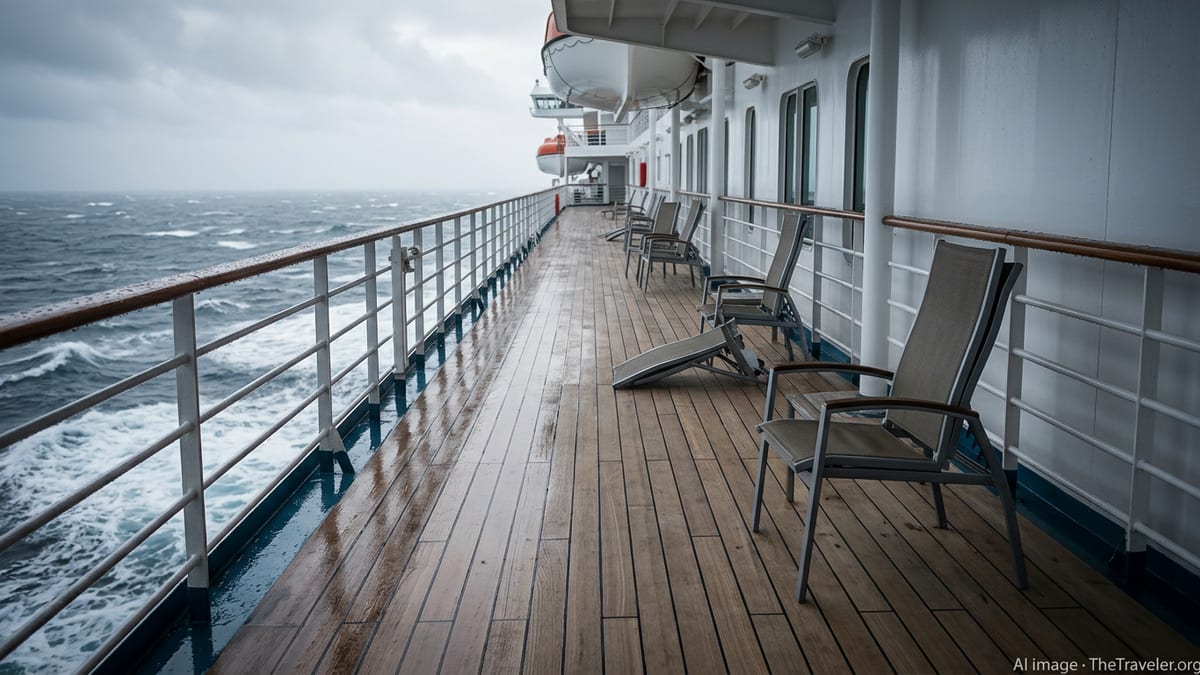
Medical emergency unfolds off the Cretan coast
Publicly available reports from Greek and international outlets indicate that the traveler, described as a British man in his late seventies, lost consciousness while on deck during a Mediterranean cruise itinerary that brought the vessel close to Crete. Initial accounts state that crew members and onboard medical staff responded to the incident and attempted to stabilize him.
The ship is reported to have altered course toward Crete so that the passenger could be transferred ashore for hospital treatment. Coverage in Greek media states that he was disembarked and taken to a local medical facility, where his death was later confirmed.
Local port and coastguard services have opened an inquiry into the circumstances surrounding the death, a standard procedure in Greece when a serious medical incident or fatality occurs at sea. Early indications from regional reporting suggest that no criminal element is currently suspected, although formal conclusions will depend on medical examinations.
Details such as the cruise line, vessel name, and precise itinerary have not been widely released in order to protect the privacy of the deceased and his family. Specialist cruise news publications note that operators and authorities often withhold identifying information in cases where there is no suggestion of foul play.
Inquiry focuses on cause of death and shipboard response
According to Greek-language news coverage, the local port authority in Chania has initiated standard investigative steps, including gathering documentation from the ship and collecting statements about the sequence of events leading up to the medical emergency. A post-mortem examination has reportedly been ordered to clarify the cause of death.
Such examinations are routine when a foreign national dies on a vessel in Greek waters. The findings typically help determine whether the fatality was linked to pre-existing health conditions, an acute medical event, or external factors such as a fall or environmental stress. As of the latest reporting, there is no indication that the death has been classified as suspicious.
Cruise-industry observers point out that large ships are equipped with medical centers capable of handling many urgent situations, but outcomes can depend on how quickly a passenger’s condition is recognized and treated. In this case, the decision to divert toward Crete and arrange an emergency disembarkation suggests that the incident was considered serious from an early stage.
International consular procedures are expected to follow, including notification of relatives and coordination over the repatriation of the passenger’s remains. Public information does not yet clarify whether the traveler was accompanied by family or friends on the voyage.
Recent cruise deaths in Greece highlight safety and medical protocols
The incident off Crete comes shortly after other reported deaths of British nationals on cruises in Greek waters, including a separate case involving a passenger who died on a ship docked in Corfu earlier this month. Taken together, these events have drawn attention to how cruise operators and Mediterranean ports manage serious medical situations at sea.
Specialist maritime publications and mainstream outlets stress that, in the context of the millions of people who cruise annually in the region, fatalities remain rare and are often linked to age-related health issues. Nonetheless, each case is examined by local authorities to assess whether additional safety or medical measures might have influenced the outcome.
Advocacy groups and passenger-rights organizations have long called for greater transparency around serious incidents on cruise ships, including clear public data on deaths, medical evacuations, and emergency responses. While operators publish general safety statistics, specific cases are often only documented in local media or industry-focused reporting.
Travel analysts note that Greece, with its dense network of islands and busy summer shipping lanes, has developed extensive protocols for receiving emergency diversions, whether for medical evacuations from cruise ships or for rescues involving smaller leisure craft. These procedures, which involve coordination between ships, port services, and hospitals, are being applied once again in the Crete case.
Context: health risks and precautions for older cruise passengers
The death of an older British passenger near Crete also underscores the health considerations associated with cruise travel for seniors. Medical experts who comment on travel-related risks generally emphasize that age alone does not preclude safe cruising, but they highlight the importance of recent medical check-ups, accurate disclosure of conditions, and adherence to prescribed medications during a voyage.
Industry guidance commonly encourages passengers with heart or respiratory conditions to discuss cruise plans with their doctors, particularly when itineraries involve hot climates, extensive walking during shore excursions, or long travel days before and after the sailing. Ships provide climate-controlled environments, but sudden temperature shifts between air-conditioned interiors and outdoor decks, combined with the excitement of activities, can place additional stress on vulnerable travelers.
Travel-insurance policies can also play a key role when serious illness or death occurs aboard a ship. Comprehensive coverage may support medical care ashore, potential medical repatriation, and arrangements for family members who need to alter their travel plans in the event of an emergency. Consumer advisers often recommend that older travelers review policy exclusions related to pre-existing conditions before booking.
The Greek Mediterranean remains one of Europe’s most popular cruise regions for British holidaymakers, particularly during the peak season from late spring through early autumn. While this latest case near Crete is being treated as an individual tragedy, it is also likely to contribute to ongoing discussions about how cruise lines communicate health risks and support guests with complex medical needs.
Cruise sector balances growth with scrutiny over incidents at sea
The broader cruise market in the Eastern Mediterranean has continued to expand, with major lines increasing calls to Greek islands and smaller operators adding boutique itineraries focused on culture and gastronomy. This growth has brought renewed scrutiny of how the sector manages everything from onboard outbreaks of illness to isolated medical emergencies and deaths.
Recent seasons have seen cruise-industry associations publish updated guidelines on emergency preparedness, including staff training, drills, and coordination with port authorities in destination countries. Although such documents are largely technical, they aim to standardize procedures across different operators so that crew responses are predictable and practiced when lives are at stake.
Analysts suggest that the death of a British passenger near Crete will likely feature in ongoing safety reviews, even if it ultimately proves to be the result of natural causes. Each serious onboard incident tends to be examined within the industry for potential lessons, whether in relation to early symptom recognition, availability of specialist equipment, or decision-making about when to divert a ship to the nearest port.
For travelers and their families, the case serves as a reminder that while modern cruise ships are designed as floating resorts, they remain complex maritime environments where medical events can unfold far from land-based hospitals. As inquiries proceed in Crete, the focus among both authorities and operators is expected to remain on understanding what happened and on reinforcing systems intended to protect passengers on future voyages.