

More news on this day
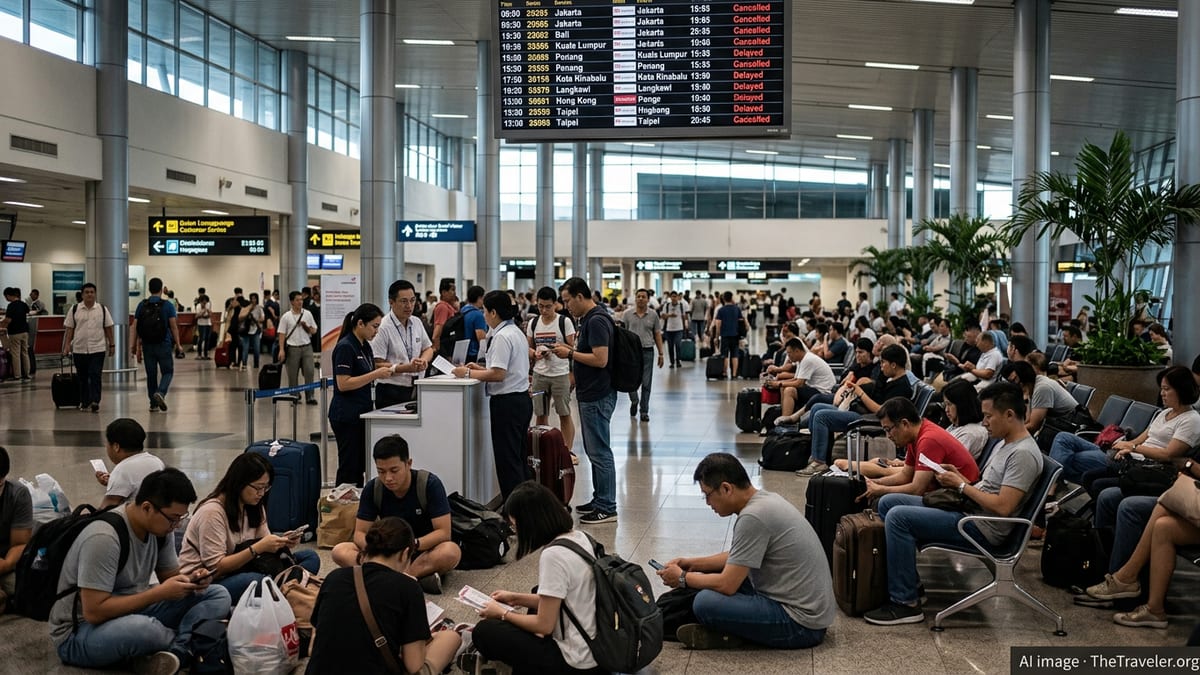
Travelers moving through some of Asia’s busiest air corridors faced widespread disruption on June 29 as six regional carriers collectively canceled 90 flights and delayed nearly 800 more, stranding passengers across China, Indonesia, Japan and neighboring markets.
Get the latest news straight to your inbox!
Network Shock Across Key Asian Gateways
Publicly available flight monitoring data and industry coverage indicate that China Eastern, Batik Air, Hainan Airlines, Air China, Japan Air Commuter and China Express together recorded 90 cancellations and 796 delays on June 29. The disruptions were concentrated across domestic and regional routes in China, Indonesia and Japan, but also affected onward travel into other parts of Asia.
Beijing, Jakarta and Kagoshima emerged among the hardest hit airports, with services either grounded outright or pushed back by several hours. Reports describe long queues at check in and transfer desks as travelers attempted to rebook missed connections or secure overnight accommodation while waiting for new departure times.
The disruption added fresh strain to aviation networks that have already been under pressure in June, following earlier spikes in delays and cancellations across Chinese hubs such as Guangzhou, Shenzhen and Beijing. Analysts note that, taken together, the latest figures underscore how quickly operational challenges can cascade across multiple airlines and airports in the region.
Regional travel platforms tracking on time performance have highlighted that even a relatively modest number of cancellations can trigger a far larger volume of knock on delays, as aircraft and crew are displaced from their planned rotations. This dynamic appears to have been a key factor in the imbalance between the number of outright cancellations and the much higher number of delayed departures.
Beijing, Jakarta and Kagoshima Bear the Brunt
In China, publicly available information shows that Beijing’s airports once again shouldered heavy disruption, reinforcing a pattern seen in mid June when more than two thousand departures were reported affected nationwide over a single day. On June 29, flights operated by China Eastern, Air China, Hainan Airlines and China Express saw a mix of cancellations and protracted delays into and out of the capital.
Jakarta’s Soekarno Hatta International Airport also experienced major schedule irregularities, particularly on services operated by Batik Air and China Eastern on regional routes linking Indonesia with Chinese hubs. Flight tracking summaries for late June already showed mounting delays on key Jakarta Shanghai and Jakarta Beijing rotations, and the latest wave of schedule changes appears to have deepened that pattern.
In Japan, Kagoshima in the country’s southwest reported acute disruption relative to its usual traffic levels. Japan Air Commuter, which plays a critical role in connecting remote islands and secondary cities with regional hubs, registered delays that rippled outward across its network. For passengers relying on tight same day transfers, even moderate schedule shifts at Kagoshima translated into missed onward connections to larger airports such as Osaka and Tokyo.
The geographic spread of the disruption meant that knock on effects were felt well beyond the three focal airports. Reports from regional media and travel advisories point to secondary impacts on traffic flows into Singapore, Kuala Lumpur and other Southeast Asian gateways, as aircraft and crew rotations were adjusted to absorb the irregular operations.
Lingering Operational Strain After a Turbulent June
The June 29 disruptions did not arise in isolation. Passenger rights organizations and aviation data providers have been documenting an elevated level of irregular operations across Asia throughout the month, including earlier clusters of more than one thousand delays and cancellations in China and across wider regional networks.
Several factors appear to be converging. Airlines are still rebuilding schedules amid shifting demand patterns, constrained aircraft availability and tight crew rosters. In China, where domestic capacity has expanded rapidly, even minor disruptions can quickly amplify across dense short haul networks connecting multiple hubs such as Beijing, Shanghai and Guangzhou.
Weather has also played a role at various points in June, with thunderstorms and seasonal conditions periodically affecting departures from major coastal airports. However, passenger advocacy platforms note that many of the month’s disruptions have been categorized as operational issues rather than purely weather related, which can have implications for what forms of redress may be available to travelers under different jurisdictions.
The combination of operational and weather pressures has left airlines juggling recovery flights, aircraft substitutions and last minute schedule changes. When multiple carriers experience such challenges simultaneously, as occurred on June 29, the result is a region wide pattern of late departures and missed connections that can take days to fully unwind.
Passenger Rights and What Stranded Travelers Can Do
The latest wave of disruptions has renewed attention on what options are available to passengers when flights are delayed or canceled. Aviation consumer resources and legal guidance generally indicate that travelers may be entitled to care, rerouting or refunds in many situations, depending on the origin and destination of the ticket, the airline involved and the underlying cause of the disruption.
For routes that touch jurisdictions with strong passenger protection rules, such as the European Union’s EC 261 framework, eligible travelers on affected flights may be able to claim financial compensation when significant delays or cancellations are deemed within the airline’s control. On other routes, airline specific conditions of carriage typically outline obligations related to meals, accommodation and rebooking during extended disruptions.
Consumer advocates recommend that passengers retain boarding passes, booking confirmations and any written notifications from airlines that describe the reason for a delay or cancellation. These documents can be important later when submitting complaints or claims, especially in complex cases involving multiple carriers or codeshare itineraries.
Travelers are also being encouraged to check real time flight status information directly with their carrier and to monitor airport departure boards closely, as recovery schedules can change on short notice once airlines begin repositioning aircraft and crew. Travel insurance policies, where purchased, may provide an additional avenue for reimbursement of out of pocket expenses such as hotels and meals, subject to policy terms.
Outlook for Regional Air Travel
Industry observers suggest that Asian air travel demand remains robust heading into the peak summer period, which may limit airlines’ flexibility to absorb additional shocks without visible passenger impact. High aircraft utilization and tight connection windows mean that any fresh wave of disruptions could again echo across multiple countries and carriers.
Some carriers have signaled a willingness to fine tune schedules and add operational buffers after recent events at Shanghai, Guangzhou and now Beijing, Jakarta and Kagoshima highlighted pain points in their networks. Adjustments to turnaround times, crew rotations and spare aircraft allocation can improve resilience, although such measures may take time to fully implement.
For now, passenger advocacy organizations and travel analysts alike are advising travelers bound for major Asian hubs to build extra time into itineraries, especially when planning self arranged connections or trips that combine tickets on different airlines. Early check in, flexible booking options and awareness of passenger rights are likely to remain key tools for navigating an increasingly busy and occasionally volatile regional aviation landscape.
With the June 29 figures underscoring how quickly conditions can deteriorate across multiple airlines at once, the latest disruptions serve as a reminder that Asia’s rapidly growing air networks remain vulnerable to sudden operational stress, even as they strive to meet surging demand.