


More news on this day
Asia’s aviation sector, long described as the engine of global air travel, is facing a sharp 2026 stress test as war-driven fuel shocks, capacity constraints and fragile finances converge just as demand peaks across the region.
Get the latest news straight to your inbox!
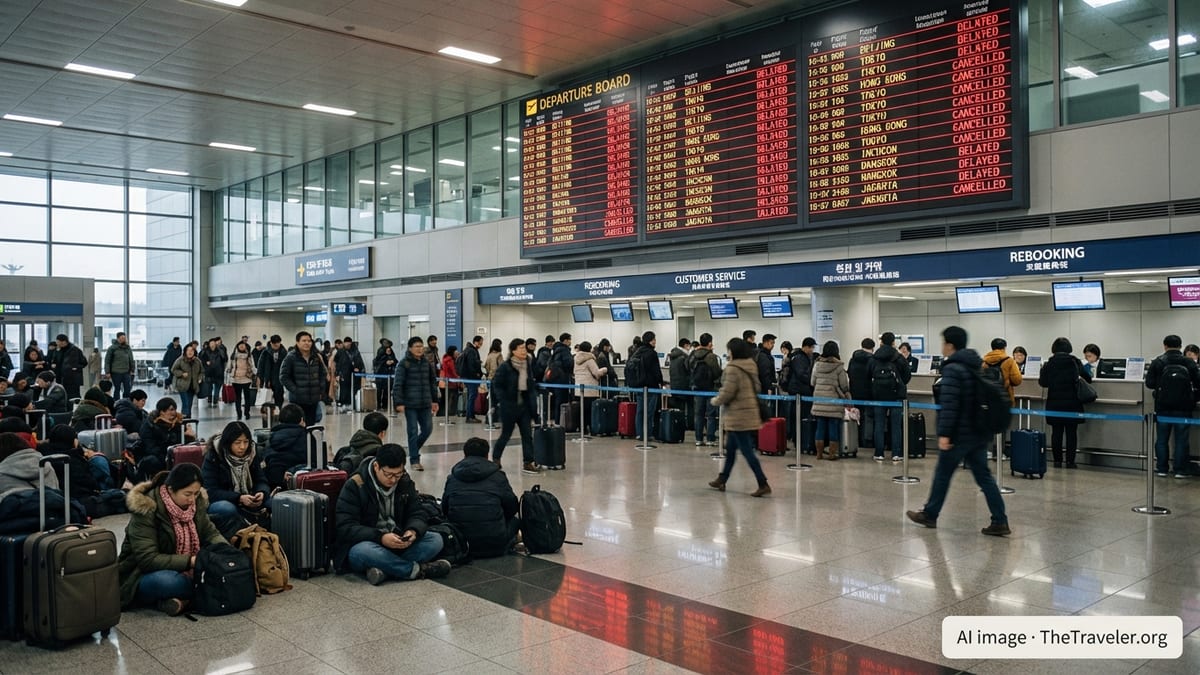
Fuel Shock Turns Jet Fuel into a Strategic Vulnerability
Energy market turmoil triggered by the 2026 Iran war has pushed jet fuel to the center of Asia’s aviation crisis. Refinery disruptions and a temporary blockade of the Strait of Hormuz have restricted flows of aviation fuel out of the Gulf, a vital supply source for Asian hubs. Industry reports note that more than 150,000 international flights were cut worldwide between March and June 2026 compared with pre conflict schedules, with Asian carriers heavily represented among the cancellations.
Publicly available analysis indicates that airlines with high exposure to Asia Pacific and Middle East transit routes are carrying the brunt of the shock as fuel prices surge and physical supply tightens. Consultancy assessments describe a steep rise in war risk insurance premiums on widebody and narrowbody aircraft operating near the conflict area, compounding the cost pressure created by higher fuel bills.
Global figures from airline industry bodies show fuel is now forecast to account for more than 31 percent of airline operating expenses in 2026, up from about a quarter the previous year. This shift is particularly acute in Asia, where average fares were already rising and many low cost operators relied on high frequency, thin margin flying to secondary and tertiary cities.
In Southeast Asia, trade publications report that low cost carriers have responded by trimming roughly one fifth of services versus pre crisis plans, equating to several million fewer seats per month. Executives at major regional groups have publicly described fare increases as unavoidable and signaled that routes unable to cover elevated fuel costs will be pulled back, at least through the current peak season.
War, Airspace Closures and Rerouting Disrupt Asia–Europe Flows
The conflict in and around Iran has also upended the map for long haul flying between Asia and Europe. Safety bulletins from European regulators have advised airlines to avoid large sections of Middle Eastern airspace, including Iran, Iraq and parts of the Gulf, limiting options for carriers that once relied on direct, fuel efficient routing across the region.
Regional aviation media describe three remaining broad corridors for Europe Asia services: polar routes via Russian airspace, southern paths over the Caucasus and Central Asia, and more southerly tracks through the Middle East and Gulf. With Russian airspace still restricted for many Western airlines because of sanctions related to the war in Ukraine, the practical options for rerouting have narrowed further.
This combination of closures and diversions has immediate operational consequences. Flights are taking longer, burning more fuel per sector and tying up aircraft and crews for extended duty periods. Industry outlook papers warn that these factors are eroding already thin margins on long haul services that feed Asian hubs and connect them to European and transatlantic markets.
Analysts caution that if conflict related restrictions persist, some secondary city pairs linking Europe with South and Southeast Asia could become structurally uneconomic. That would force consolidation onto a smaller number of trunk routes and large hub airports, reducing point to point connectivity that has grown steadily over the past decade.
Demand Stays High as Capacity and Margins Come Under Pressure
The crisis has emerged against a backdrop of exceptional demand. Industry data for 2025 show Asia Pacific carriers posting the fastest international traffic growth globally, with double digit year on year increases and the highest regional load factors on record. Forecasts published in late 2025 and mid 2026 continued to describe Asia Pacific as the main engine of global air traffic growth, with passenger volumes still expected to expand faster than in Europe or North America.
At the same time, the very strength of that demand is exposing structural constraints. Airlines across the region are grappling with unreliable delivery schedules for new aircraft and spare engines, limited maintenance capacity and staffing bottlenecks. One industry association estimated that global cost increases linked to supply chain issues had already reached double digit billions of dollars before the latest fuel shock, leaving carriers with little buffer to absorb additional disruption.
Recent figures from the Association of Asia Pacific Airlines show that international passenger numbers in the region began to slip in May and June 2026 compared with a year earlier, marking the first sustained decline in traffic since the pandemic recovery. The association attributed the drop to capacity reductions and higher fares driven by surging fuel costs, even as the mid year travel peak approached.
Despite these setbacks, economic reports and airline order books suggest that long term growth expectations remain intact. Asia Pacific still accounts for more than one third of global passenger traffic, and multi year forecasts point to continued expansion in China, India, Vietnam and Indonesia. The immediate challenge for 2026 is therefore not demand, but the ability of carriers and infrastructure to accommodate it profitably.
Fragile Finances Across Key Asian Markets
The financial shock is most visible in markets where balance sheets were already stretched. In India, where rapid growth has been accompanied by frequent airline restructurings, recent coverage has highlighted mounting losses at full service flag carriers and liquidity strains at several budget operators. Industry participants there have called for tax relief on aviation turbine fuel and a review of airport charges as rising input costs hit a price sensitive customer base.
In Southeast Asia, the parent company of Thai AirAsia recently reported that it had prioritized yield and liquidity in the second quarter of 2026 in response to the global fuel crisis. The group emphasized that protecting cash flow had taken precedence over rapid capacity expansion, signaling a more defensive posture among carriers that had previously raced to rebuild networks after pandemic related shutdowns.
Across the wider region, research published by aviation consultancies and financial analysts points to net profit margins for Asia Pacific airlines remaining in the low single digits through 2026, even under relatively optimistic traffic scenarios. IATA’s latest profitability outlook indicates that the region’s carriers are expected to post net margins of around 2.3 percent in 2026, lower than those in North America and leaving limited room to absorb further fuel or financing shocks.
With war risk insurance premiums climbing and borrowing costs elevated, observers caution that weaker airlines could face renewed restructuring or consolidation pressures if current conditions persist into 2027. Governments, meanwhile, are seeking to balance consumer concerns over rising fares with the strategic importance of maintaining air connectivity for trade and tourism.
Travelers Face Higher Fares, Thinner Networks and Persistent Uncertainty
For travelers within and to Asia, the crisis is translating into higher prices, fewer options and more unpredictability. Regulatory statements in markets such as Taiwan show that fuel surcharges on international tickets have been increased, with short haul add ons now reaching tens of dollars per segment and long haul surcharges significantly higher.
Data from ticketing and distribution specialists indicate that average corporate airfares in Asia Pacific had already risen steadily since 2022 and are projected to climb further in 2026 as airlines seek to pass on fuel, insurance and financing costs. Business travel demand has remained relatively resilient so far, but travel management forecasts suggest that companies are reexamining trip volumes and routing choices in response to the latest price moves.
Leisure travelers across South and Southeast Asia are encountering more frequent schedule changes, particularly on cross border short haul routes that depend heavily on low cost carriers. Reports from regional tourism boards and trade media note that some secondary destinations have seen a noticeable fall in direct international services as airlines concentrate aircraft on the most profitable city pairs.
Industry outlooks stress that Asia’s aviation system remains fundamentally growth oriented, with thousands of new aircraft on order and long term traffic projections still pointing upward. Yet the events of 2026 have underscored how exposed that growth is to geopolitical shocks, energy market volatility and chronic supply constraints, raising questions about how resilient the region’s air links will be in the next global crisis.
Sources:
The Japan Times coverage of Asia’s air travel crisis and jet fuel squeeze
IATA 2025 passenger market performance and 2026 outlook
TTG Asia reporting on fuel shock and intra Asia travel
IATA financial outlook and regional profitability projections
S&P Global analysis of Asia Pacific traffic declines amid high fuel prices