


More news on this day
Asia’s aviation sector is entering the second half of 2026 under mounting strain, as conflict-driven route disruptions, surging fuel costs and pockets of safety concern collide with a cooling in travel demand across the region.
Get the latest news straight to your inbox!
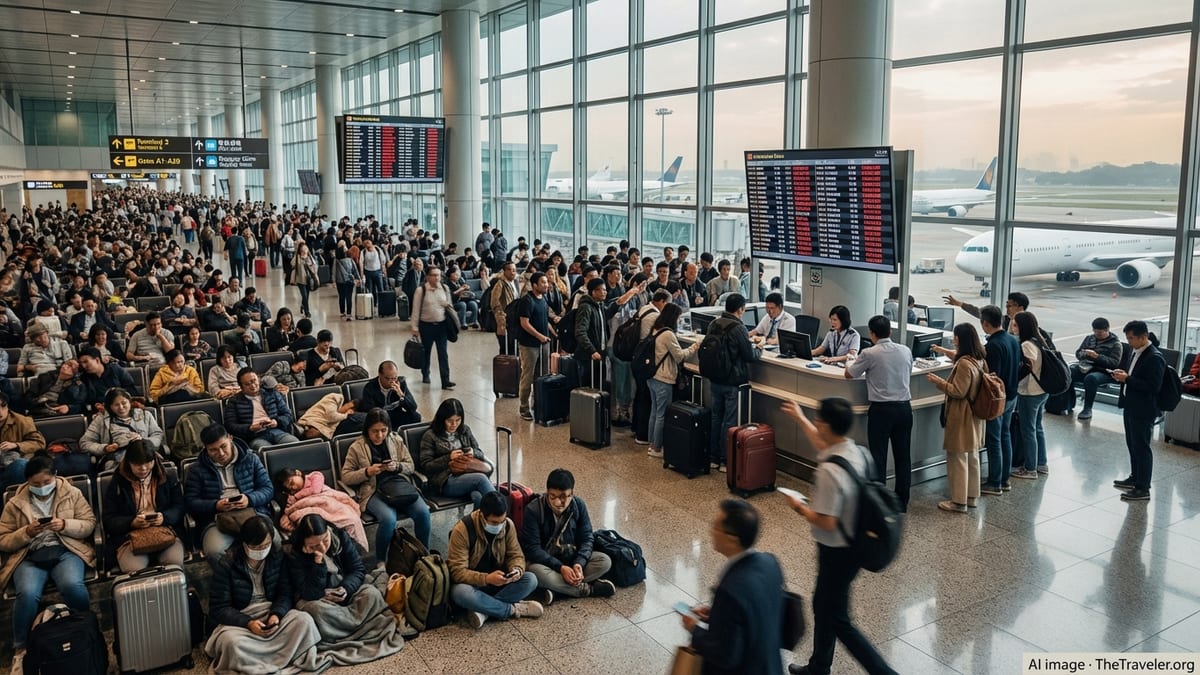
Geopolitics and Fuel Shocks Reshape Asia’s Skies
The conflict in and around the Middle East has become a central driver of the 2026 aviation crisis facing Asian carriers. Airspace restrictions over Iran, Iraq, Israel and parts of the Gulf have forced airlines to reroute Europe Asia services, adding flying time, complicating crew rosters and pushing up fuel burn on many of the region’s most profitable long haul routes.
Analysis from industry consultancies indicates that Gulf and transit hub carriers, as well as airlines heavily exposed to Middle East overflight, are seeing sharp revenue hits as network connectivity is impaired. Longer routings and the loss of key hub connections are eroding margins even on routes that historically performed strongly, placing additional stress on balance sheets that were only beginning to recover from the pandemic.
At the same time, jet fuel prices across Asia have surged, reflecting tight regional supplies of refined products. Assessments from energy and economic researchers highlight that constraints on aviation fuel availability are tightening transport capacity, raising freight and passenger costs, and acting as a brake on broader trade dependent growth in Asian economies.
Updated forecasts from global airline bodies for June 2026 show that high fuel prices and war related disruptions are expected to cut industry profitability in half compared with earlier projections. While some Asia Pacific carriers are benefiting from traffic rerouted away from Middle East hubs, the net effect of higher costs and operational complexity is contributing to what many analysts now describe as a systemic regional aviation crisis.
Capacity Pullbacks and a Sudden Demand Cooldown
Evidence is emerging that the shock to operating costs is starting to feed through to capacity decisions and passenger demand across Asia. Data from schedule analytics firms tracking the May to October 2026 season show mid year reductions in planned seats from several Southeast Asian markets, with cuts focused largely on intra Asian travel rather than purely Middle Eastern routes.
Commentary accompanying this data links the adjustments to the combined impact of the Middle East crisis on fuel costs and the cost of living, suggesting that both airlines and travelers are recalibrating expectations after a period of exuberant post pandemic growth. Airlines appear to be trimming marginal routes and frequencies in order to preserve yields and manage thin margins in an increasingly volatile environment.
Traffic statistics published by the International Air Transport Association for June 2026 reinforce this picture of a cooling market. Global air passenger demand fell 1.7 percent year on year, while Asia Pacific carriers recorded a 2 percent drop in traffic and a similar fall in capacity, even as load factors remained in the low 80 percent range. The figures mark a sharp contrast with the strong growth recorded earlier in the recovery period.
Economists tracking the jet fuel market in Asia note that demand growth for aviation fuel in the second quarter of 2026 has slowed markedly compared with earlier forecasts. Initial expectations of robust increases in regional jet consumption have been revised down as higher surcharges, selective capacity reductions and consumer caution dampen flying activity, particularly on discretionary and leisure segments.
Safety Under the Spotlight Amid Operational Strain
While the current aviation crisis in Asia is driven primarily by costs and geopolitics rather than a spike in accidents, safety performance and oversight are coming under renewed scrutiny as airlines juggle longer routes, tighter schedules and complex risk environments. Industry wide data released in March 2026 by IATA for the 2025 operating year presented a generally solid global safety record, with one fatal accident for every several million flights and relatively low accident rates across Asia’s subregions.
However, the report and subsequent commentary also highlighted how geopolitical instability and conflict zones can rapidly introduce new safety challenges, from misidentification risks to GPS interference and the concentration of traffic in narrow flight corridors. Analysts note that the 2026 Iran conflict and associated military activity in parts of the Middle East have underscored these systemic vulnerabilities, prompting updated conflict zone advisories and route planning reviews that heavily affect Asia Europe flows.
Within Asia, regulators have continued to push carriers on operational discipline. Public documentation from one major Japanese airline records that in April 2026 it received a business improvement advisory and a warning from the national civil aviation bureau in relation to maintenance work and safety manager responsibilities, underscoring how authorities are responding to even non fatal occurrences with heightened oversight.
At the same time, some regional airlines are emphasizing compliance with international audit standards as a way to reassure passengers. Carriers based in Thailand and Malaysia have announced new or renewed registrations in the IATA Operational Safety Audit registry during 2026, following rigorous external reviews of operational procedures. These developments signal an effort by parts of the Asian industry to strengthen safety credentials at a time when public attention is focused heavily on risk and reliability.
Recovery Prospects Clouded by Structural Risks
The aviation crisis unfolding in 2026 comes against the backdrop of what had been an optimistic medium term outlook for Asia Pacific air travel. Prior to the latest conflict in the Middle East and the surge in fuel prices, IATA and other forecasters had projected that Asia Pacific would lead global passenger growth through the rest of the decade, supported by expanding middle classes, liberalizing air services agreements and infrastructure investment.
Those structural drivers remain in place, but updated economic and traffic outlooks in mid 2026 suggest a more subdued near term trajectory. In a June 2026 global outlook, IATA projected that overall air passenger traffic growth in 2026 would moderate to just over 2 percent, with Asia Pacific still contributing a large share of global demand but facing headwinds from fuel costs, currency pressures and supply chain constraints.
Research from economic consultancies examining Asia’s exposure to refined fuel shocks warns that tight supplies of aviation and marine fuels are likely to persist, constraining transport capacity and potentially prolonging supply chain frictions across key export economies. The implication for airlines is that elevated operating costs could become a semi permanent feature rather than a short lived spike, limiting the ability to rapidly rebuild networks to pre conflict growth paths.
Industry analysts also caution that geopolitical risk appears to be rising as a structural factor for aviation, rather than a series of isolated events. From conflict zones that cut across major trunk routes to sanctions and airspace closures, carriers based in Asia or reliant on Asia transit are operating in an environment where strategic flexibility, diversified networks and robust risk management may be as important to long term viability as traditional cost and service advantages.
What the Crisis Means for Travelers and Trade
For passengers across Asia, the 2026 aviation crisis is most visible in schedules, fares and route options. Travelers are encountering higher ticket prices as airlines pass on fuel surcharges and attempt to preserve margins, particularly on long haul and connecting itineraries that now require circuitous routings to avoid restricted airspace. In some Southeast Asian markets, published schedules for the summer and autumn seasons show trimmed frequencies or reduced service on secondary city pairs.
Travel data providers note that while demand for essential business and visiting friends and relatives travel remains relatively resilient, price sensitive leisure segments are showing signs of softness. This creates a feedback loop in which airlines, faced with high unit costs and uneven demand, further concentrate capacity on core routes, potentially reducing connectivity for smaller markets and emerging destinations across the region.
The crisis also has significant implications for air cargo and supply chains. Tight jet fuel supplies and higher operating costs add to already elevated logistics expenses for exporters that rely on belly hold capacity in passenger aircraft for time sensitive shipments. Economic assessments suggest that these pressures are feeding into broader cost structures for sectors ranging from electronics to apparel, given Asia’s central role in global manufacturing.
Looking ahead, industry bodies and analysts indicate that the trajectory of the aviation crisis in Asia through the remainder of 2026 will depend heavily on developments in the Middle East conflict, the evolution of global fuel markets and the resilience of consumer demand in key Asian economies. For now, publicly available data points toward a region navigating a fragile recovery, where every fluctuation in geopolitics or energy prices can rapidly be felt in the timetable boards of its major hubs.
IATA June 2026 passenger demand data
OAG analysis of Asia capacity changes 2026