


More news on this day
Across Asia, from China and Japan to Singapore, South Korea, Malaysia, the Philippines and Sri Lanka, growth prospects are dimming as the conflict in the Middle East injects new uncertainty into an already fragile recovery, unsettling trade and travel flows even as oil prices show tentative signs of stabilizing.
Get the latest news straight to your inbox!
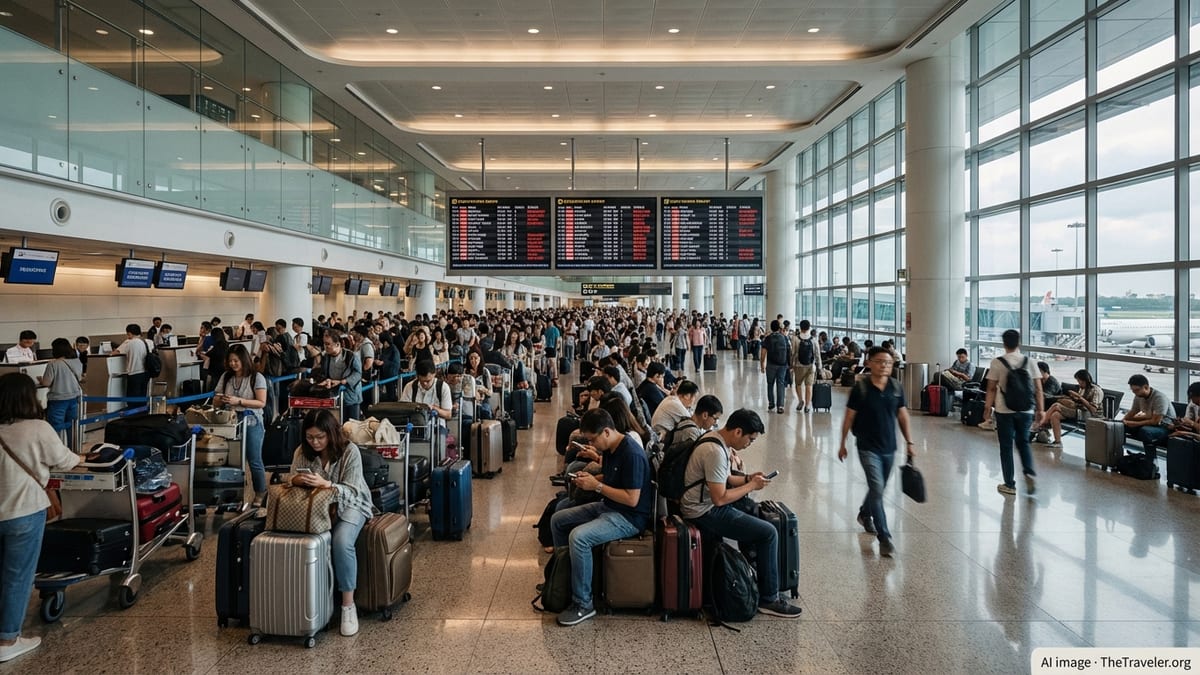
Energy Shock Ripples Across East and Southeast Asia
The latest regional assessments show momentum in East Asia and the Pacific slipping in 2026, with growth projections easing as higher energy costs, weaker external demand and lingering domestic vulnerabilities collide. Publicly available analysis from international financial institutions points to growth in the broader region slowing from around 5 percent in 2025 to just above 4 percent this year, with the energy shock linked to the Iran war cited as a central factor.
The fighting and related disruption around the Strait of Hormuz have periodically pushed benchmark Brent crude above 100 dollars a barrel, before easing back as additional supply and demand concerns rebalanced the market. Forecasts released in late 2025 had anticipated oil prices drifting lower in 2026, a trend that would typically benefit major importers such as China, Japan, South Korea and Singapore. Instead, price volatility and insurance costs on key shipping lanes have complicated planning for airlines, cruise operators and logistics companies that underpin Asia’s tourism and trade ecosystems.
World Bank and regional policy briefings indicate that while headline oil prices have come off their early March peaks, the combination of elevated freight rates, currency pressures and tighter financial conditions is eroding purchasing power across emerging Asia. Governments from Malaysia to the Philippines are juggling fuel subsidies, infrastructure spending and debt service, leaving less room to support travel-linked small businesses that had only recently recovered from the pandemic era collapse.
For travelers, the impact is most visible in airfare and package pricing. Carriers serving popular leisure corridors between North Asia and Southeast Asia have pulled back promotional fares and trimmed marginal routes, particularly on secondary city pairings. The result is a more expensive, less frequent network just as households face their own inflation concerns, weighing on regional trip volumes.
China’s Slowing Engine Adds to Regional Strain
China, long the region’s principal growth engine and its largest single source of outbound tourists, is confronting a more complex environment. Official data released in mid-April indicate that exports grew just 2.5 percent year-on-year in March, a sharp deceleration from the robust double-digit gains recorded at the start of 2026. Analysts cited by international media link the slowdown in part to softer global demand tied to the Iran war and its broader economic aftershocks, alongside ongoing property market weakness at home.
While Beijing met its growth target of around 5 percent in 2025, the authorities have set a lower goal for 2026 and are leaning heavily on trade to offset tepid domestic investment. That reliance increases the region’s exposure to swings in Chinese manufacturing and consumer demand. For destinations such as Japan, South Korea, Singapore, Malaysia, the Philippines and Sri Lanka, any plateau in Chinese outbound tourism translates directly into pressure on hotels, retailers and airlines.
Industry data collected over the past year show a more uneven recovery in Chinese travel than many tourism boards had anticipated. Outbound trips have rebounded strongly to some short-haul markets, particularly South Korea and selected Southeast Asian destinations, but have been more volatile to Japan and long-haul markets amid diplomatic tensions and shifting visa rules. This patchy pattern complicates investment decisions for regional airports and hospitality operators that built capacity around pre-pandemic Chinese travel volumes.
At the same time, China’s own inbound tourism and domestic travel sectors are contending with weaker consumer confidence and heightened competition from digitally savvy platforms offering deep discounts. Price wars in e-commerce and delivery are symptomatic of a broader struggle to revive household spending, which in turn dampens demand for leisure travel within the country and across its borders.
Tourism Hubs Face Softer Demand and Higher Costs
Key travel and aviation hubs across Asia are feeling the twin squeeze of softer demand and rising operating costs. Singapore, which has leveraged its role as a regional air hub and financial center, continues to attract significant visitor flows from China, Southeast Asia and beyond, but visitor spending patterns have shifted. Publicly available tourism figures indicate strong headline arrivals, yet length of stay and discretionary outlays in shopping and dining are under pressure as travelers manage tighter budgets.
Japan, which recorded a record year for inbound visitors in 2024, entered 2026 grappling with more fragile growth. A diplomatic rift with China that escalated through 2025 led to travel advisories and a wave of flight and package cancellations, reducing the contribution of Chinese visitors just as the country faced broader headwinds from slower global trade. Although arrivals from markets such as South Korea, Taiwan and the United States remain robust, the loss of high-spending Chinese tourists has been a drag for retailers and regional airports.
South Korea, by contrast, has emerged as one of the strongest tourism performers in Asia, with 2024 visitor numbers nearly back to pre-pandemic peaks and Chinese travelers once again a major driver. Yet even there, analysts warn that growth is likely to moderate as energy costs feed into airfares and as households across the region recalibrate their travel frequency. New concerns about external demand for Korean exports and capital outflows linked to trade agreements add another layer of uncertainty to the country’s broader growth outlook.
In Southeast Asia, Malaysia and the Philippines are striving to sustain impressive rebounds in visitor numbers recorded in 2024 and 2025. Regional tourism reports show that both countries have benefited from travelers seeking alternatives to crowded or higher-cost destinations further north. However, these gains may be hard to maintain if higher jet fuel prices persist and if China’s economy slows more sharply than expected, given its growing importance as both a source market and a trading partner.
Smaller and Vulnerable Economies Navigate Tight Margins
For smaller and more vulnerable economies such as Sri Lanka, the latest global turbulence comes at a delicate moment. The country’s tourism sector has been a critical component of its economic stabilization efforts following its debt crisis, with visitors from China, India and other Asian neighbors playing an increasingly important role. Rising fuel, food and financing costs linked to the Middle East conflict narrow the fiscal and monetary space available to support that recovery.
Publicly released outlooks from multilateral institutions caution that South Asian economies reliant on imported energy and external financing face heightened risks if global rates stay elevated or if another sustained spike in oil prices materializes. In Sri Lanka and parts of Southeast Asia, this has already translated into higher utility tariffs and transport costs, which can deter both local and foreign travelers and compress profit margins for small hotels and tour operators.
The Philippines, meanwhile, must balance its ambitions to expand tourism infrastructure with the broader goal of managing inflation and improving resilience to climate-related shocks. Typhoons and flooding across the region in recent seasons have underscored the exposure of coastal and island destinations to extreme weather, adding another structural challenge on top of the current geopolitical uncertainties and fluctuating energy prices.
These constraints are leading some governments to recalibrate incentives, shifting away from pure volume targets in tourism to a greater focus on higher-yield segments and more diversified source markets. While that may strengthen long-term resilience, it also requires upfront investment in skills, marketing and sustainability that can be difficult to finance in a tighter global environment.
Stabilizing Oil Prices Offer Relief but Not a Cure
Recent commodity market forecasts suggest that, barring further escalation in the Middle East, oil prices could gradually drift lower through late 2026 as additional supply comes online and demand growth cools. For Asia’s major importers, any sustained easing in crude benchmarks would alleviate pressure on current accounts, reduce fuel subsidies and create fiscal room to support infrastructure and tourism promotion.
Analysts caution, however, that price stabilization alone will not restore the rapid growth rates seen before the pandemic and before the current round of geopolitical tensions. Structural issues ranging from aging populations in Japan and South Korea to productivity challenges in parts of Southeast Asia and elevated debt levels in China and Sri Lanka continue to cap potential growth. Trade fragmentation and higher global tariffs also weigh on export-led models that have historically driven prosperity across the region.
For travel and tourism, a more stable energy backdrop could encourage airlines to reintroduce suspended routes and to invest in more fuel-efficient fleets, while hotels and destinations step up efforts to attract longer stays and higher spending segments. Yet the broader message from recent regional outlooks is one of caution: Asia remains a powerful engine of global travel demand, but its growth is becoming slower, more uneven and more exposed to geopolitical shocks.
As 2026 unfolds, China’s deceleration, Japan’s delicate balancing act, the competitive repositioning of Singapore, South Korea, Malaysia and the Philippines, and the fragile recoveries in economies such as Sri Lanka will together define how resilient the region truly is in the face of conflict beyond its shores and an energy market that is stable in price but still fraught with risk.