

More news on this day
Passengers traveling through Athens International Airport in the middle of this week are being advised to allow extra time, as scheduled inspections of key air navigation systems are expected to cause delays of up to 60 minutes on some flights.
Get the latest news straight to your inbox!
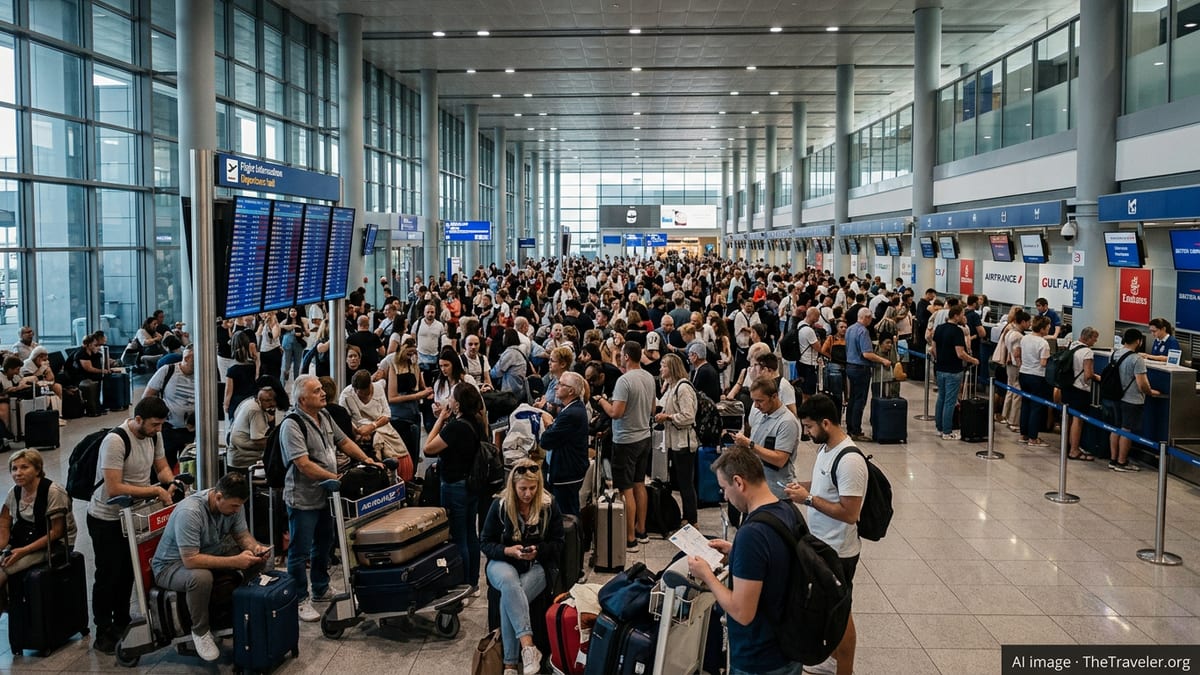
Scheduled checks to affect flights on June 11 and 12
According to Greek media reports, Athens International Airport "Eleftherios Venizelos" will see a series of planned technical inspections on its approach and navigation aids on Wednesday, June 11, and Thursday, June 12. The work is understood to focus on precision approach systems that support aircraft during landing, particularly in busy afternoon periods.
The checks are reported to be scheduled between 15:00 and 18:00 local time on both days, a window that typically coincides with a high volume of arrivals and departures. During this period, temporary air traffic flow measures are expected to limit capacity, which is likely to translate into minor schedule adjustments and holding patterns for some flights.
Publicly available information indicates that delays of up to 60 minutes are possible for both domestic and international services using the airport during the inspection windows. Airlines are expected to adjust timetables and build additional buffer time into their operations, but passengers may still experience extended waiting times at gates or on board aircraft before take-off.
While the impact is concentrated around the mid-afternoon, knock-on effects are possible into the early evening as aircraft and crew rotations absorb any disruptions. Travelers with tight onward connections within Greece’s island network or to other European hubs are being urged by carriers and travel agents to monitor their bookings closely.
Recent strain on Athens’ navigation and traffic systems
The planned inspections come at a time when Athens has already been under scrutiny for the resilience and capacity of its air navigation infrastructure. Network performance reports published by European aviation bodies in recent months have highlighted Athens among airports experiencing recurring air traffic management regulations and delay minutes linked to capacity constraints and system upgrades.
Earlier this year, an incident affecting frequencies in the Athens Flight Information Region prompted a detailed technical review by national aviation authorities. Public documentation on that investigation refers to work on voice communication and remote control systems, as well as coordination with telecommunications providers, illustrating the complexity of the network that underpins flight operations over Greece.
In parallel, the Hellenic Civil Aviation Authority has publicized a technical support agreement with Eurocontrol aimed at modernizing key elements of the Greek air navigation system. Areas flagged for investment include new surveillance equipment, data processing upgrades, and the design of performance-based navigation procedures, all intended to enhance both safety and efficiency at major hubs such as Athens.
Industry observers note that the current inspections at Athens International Airport appear to fit into this broader cycle of modernization and testing. As systems are upgraded or recalibrated, temporary reductions in runway or airspace capacity are often necessary, particularly when work involves instrument landing systems or other approach aids that cannot be fully validated while operating at maximum traffic levels.
What passengers should expect during the inspection window
For travelers, the most visible effect is likely to be extended departure queues and occasional holding patterns in the air during the mid-afternoon periods on June 11 and 12. While average delays are not expected to exceed an hour, even relatively short disruptions can feel significant for those attempting same-day connections to Greece’s islands or to long-haul flights from other European hubs.
Airlines operating at Athens routinely factor operational constraints into their schedules, but reports already suggest that some carriers are proactively advising passengers to arrive at the airport earlier than usual and to keep a close eye on mobile app notifications and departure boards. This is particularly relevant for those who need to clear passport control or re-check baggage between flights.
Travelers connecting to or from non-Schengen destinations may face compounded waiting times, as the airport continues to adjust to the European Union’s new Entry/Exit System, which has already been associated with occasional bottlenecks at border control in recent weeks. When combined with potential flight delays from navigation inspections, this may lengthen the overall journey time for non-EU visitors.
Passengers with tight minimum connection times, especially those booked on separate tickets, are being encouraged by travel advisers to consider allowing additional margin or, where possible, to consolidate itineraries under a single booking so that missed connections can be reprotected by the operating carrier.
Operational context at a key southeastern Europe hub
Athens International Airport serves as the primary gateway to Greece and a crucial hub for traffic connecting Western Europe with the Eastern Mediterranean, the Balkans, and the Middle East. In recent seasons, the airport has handled steadily rising passenger volumes, driven by strong demand for Greek leisure destinations and the recovery of long-haul tourism.
Industry data for the current year shows that Athens is classified as a schedules-facilitated airport during the summer season, with coordination parameters adjusted to reflect available runway and airspace capacity. Under certain conditions, such as infrastructure works or system checks, the airport can be treated temporarily as fully coordinated, meaning that slot allocation becomes more tightly controlled.
Network analyses published by Eurocontrol have in the past listed Athens among European locations generating notable air traffic flow management delays, particularly on days when weather or technical limitations coincide with peak travel periods. As a result, regional airlines and tour operators are accustomed to planning around potential bottlenecks in Greek airspace, with contingency timetables and spare aircraft often positioned to recover from disruptions.
The upcoming navigation system inspections therefore represent a manageable but closely watched operational challenge. The airport, air navigation service providers, and carriers will be aiming to keep any disruption contained within the published window so that the evening wave of flights, including key departures to other European hubs and late domestic services, can operate as close to schedule as possible.
Advice for travelers flying through Athens this week
For travelers scheduled to pass through Athens on June 11 or 12, practical preparation can help reduce stress if delays occur. Travel experts generally recommend arriving earlier than usual for afternoon departures, especially for those who need to check baggage, clear security, and navigate passport control.
Passengers are also encouraged to keep digital copies of their itineraries and to enable notifications from their airlines for real-time gate and schedule updates. In the event of a delay, boarding passes and confirmation numbers will be essential for rebooking or for adjusting onward transport plans such as ferries, trains, or hotel check-ins.
Those with same-day connections to the Greek islands may wish to consider flexible tickets where possible, particularly during this inspection period. Even if the majority of flights experience only modest delays, a short disruption at Athens can cause missed onward departures to smaller airports that do not have multiple daily frequencies.
Despite the possibility of inconvenience, aviation specialists point out that periodic inspections and system checks are a routine part of maintaining safe air navigation services. For a major tourism gateway like Athens, investing time in validating navigation equipment before the peak summer holiday season is seen as an important step toward ensuring reliable operations for the months ahead.