


More news on this day
Rail connectivity between Dhaka and northern Bangladesh was restored after a six hour suspension on the Jamuna Bridge corridor, following the derailment of the Dhaka bound Silk City Express that briefly severed a critical intercity link.
Get the latest news straight to your inbox!
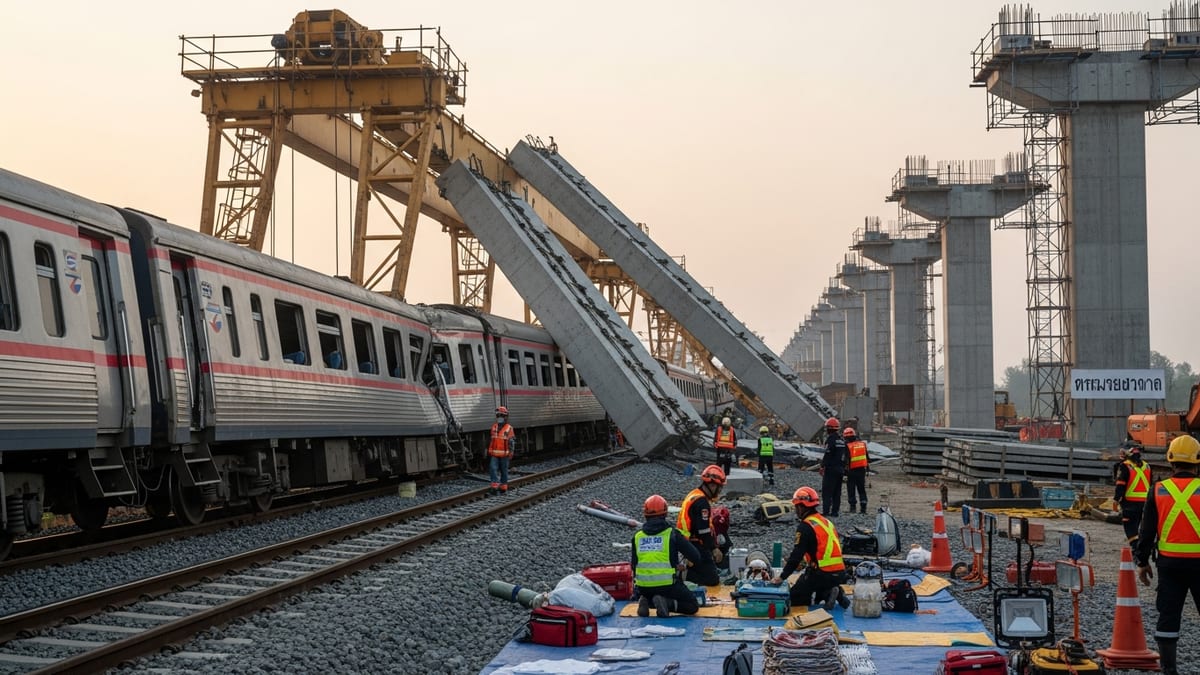
Derailment Halts Traffic on Strategic Dhaka–North Route
Published reports indicate that the Silk City Express, a popular intercity service linking Rajshahi with the capital Dhaka, left the tracks near the western approach to the Jamuna Bridge, causing a sudden halt to traffic on one of the country’s busiest rail corridors. The incident occurred on the up line toward Dhaka, prompting an immediate block on movements across the bridge as safety checks began.
Initial coverage from local and national outlets describes several coaches leaving the rails but remaining upright, limiting structural damage compared with more severe derailments seen elsewhere on the network in recent years. The location near the Jamuna crossing, however, amplified the disruption, as trains to and from multiple northern districts typically funnel through this single strategic bottleneck.
The timing of the derailment coincided with heavy passenger demand, with many travelers using intercity trains to reach the capital and connect onward to other destinations. The suspension forced thousands of passengers on both sides of the river to wait on platforms or inside stationary trains while crews worked to stabilize the derailed coaches and inspect adjoining track sections.
Publicly available information suggests that the immediate priority for railway teams was to safeguard passengers on board, secure the train from further movement and prevent secondary incidents on the parallel track. Emergency procedures around the bridge were activated while technical staff moved equipment into place to begin the clearing operation.
Six Hour Race to Clear the Line and Inspect the Bridge
According to published coverage, engineers and track workers required roughly six hours to remove the derailed coaches, repair the affected rail bed and carry out structural and safety inspections on the section leading to the Jamuna Bridge. Because of the line’s importance for long distance services, the response focused on reopening at least one track as quickly as conditions allowed.
Heavy recovery equipment was brought to the site to re rail the affected coaches and tow them to a safe siding. During this period, all train traffic over the bridge was suspended, with railway control centers reportedly holding or re routing services where alternative alignments existed. For many long distance passengers, that meant extended delays rather than outright cancellations.
Once the derailed cars were cleared, track specialists inspected the rails, sleepers and fastenings, as well as signaling and communication systems feeding into the bridge approaches. Only after these checks did traffic resume, initially at reduced speed and under close monitoring. Reports describe the resumption as gradual, with priority given to time sensitive intercity services.
Observers note that the relatively swift clearance compares with previous derailments elsewhere in Bangladesh that have kept main lines closed for significantly longer periods. The Jamuna corridor’s strategic value, combined with a growing public focus on transport reliability, appears to have driven a concentrated effort to restore at least partial capacity within hours.
Passenger Impact and Wider Travel Disruptions
The six hour shutdown reverberated well beyond the immediate accident site. Passengers heading to Dhaka for work, medical appointments or international flights experienced cascading delays, which in some cases were compounded by congested road links on either side of the river. Bus operators reported increased demand from travelers seeking alternative routes when news of the derailment spread.
For those already on board affected trains, the experience involved prolonged waits in hot, crowded conditions, often with limited information. Local media accounts and social media posts highlighted passengers resting on station platforms, children sleeping on luggage and food vendors attempting to meet sudden spikes in demand at intermediate stops where trains had been held.
Travelers on other intercity services that normally use the Jamuna crossing also faced uncertainty. Some trains were turned back to originating stations, while others were terminated short of their full route. In several northern districts, this left evening schedules thinner than usual, complicating onward connections for passengers bound for smaller towns and rural areas.
Despite the disruption, the absence of large scale casualties in this incident, based on current reporting, limited the need for extensive medical response. The focus instead fell on passenger care, rebooking and communication about revised timings once services began to move again over the bridge.
Spotlight on Rail Safety and Infrastructure Resilience
The Silk City Express derailment adds to a series of rail incidents in Bangladesh that have drawn attention to track conditions, rolling stock maintenance and safety enforcement. Analysts frequently point to underinvestment in routine maintenance compared with large, high profile projects, as well as shortages of front line staff responsible for inspecting and securing the rails.
Previous derailments on busy intercity routes have been attributed in public reports to a mix of track defects, aging components and occasional human error. While each incident has its own causes, the cumulative effect has been to heighten concern about the resilience of the network at a time when passenger volumes continue to grow and more long distance travelers rely on rail to avoid road congestion.
The Jamuna Bridge approaches are considered particularly sensitive, as any disruption can sever multiple north south connections at once. The latest incident is likely to reinforce calls from transport commentators for more systematic inspection regimes, upgraded track hardware and improved real time monitoring of infrastructure near major bridges and junctions.
Public documents outlining national rail plans already emphasize the importance of strengthening key corridors to support regional trade and domestic mobility. Events such as the Silk City Express derailment underline, for many observers, the operational risks that emerge when maintenance does not keep pace with rising demand.
Operational Lessons and Future Travel Considerations
In the aftermath of the derailment, railway managers are expected to review how quickly information was shared with passengers, how alternative options were organized and whether train control systems responded as designed when the incident occurred. For regular travelers on the Dhaka Rajshahi route, these operational details can strongly influence confidence in the service.
Travel industry analysts note that recurring disruptions, even when relatively short lived, may encourage some passengers to shift to long distance buses or private cars, especially around holidays or peak travel periods. However, the capacity and cost advantages of rail on the Jamuna corridor mean that most commuters and intercity travelers are likely to return once schedules normalize.
For future journeys, experienced passengers on Bangladeshi rail lines often recommend building buffer time into itineraries that depend on critical crossings such as the Jamuna Bridge. Monitoring schedule updates and local news on the day of travel can provide early warning of delays, helping travelers adjust plans when major incidents occur.
As services settle back into their normal pattern after the Silk City Express derailment, the incident serves as another reminder of both the essential role and the vulnerabilities of Bangladesh’s rail system. The performance of the network on key corridors will remain under close public scrutiny as authorities continue efforts to modernize infrastructure and improve safety standards.