


More news on this day
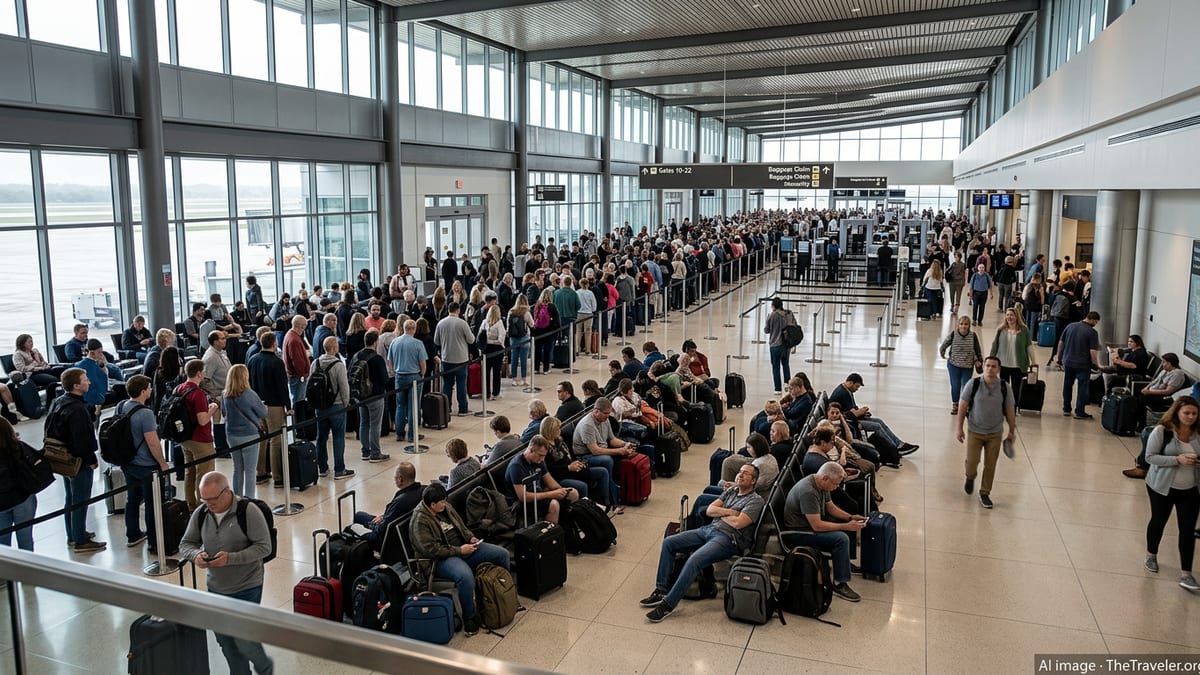
Travelers at Austin-Bergstrom International Airport faced a challenging travel day as publicly available tracking boards showed 39 delayed departures and four cancellations affecting major carriers, disrupting a mix of domestic and international routes.
Get the latest news straight to your inbox!
Disruptions Affect Major U.S. and International Carriers
The delays and cancellations at Austin-Bergstrom involved several of the airport’s largest operators, including Delta Air Lines, American Airlines, Lufthansa, KLM, Air Canada, Southwest Airlines and United Airlines. These airlines collectively handle a substantial share of Austin’s domestic and long haul traffic, so even a relatively small number of disrupted flights had a visible impact across the terminal.
Publicly available airport-departure boards and independent flight-tracking services indicated that the 39 delayed flights ranged from short holdups at the gate to schedule changes of more than an hour. The four cancellations were concentrated among a handful of carriers, amplifying pressure on remaining departures as passengers attempted to rebook on later services.
Most of the affected traffic was domestic, with delays on routes to major hubs where airlines feed connecting passengers throughout the United States. However, the disruption also touched several of Austin’s key international links, underscoring how issues at a single airport can ripple through transborder and transatlantic networks.
The overall rate of disruption remained below levels seen during severe weather or major system outages, but the concentration among a core group of high-traffic airlines meant longer lines at customer service counters and fuller standby lists on subsequent flights.
Frankfurt, Vancouver, Toronto and Oakland Among Impacted Routes
Among long haul services, the Austin to Frankfurt route operated by Lufthansa featured in the disruption picture, reflecting how a late inbound aircraft or operational constraints overseas can cascade into significant schedule changes. Published flight-status tools showed irregular operations on the Frankfurt rotation, which typically serves as a key European gateway for Central Texas travelers.
Northbound services to Canada were also affected. Air Canada’s links from Austin to Vancouver and Toronto, which connect passengers to Western Canada and onward international destinations, experienced delays that left some travelers facing tighter connections at their final hubs. Austin’s Canadian routes generally operate with limited daily frequencies, so even a single delayed departure can create knock-on challenges for rebooking.
On the domestic front, flights between Austin and Oakland were listed among those disrupted, affecting passengers heading to the San Francisco Bay Area. Carriers serving this route, including Southwest and other major U.S. airlines, rely on tight aircraft utilization, so extended ground time in Austin can echo through later departures from the West Coast.
Because several of these routes only operate once daily or a few times per week, cancellations or long delays can leave affected passengers with fewer same-day alternatives and increase reliance on connections through larger hubs such as Dallas-Fort Worth, Houston, Denver or Atlanta.
Operational Strain Adds to a Historically Tight Airport
The latest disruption comes as Austin-Bergstrom continues to experience growth that has periodically tested its terminal capacity and gate availability. Public planning documents and local coverage in recent years have highlighted how rapid passenger growth has outpaced infrastructure, particularly at the limited number of international-capable gates used by airlines such as Lufthansa and KLM.
Travel commentary focused on Austin has noted that when one widebody or international narrow-body aircraft runs late, arriving flights can be forced to wait for an open gate, which can then push back departures on subsequent services. Reports indicate that this type of gate congestion has occasionally caused holding patterns for inbound international flights and slowed the turnaround process on busy evenings.
Domestic operations have also come under pressure on peak travel days. Historical performance data compiled from federal transportation statistics show that late-arriving aircraft, crew scheduling issues, and national airspace constraints are among the most common drivers of delays at U.S. airports. Austin-Bergstrom, with a strong mix of point-to-point and connecting traffic, is exposed to each of these factors when conditions deteriorate elsewhere in the system.
While the exact cause of each individual delay or cancellation can vary by flight, the clustering of disruptions among multiple large carriers at Austin suggests a combination of local congestion and broader network challenges rather than a single airline-specific issue.
Passenger Options and Airline Policies During Disruptions
For travelers caught up in delays and cancellations at Austin-Bergstrom, options depend heavily on fare type, operating carrier and the cause of the disruption. Public information from airline customer-service dashboards and federal consumer resources indicates that the largest U.S. carriers, including American, Delta, Southwest and United, commit to rebooking passengers on the same airline at no additional cost in many cases where the delay or cancellation is within the airline’s control.
On international routes involving Lufthansa, KLM and Air Canada, passenger rights can also be shaped by foreign and transborder regulations, especially when flights originate or terminate in jurisdictions with additional consumer protections. Publicly available guidance from travel-rights organizations notes that longer delays and cancellations on transatlantic services can, in some circumstances, trigger compensation or mandated care such as meal vouchers and hotel accommodation, though eligibility depends on route, ticketing and reason for disruption.
Airlines operating from Austin typically encourage customers to use digital tools to manage irregular operations, including smartphone apps and websites that allow same-day changes, standby listing and notification of gate or time adjustments. On busy disruption days, observers often report that digital self-service options update more quickly than airport displays, although final boarding decisions remain subject to on-the-ground operational constraints.
Travel analysts frequently recommend that passengers facing irregular operations monitor both the airline’s official channels and independent flight-tracking services, which can provide early signals of likely missed connections, inbound aircraft delays and evolving weather or airspace constraints.
What Travelers Through Austin Should Watch in the Coming Days
The latest round of delays and cancellations at Austin-Bergstrom underscores the importance for travelers of building extra time into itineraries, particularly when connecting onward from international services or flying on less-frequent routes such as Frankfurt, Vancouver or Toronto. With limited daily frequencies, a single cancellation can turn what would have been a brief delay into an overnight stay or a multi-stop journey.
Travel specialists often advise that passengers departing from Austin in the near term keep a close eye on their flight status beginning 24 hours before departure, paying particular attention to any changes in the inbound aircraft’s schedule. Early signs of a late-arriving aircraft can help travelers decide whether to adjust ground transportation, consider alternative routings or proactively contact their airline.
Looking ahead, Austin-Bergstrom is pursuing terminal expansion and additional gate capacity intended to relieve some of the current pressure on its operations, especially for international traffic. Until those upgrades are completed, days with even modest irregular operations can continue to produce a visible impact for passengers when multiple airlines experience overlapping delays.
For now, the tally of 39 delayed flights and four cancellations serves as a reminder that, at a fast-growing hub like Austin, relatively small disturbances in airline networks can quickly translate into crowded departure areas, anxious connection times and fully booked later departures across the United States and beyond.