


More news on this day
Travelers across the Middle East and beyond faced long waits and missed connections at Cairo International Airport on May 16 as 126 flights were reported delayed and one canceled, disrupting EgyptAir, Emirates, Qatar Airways and other carriers on heavily used routes to Dubai, Jeddah, Riyadh, London and Istanbul.
Get the latest news straight to your inbox!
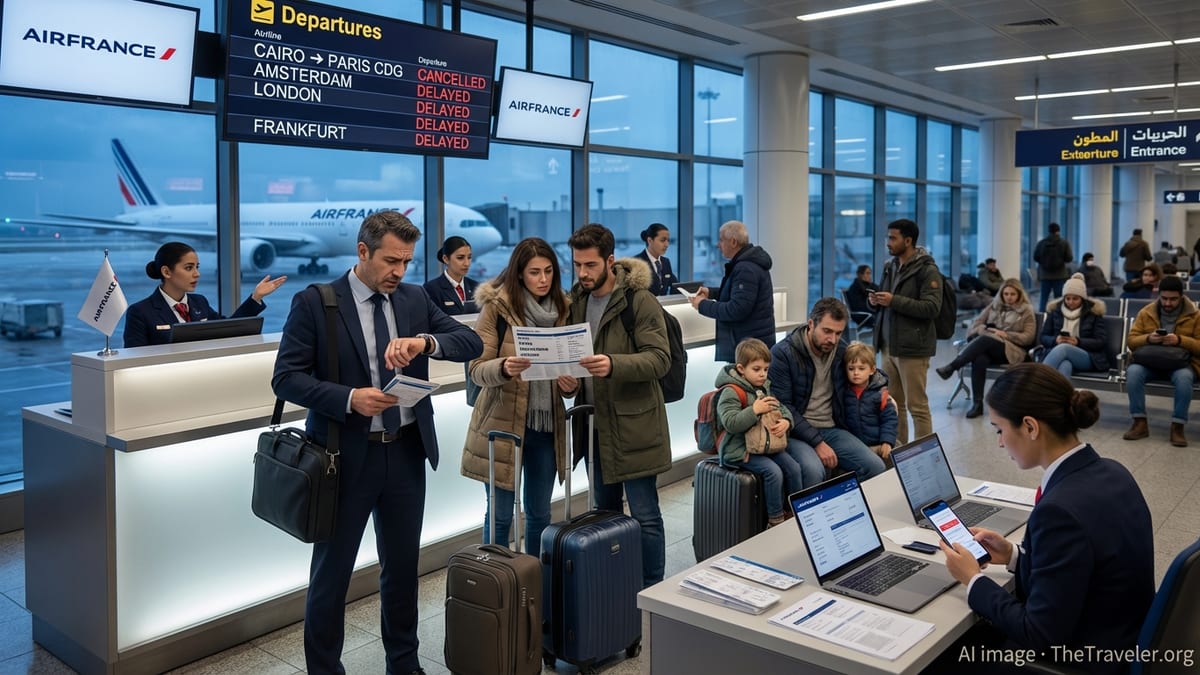
Heavy Disruptions Hit Cairo’s Role as Regional Hub
Publicly available flight-tracking dashboards and airport information services for May 16 indicate that Cairo International Airport experienced an unusually high volume of delayed departures and arrivals, with 126 services running late and one flight canceled. The pattern added a fresh layer of disruption at Egypt’s busiest gateway, which has already seen repeated turbulence in recent months linked to wider Middle East airspace constraints and operational pressures.
The latest delays affected a mix of domestic and international flights, but the impact was most visible on trunk routes connecting Cairo with major regional and intercontinental hubs. Services to Dubai, Jeddah, Riyadh, London and Istanbul appeared prominently among the delayed flights, reflecting Cairo’s function as both a transfer point and an origin-destination market for these high-demand corridors.
Travel media coverage over recent weeks has noted recurring spikes of more than 100 delayed flights per day at Cairo, with some days in April marked by well over 150 late departures and arrivals. Against that backdrop, the May 16 disruption suggests that the airport and its resident and visiting airlines remain vulnerable to knock-on effects from congested skies, schedule reshuffles and crew and aircraft availability issues across the region.
While the airport remained open and operational, the concentration of delays produced crowding at check-in counters, boarding gates and transfer zones. Passengers faced extended queues as airlines worked through rebooking requests, checked eligibility for hotel or meal support where applicable, and sought to protect onward itineraries via alternative routings.
EgyptAir, Emirates and Qatar Airways Among Affected Carriers
The disruption touched multiple operators, including EgyptAir, Emirates and Qatar Airways, along with other regional and international airlines serving Cairo. Published industry data and recent reporting describe how EgyptAir, the national carrier and primary hub airline at Cairo, has been repeatedly adjusting its schedule in response to airspace closures and route suspensions across parts of the Middle East. Those changes have previously translated into clusters of cancellations and delays on connections to Gulf hubs and European cities.
On May 16, flight-status portals showed a familiar pattern of EgyptAir services running behind schedule on routes to and from Jeddah, Riyadh and Istanbul, as well as on European links such as London. Separate tracking entries highlighted at least one EgyptAir service between Saudi Arabia and Cairo as canceled during the current disruption cycle, underlining the fragile state of certain regional links.
Emirates and Qatar Airways, two of the largest connecting carriers in the region, were also listed among airlines experiencing delays on Cairo flights. Both airlines have spent recent months reshaping networks as they navigate airspace restrictions and slot constraints at their respective hubs. Travel forums and specialist coverage have pointed to waves of cancellations and schedule changes at Dubai and Doha earlier this year, with ripple effects across feeder routes including Cairo.
Other Gulf and regional carriers serving Cairo, such as Saudi operators on the Riyadh and Jeddah corridors and additional Middle Eastern airlines feeding into Dubai and Istanbul, appeared within the roster of delayed flights. This multi-carrier involvement suggests that the disruption was not confined to a single airline’s operational difficulties but linked to broader network stresses.
Key Routes to Dubai, Jeddah, Riyadh, London and Istanbul Under Strain
The routes most visibly affected by the latest delays form some of the busiest air corridors out of Cairo. Links to Dubai and Jeddah are particularly important for both business and leisure travel, as well as for religious journeys and onward long-haul connections via Gulf hubs. When flights on these sectors run late or are canceled, travelers can easily miss onward services to Asia, Europe, North America and Africa.
Publicly available departure boards and tracking tools for May and the preceding weeks show frequent congestion on Cairo–Dubai and Cairo–Jeddah services, including late departures and arrivals and occasional outright cancellations. Similar pressure is evident on flights to Riyadh, where seat demand from workers, families and business travelers remains high despite recent schedule volatility across the region.
European-bound flights were also caught up in the May 16 disruption. Industry-focused coverage in recent weeks has highlighted repeated delays on Cairo services to London and other European cities as airlines adjust routings and flight times to accommodate airspace detours and congested connecting hubs. London Heathrow, in particular, is a key destination for both EgyptAir and Gulf carriers operating via Cairo, magnifying the impact when Cairo-origin flights fail to depart on time.
Istanbul, another major transit and destination city for passengers traveling between the Middle East, Europe and beyond, appeared in flight-tracking feeds as both an origin and destination for delayed Cairo services. Delays on this corridor can disrupt onward itineraries onto wider Turkish and European networks, extending the knock-on effects of Cairo’s operational challenges far beyond Egypt’s borders.
Regional Airspace, Weather and Operational Pressures Drive Ongoing Volatility
The May 16 disruption at Cairo did not occur in isolation. Since late winter and early spring, multiple reports from aviation analysts and regional media have pointed to a combination of factors driving instability in Middle East flight operations. These include intermittent airspace closures or restrictions, weather-related congestion at key hubs, and schedule compression as airlines attempt to maintain capacity despite narrower routing options.
Published coverage over the past two months has repeatedly linked Cairo’s difficulties to wider regional turbulence. When neighboring states restrict or close airspace, airlines must reroute flights along longer paths, compressing operating windows and placing additional strain on crew and fleet planning. As networks are recalibrated, some services are suspended while others are consolidated, raising the risk of bottlenecks at airports like Cairo that sit at the crossroads of multiple affected corridors.
Operational factors at the airport level also contribute to volatility. Earlier this year, local reporting from Egypt cited infrastructure issues, such as technical problems on airport systems, as having triggered significant if temporary reductions in capacity. Although those specific incidents were resolved, they highlighted how quickly operations can deteriorate when underlying systems are stretched and how long it can take for schedules to fully normalize.
Travel-industry commentary suggests that, under such conditions, even relatively minor delays can cascade through tightly timed daily rotations. A late-arriving aircraft on a morning regional sector can affect afternoon and evening flights to long-haul destinations, including London and other European cities, potentially pushing missed connections and overnight stays onto passengers at both ends of the route.
Advice for Travelers Transiting Cairo in the Current Environment
With Cairo continuing to experience periodic spikes in disruption, travel specialists advise passengers to build extra flexibility into any itinerary involving the airport, particularly when connecting to or from Gulf hubs or major European and Turkish cities. Publicly available guidance from airlines and travel agents stresses the importance of checking live flight status before leaving for the airport and monitoring updates throughout the journey.
In recent advisories linked to broader Middle East disruption, airlines serving Cairo have encouraged customers to use official digital channels and mobile applications to keep track of changes and, where offered, to rebook travel online. Some carriers have temporarily relaxed ticket-change conditions on affected routes, allowing free date or routing changes during defined disruption windows, although such policies can vary widely between airlines and evolve quickly as conditions change.
Travel experts also note that passengers with tight connections through Cairo face heightened risk when regional networks are unstable. Longer layovers can provide a buffer against moderate delays, while travel insurance with disruption and missed-connection coverage can help mitigate financial losses when cancellations or severe delays occur.
For now, the pattern of 126 delayed and one canceled flight at Cairo on May 16 underscores that the airport remains a focal point in a wider phase of Middle East aviation volatility. Travelers planning journeys through Egypt’s main gateway in the coming days are being urged by industry observers to stay alert to schedule changes, allow additional time, and remain prepared for last-minute adjustments to their plans.