


More news on this day
Dozens of passengers at Kansas City International Airport faced extended waits after a cluster of at least 25 flight delays disrupted departures on key domestic routes, affecting schedules on Southwest Airlines, American Airlines, Delta Air Lines and other carriers serving major hubs including Chicago, Dallas, Denver, Atlanta and Las Vegas.
Get the latest news straight to your inbox!
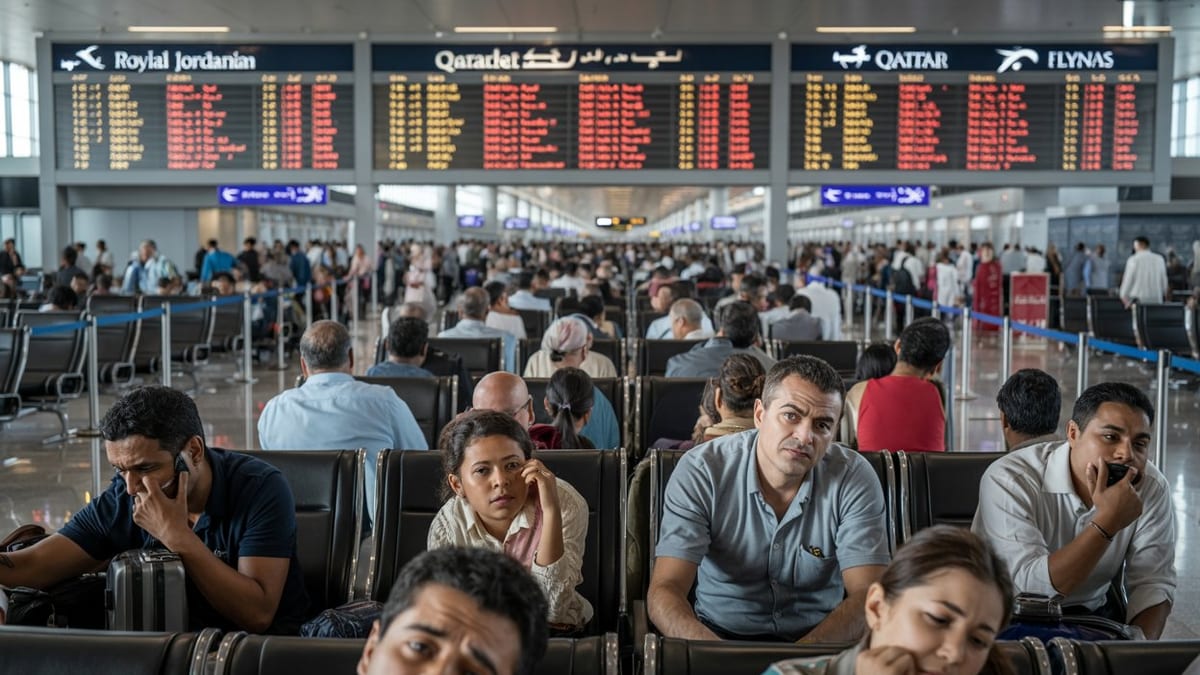
Wave of Delays Hits Major Carriers at MCI
Publicly available flight tracking data and airport status boards on Saturday indicated that a concentration of delays at Kansas City International Airport affected at least 25 departures over the course of the morning and early afternoon, leaving travelers stuck in the new single terminal as they waited for revised departure times. The disruptions were spread across several airlines and destinations, limiting opportunities for easy rebooking.
Southwest Airlines, the largest carrier at Kansas City by passenger share, appeared particularly exposed as delays accumulated on popular point to point routes. Schedules into Chicago Midway, Dallas Love Field, Denver and Las Vegas showed rolling time changes, in some cases pushing departures back by more than an hour. Similar patterns were visible on American Airlines flights to Chicago O Hare and Dallas Fort Worth, and on Delta Air Lines services linking Kansas City with its Atlanta and Denver connections.
Operational data for recent weeks already showed a sensitivity on several of these routes, with some flights between Kansas City and major hubs recording repeated minor delays. The latest cluster of disruptions intensified that pattern into a more visible breakdown of the day s timetable, particularly for travelers relying on tight connecting itineraries at downstream hubs.
As departure times slid, large numbers of travelers remained in gate areas, monitoring overhead screens that did not always update as quickly as airline mobile applications. Guidance from airline information materials notes that in irregular operations, internal systems often reflect changes before airport monitors, adding to confusion for travelers who are not actively checking digital tools.
Key Domestic and International Connections Affected
The impact of the delays extended beyond Kansas City s local market because the disrupted flights serve as feeders into some of the nation s busiest hubs. Routes to Chicago, Dallas, Denver and Atlanta link Kansas City with four of the largest connecting banks in the United States, meaning schedule problems at the origin can cascade into missed long haul connections.
Travelers heading to Chicago faced particular uncertainty because service from Kansas City is split between Chicago O Hare and Chicago Midway, on different carriers and with different connecting options. Delays on American Airlines services into O Hare and Southwest services into Midway limited flexibility for passengers attempting to switch between airports to protect onward flights.
The Dallas market, split between Dallas Fort Worth and Dallas Love Field, also experienced knock on effects. Delayed departures from Kansas City made it harder for travelers to reach evening connections to destinations across the southern United States and Latin America that typically funnel through Dallas Fort Worth on American Airlines or onward domestic links on Southwest via Love Field.
Reports from national aviation data aggregators show that Denver, Atlanta and Las Vegas are among the most heavily trafficked destinations from Kansas City, functioning as both leisure gateways and transfer points. When flights on those corridors are delayed in clusters rather than in isolation, the result can be a sizable buildup of stranded passengers in Kansas City and missed connections at the receiving hubs.
Possible Causes: Congestion, Weather and Network Strain
While a single, clearly defined cause for Saturday s disruptions was not immediately evident, several factors commonly contribute to similar patterns of delays. Historical data and previous coverage of Kansas City International suggest that regional weather, air traffic control constraints, and crew or aircraft availability issues can all play a role when multiple flights to hub airports are held or pushed back.
Industry wide statistics on delay causes indicate that congestion in busy airspace around hubs such as Chicago, Dallas, Denver and Atlanta regularly triggers ground holds and flow restrictions at origin airports. When traffic into a hub slows, departures from spoke cities like Kansas City may be throttled to avoid gridlock at arrival gates or in holding patterns.
Weather systems that only lightly touch Kansas City but more severely affect downline hubs can also produce disruptive ripple effects. Airlines sometimes delay flights at origin to ensure that aircraft and crews are not stranded in locations where storms, low visibility or ramp closures make operations more difficult. That can lead to clear skies at Kansas City paired with unexplained gate holds for travelers who are not aware of conditions at the destination.
In addition, airlines are operating complex networks that rely on aircraft rotating through multiple cities per day. When an incoming flight is delayed by even a modest margin, it can push back the scheduled departure for the next leg out of Kansas City. Over the course of several rotations, those delays can accumulate into the type of cluster that strands travelers for extended periods, as appeared to be the case on several affected routes.
Stranded Travelers Face Limited Alternatives
For many passengers at Kansas City, the concentration of delays on a handful of major airlines and routes reduced the availability of immediate alternatives. Rebooking onto later departures to the same hubs was challenging because seats were already heavily booked at the start of the spring and summer travel period, and additional delays could threaten those options as well.
The airport s role as a spoke rather than a mega hub also limits the range of same day rerouting opportunities. With only a finite set of nonstop destinations and carriers, a delay on one airline can quickly make other carriers out of Kansas City fully booked, particularly to destinations such as Denver, Atlanta and Las Vegas that already see strong demand from leisure and connecting travelers.
Passenger advocacy information notes that in such situations, travelers may be able to request rerouting through secondary hubs or on different routings entirely, such as connecting through alternate cities not originally on the itinerary. However, those solutions depend on available seats and on the specific rules of each airline ticket, which can vary widely between full fare, discounted and basic economy products.
As the day progressed, some travelers turned to regional options such as driving to other airports within a few hours of Kansas City in search of open seats. Past episodes of extended disruption in the region have seen passengers shift to airports in St. Louis, Omaha or Wichita when tight capacity and repeated delays at Kansas City made air travel from the city impractical on the same day.
Airlines and Airport Urge Close Monitoring of Flight Status
Public guidance from airlines and the airport emphasizes the importance of monitoring flight status closely during irregular operations. Online check in portals, mobile applications and text alerts typically display gate changes, revised departure times and rolling delays more quickly than static screens inside the terminal or printed boarding passes issued earlier in the day.
Industry facing travel guides highlight that delays on one flight segment can have knock on effects across an entire itinerary, especially for passengers with connections at busy hubs. Travelers are encouraged to keep an eye on the status not only of their Kansas City departure, but also of their onward connections from Chicago, Dallas, Denver, Atlanta or Las Vegas, so they can seek assistance if it becomes clear that a connection can no longer be made.
Information shared by aviation services also notes that many airlines will proactively rebook passengers onto later flights or alternate routes when multiple delays accumulate, although the timing and scope of such moves can differ widely between carriers. Travelers stranded at Kansas City during the latest disruptions were urged through public resources to utilize self service tools in mobile apps alongside in person help at customer service desks to find the fastest possible way to their destinations.
With busy summer travel building, the pattern of delays at Kansas City illustrates how quickly conditions can deteriorate for passengers when a relatively small number of flights into key hubs are pushed back at the same time. Passenger groups and travel advisers recommend that travelers departing Kansas City in the coming weeks build extra time into their plans, particularly when depending on close connections through Chicago, Dallas, Denver, Atlanta or Las Vegas.