


More news on this day
With Hajj 2026 expected to draw millions of worshippers to Saudi Arabia in late May and June, new guidance from aviation planners indicates some pilgrims may face flight delays as airlines and airports grapple with peak-season congestion.
Get the latest news straight to your inbox!
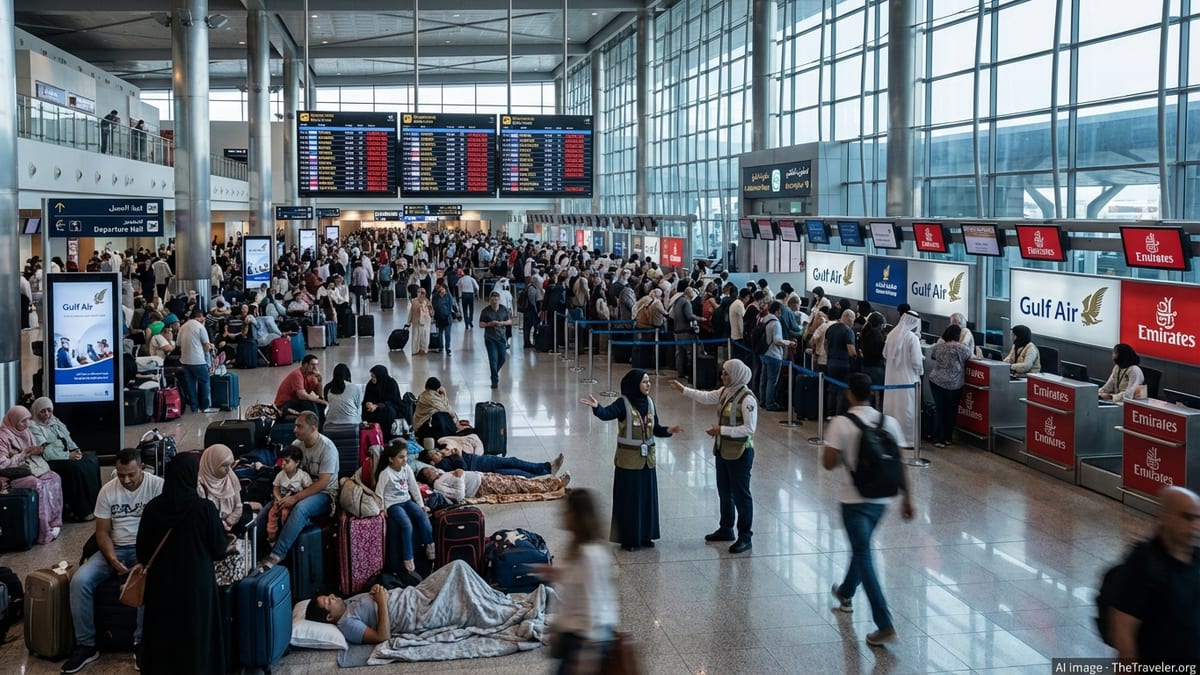
Peak Demand Meets Fixed Airport Capacity
Forecasts for Hajj 2026 point to another year of heavy passenger volumes into Jeddah and Madinah at a time when runway and terminal capacity remain essentially fixed. Publicly available traffic assessments highlight that King Abdulaziz International Airport in Jeddah and Prince Mohammad bin Abdulaziz International Airport in Madinah already operate near their limits during the Hajj peak, leaving limited room to absorb schedule disruptions.
Industry planning documents show that the bulk of government and tour-group charter flights from key departure markets such as Pakistan, Indonesia, India, Turkey and several African countries are scheduled within a relatively narrow operating window in early to mid May. This clustering, intended to ensure pilgrims reach the Kingdom before the start of Dhu al Hijjah and the core Hajj rites around 25 to 30 May 2026, increases the risk that even minor weather or technical issues could cascade into wider delays.
Aviation observers note that while Saudi Arabia has expanded infrastructure in recent years, air traffic management during Hajj remains a complex operation involving slot-controlled arrivals, turnarounds on crowded aprons and intensive ground handling. Any imbalance between planned and actual operations, such as late inbound aircraft or extended boarding times for elderly passengers, can slow the system and push departure times back.
Given these pressures, planners associated with the Pakistan Airline Operators Guild, referenced by regional media under the acronym PAOG, are drawing attention to the possibility that some flights to the Kingdom in the run-up to Hajj 2026 may not operate at their originally published times, particularly at smaller or capacity constrained departure airports.
What PAOG’s Advisory Suggests For Pilgrims
Recent planning inputs circulating in South Asian aviation circles under the PAOG banner emphasize risk factors rather than specific airline shortcomings. The guidance points to the combination of tight aircraft rotations, high passenger loads and limited spare capacity in airline fleets serving Hajj charters as elements that could lead to delays or schedule reshuffles.
In practical terms, the advisory suggests that pilgrims should be prepared for potential changes to departure times and, in some cases, aircraft types. Publicly available information on previous Hajj seasons shows that when schedules come under strain, some carriers consolidate lightly booked flights or reschedule services to less congested hours, which can affect ground transport and accommodation plans at both ends of the journey.
The PAOG note also aligns with past Hajj traffic analyses in highlighting how delays on the outbound phase can have knock-on effects on inbound returns after the rituals conclude. Aircraft that arrive late into Saudi Arabia may depart behind schedule after Hajj, affecting homebound journeys as well as earlier flights carrying new passengers on other routes.
While the advisory does not single out individual airlines or airports, its message is that the 2026 season is shaping up to be particularly sensitive to operational disruptions because of the tight overlap between Hajj dates, regional school holidays and early summer travel demand on other routes.
Weather, Summer Heat And Operational Constraints
Hajj 2026 is expected to fall between approximately 25 and 30 May 2026 in the Gregorian calendar, with the Day of Arafah projected for 26 May. That timing places the pilgrimage at the transition into the hot summer period on the Arabian Peninsula, a season when high temperatures and occasional sandstorms are known to affect aircraft performance and visibility.
Operational records from earlier Hajj seasons show that extreme heat can lengthen turnaround times, as ground crews work more slowly in high temperatures and equipment requires additional checks. In some cases, performance limits on fully loaded aircraft departing shorter runways can necessitate payload restrictions or schedule adjustments, especially for long-haul flights.
Weather-related disruptions compound existing slot and capacity challenges. When flights are held on the ground due to reduced visibility or air traffic control restrictions, departure waves may be compressed into even narrower time bands once operations resume. This effect is particularly acute at airports where Hajj flights share runways with regular scheduled services.
According to regional industry commentary, planners expect 2026 to bring the same mix of heat, potential dust storms and occasional thunderstorm activity seen in previous late spring Hajj periods. While large hubs have contingency plans, secondary and regional airports feeding pilgrims into Saudi Arabia may have less redundancy, making them more vulnerable to extended delays if adverse conditions coincide with peak departure days.
Pressure On Charter Operations And Government Quotas
Many pilgrims from Asia and Africa travel under government quota schemes that rely heavily on charter or specially scheduled flights. Planning documents and tour brochures for Hajj 2026 show dense flight programs compressed into a few weeks on either side of the core ritual days, with limited flexibility to spread demand more evenly across the season.
Charter operators typically operate tight rotations to maximize aircraft utilization, often scheduling multiple round trips per day between a home country and Saudi Arabia. This high-frequency model leaves limited room to recover when an aircraft goes out of service for technical reasons or faces extended ground time due to congestion at Jeddah or Madinah.
Publicly available Hajj 2026 schedules from several regional airports already list daily or near-daily departures for pilgrims through early May, underscoring how quickly capacity ramps up. Aviation analysts note that similar patterns in previous years have coincided with spikes in delayed or rescheduled flights on certain days as the system adjusts to real world conditions that differ from initial plans.
In this context, the PAOG advisory is being viewed by travel organizers as a reminder that even well planned Hajj air operations remain vulnerable to disruption when many carriers, airports and ground handlers are operating at the edge of their capacity for an extended period.
How Pilgrims And Organizers Are Responding
Travel companies and Hajj group organizers are using the lead-up to the 2026 season to advise clients on how flight delays could affect their itineraries. Booking guidance distributed in several markets encourages pilgrims to build in buffer days on either side of the main Hajj rites, particularly for those traveling long distances or with complex connecting journeys.
Some organizers are also adjusting internal schedules for ground transport and hotel check in times in anticipation of possible late arrivals, especially during the busiest departure windows in May. They are emphasizing that published flight times may be subject to operational changes and that flexibility is an important part of Hajj preparation alongside health, documentation and financial planning.
Aviation planners who track Hajj logistics indicate that better communication of realistic schedules and potential contingencies can reduce stress for travelers if delays occur. By treating the PAOG warning as an early planning tool rather than a cause for alarm, many in the travel sector are aiming to ensure that any disruption remains a temporary inconvenience rather than a serious barrier to pilgrims completing their journey.
With Hajj 2026 approaching, the emerging consensus in publicly available industry commentary is that some level of flight delay is likely inevitable given the scale of the operation. The focus now is on mitigating the impact through conservative planning, clear communication and close coordination across airlines, airports and organizers so that pilgrims can begin and end their pilgrimage journeys as smoothly as possible.