


More news on this day
Travelers moving between Australia and New Zealand faced widespread disruption today, as Qantas, Virgin Australia, Air New Zealand and other carriers recorded around 155 flight delays and nine cancellations across the key hubs of Melbourne, Sydney, Wellington and Christchurch.
Get the latest news straight to your inbox!
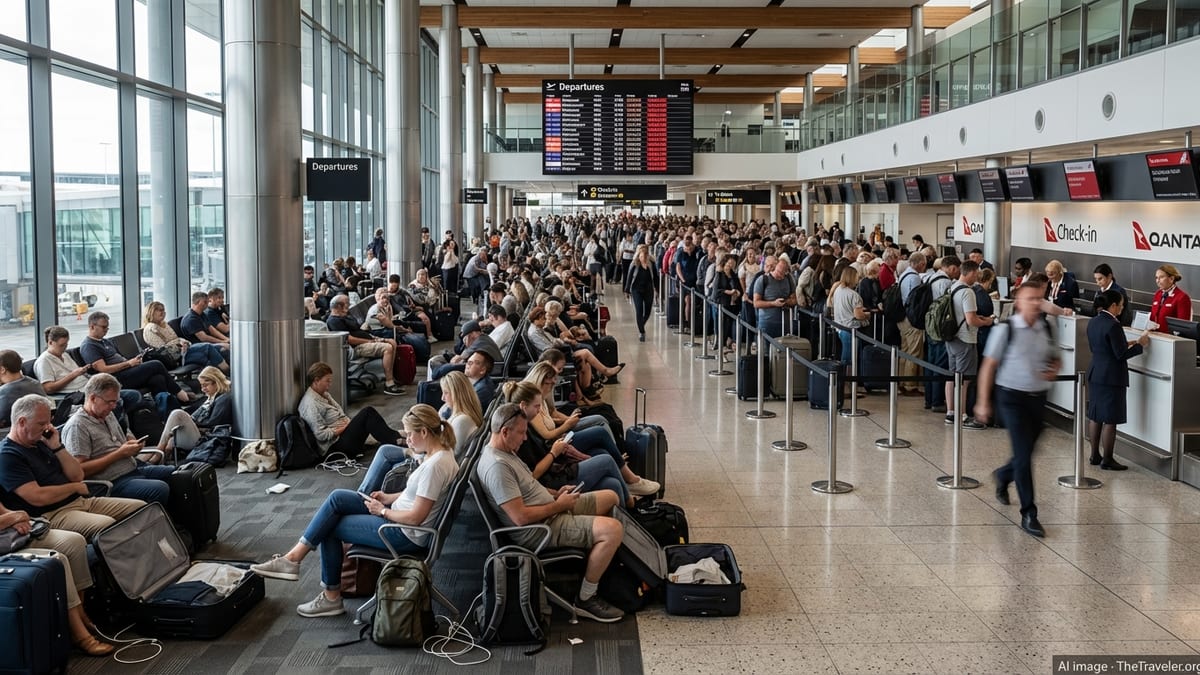
Major Trans-Tasman Routes Hit by Cascading Delays
The disruption affected some of the busiest trans-Tasman and domestic corridors linking the Australian east coast with New Zealand’s main population centers. Flight-tracking dashboards and airport status boards showed delays building across morning and midday banks of services, with knock-on effects continuing into the afternoon.
Publicly available data indicated that flights between Sydney and Auckland, Sydney and Christchurch, and services connecting Melbourne with Wellington and Christchurch were among those experiencing significant timetable slippage. Several departures were pushed back by more than an hour, contributing to a congested operating environment across both countries’ aviation networks.
While the precise breakdown of affected flights varied by carrier and route, the combined total of approximately 155 delayed flights and nine outright cancellations underscores the sensitivity of the trans-Tasman system to operational pressure. Airline performance reports released in recent months have already highlighted tight schedules and modest buffers on major Australia–New Zealand sectors.
Today’s disruption added to that existing fragility, with later departures from both sides of the Tasman feeding into evening arrival waves. Passengers on multi-leg itineraries, particularly those with self-booked connections, were among the most exposed to missed onward flights and extended layovers.
Qantas, Virgin Australia and Air New Zealand Under Strain
Qantas, Virgin Australia and Air New Zealand carried the bulk of the disruption, reflecting their dominant positions on routes between Australia and New Zealand as well as on key domestic sectors feeding into trans-Tasman flights. Real-time status pages for the three brands showed clusters of delayed services around Sydney and Melbourne, as well as at Wellington and Christchurch.
Recent punctuality statistics published by transport agencies in both countries have pointed to uneven on-time performance on these routes, with some carriers operating with completion rates prioritized over punctuality. On sectors such as Sydney–Auckland and Sydney–Christchurch, historical data shows a pattern of delays and a small but recurring share of cancellations, indicating that even minor operational shocks can quickly ripple across daily schedules.
Air New Zealand has already been adjusting parts of its network in response to higher fuel costs and capacity constraints, while Australian operators have been contending with tight staffing, aircraft utilization and intense competition on trunk routes. Today’s events appeared to bring several of those pressures into sharper focus for travelers attempting to cross the Tasman Sea.
Operational advisories published by the airlines in recent weeks outline rebooking options and credit policies during periods of disruption, and the same frameworks were being applied for passengers whose flights fell among the nine cancellations recorded today.
Knock-on Impact for Passengers and Airports
At the terminal level, the pattern of rolling delays translated into longer queues at check-in, security and customer service desks in Melbourne, Sydney, Wellington and Christchurch. Airport information pages and live departure boards showed clusters of flights listed as delayed, often with revised departure times updated repeatedly as aircraft and crew were repositioned.
For many travelers, the primary impact was extended waiting periods and missed same-day connections. Passengers with tight itineraries linking domestic and international sectors were particularly vulnerable, as late inbound services from regional centers left little room to absorb further delay on onward flights to or from New Zealand.
Airport operators in both countries have previously noted that even moderate schedule disruptions can place significant strain on terminal operations, especially during peak holiday periods or weekends when leisure demand is strong. Today’s pattern of 155 delayed flights, while not unprecedented, was enough to test those systems, with some services departing from crowded gate lounges and altered gate assignments as planners worked to keep aircraft turning.
Industry observers point out that such episodes can also have secondary effects beyond the immediate travel day, including challenges in aircraft maintenance scheduling and crew rostering, which may influence punctuality and reliability over subsequent days if recovery windows remain tight.
Context of a Fragile Regional Aviation Recovery
The disruption comes at a time when air travel between Australia and New Zealand is still recalibrating after several years of volatility. Published reports on capacity planning show airlines steadily rebuilding trans-Tasman schedules, adding new seasonal routes and restoring frequencies, even as they face higher fuel costs, geopolitical uncertainty and infrastructure constraints.
Industry monitoring by competition and transport regulators has highlighted that average on-time performance across major domestic and trans-Tasman routes remains below pre-pandemic levels. Factors such as congested airspace at peak periods, weather-related interruptions and limited spare aircraft capacity continue to act as drag on reliability, making clusters of delays more likely when any one element of the system falters.
Airports including Sydney and Melbourne have signaled ongoing investment in terminal and airfield capacity, while New Zealand hubs at Wellington and Christchurch are fine-tuning their own infrastructure and contingency plans. Nevertheless, today’s experience for passengers illustrated how easily a mix of operational challenges can translate into hours of disruption for thousands of travelers on both sides of the Tasman.
For now, publicly available information suggests that airlines are focusing on clearing backlogs and restoring normal patterns of service across the evening and into the next operating day, with passengers urged to monitor flight status tools and allow additional time at the airport when traveling on affected routes.