


More news on this day
Jordan’s tourism sector, long buoyed by record inbound arrivals, is now contending with a quieter but telling trend on the other side of the ledger: a slowdown and reshaping of outbound travel as regional tensions, shifting household budgets and evolving airline schedules alter how Jordanians journey abroad.
Get the latest news straight to your inbox!
From Record Inbound Highs to a More Cautious Travel Mood
In 2023, Jordan’s tourism industry was widely described as enjoying a peak year, with visitor numbers exceeding 6.3 million and tourism income reaching the equivalent of around 7.4 billion dollars. Publicly available data from the Central Bank of Jordan and national tourism authorities showed double-digit growth compared with 2022, underscoring how strongly inbound travel had rebounded after the pandemic.
That momentum has since softened. In 2024, the number of tourists entering Jordan slipped by about 3.9 percent to roughly 6.1 million, while tourism revenues eased by just over 2 percent. Reports indicate that the slide was closely linked to the war in Gaza and broader instability in the region, which prompted widespread trip cancellations and flight adjustments affecting the eastern Mediterranean.
This turbulence has influenced sentiment among Jordanians considering overseas holidays. While the headline numbers often focus on inbound visitors and foreign currency earnings, the same shocks have filtered into outbound decisions, encouraging some residents to delay or downsize travel plans and reshaping where and how they spend tourism budgets.
Travel industry commentary in local media points to a more hesitant market overall. Periods of surging bookings, especially ahead of peak seasons, have repeatedly been followed by sudden reversals whenever security fears or new regional flashpoints emerge, leaving both inbound and outbound segments exposed to abrupt changes in demand.
Outbound Spending Rises, But Patterns Are Shifting
Despite heightened uncertainty, official figures show that Jordanian spending on trips abroad has remained significant and even ticked up in aggregate terms. Central Bank data for 2024 points to outbound tourism expenditure of about 1.9 billion dollars, an increase of just over 4 percent from the previous year. This suggests that a sizeable share of residents continue to prioritize international travel, particularly to nearby destinations.
However, industry analysis and publicly available surveys suggest that this spending is being deployed differently. Many households are reportedly gravitating toward shorter regional breaks or family visits within the Arab world instead of long-haul leisure travel to Europe or North America. Price-sensitive travelers appear more inclined to choose destinations reachable by low-cost carriers, or to seek package deals that lock in airfares and hotel costs amid volatile fuel prices.
At the same time, the growth in outbound expenditure is occurring from a relatively modest base, and is concentrated among middle- and higher-income segments. Travel agents describe a widening gap between Jordanians who can still afford international holidays and those who have cut trips altogether in response to inflation and rising living costs at home, even as headline outbound totals edge higher.
This combination of cautious sentiment and selective resilience means that outbound tourism is no longer expanding in step with the boom seen in inbound arrivals before regional tensions escalated. Instead, it is evolving into a more segmented market, with clear divides by income, preferred destinations and tolerance for risk.
Regional Uncertainty Rewrites Jordanians’ Destination Map
Regional instability has become a defining factor in how and where Jordanians travel abroad. The conflict in Gaza and its political reverberations across the Middle East have weighed heavily on perceptions of safety and convenience, even for destinations that remain physically distant from active front lines.
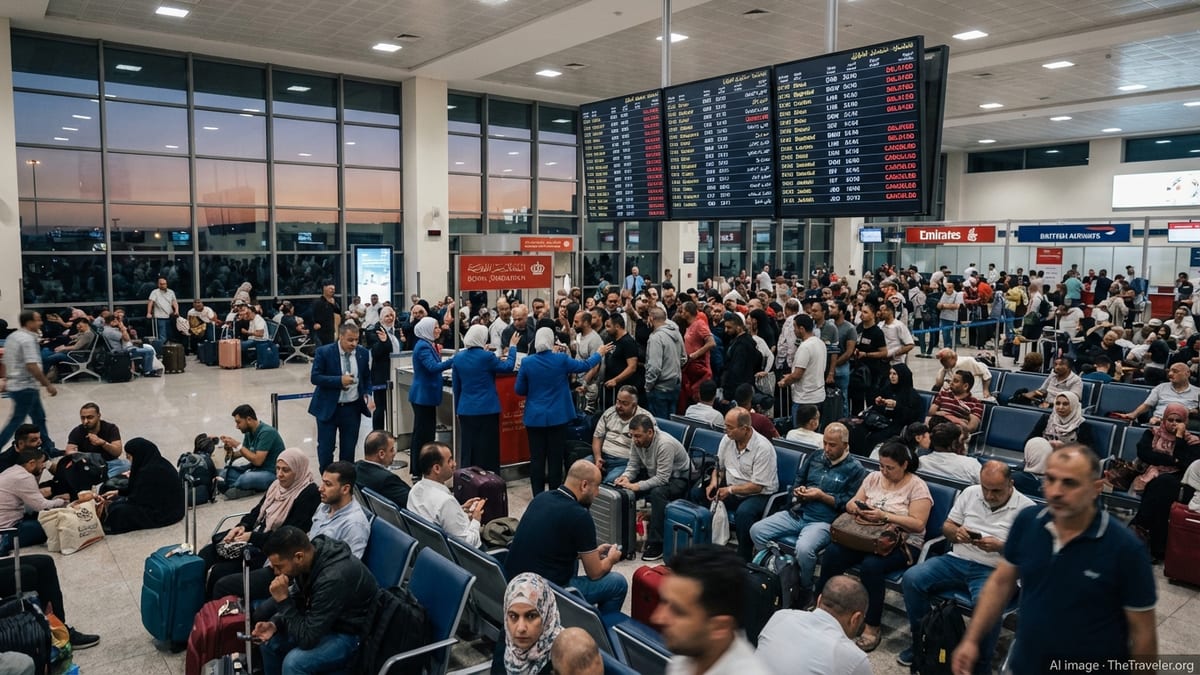
Published coverage in local newspapers has highlighted repeated waves of flight cancellations and schedule cuts affecting routes across the region since late 2023. Travel offices reported that major carriers reconfigured services through Amman and neighboring hubs, temporarily shrinking options for connecting itineraries that many Jordanians use for holidays and medical or educational trips abroad.
As a result, observers note that outbound travelers are increasingly favoring destinations deemed politically stable and operationally reliable. Gulf states, Turkey and select European countries accessible via direct or well-established connections appear to have retained or strengthened their appeal, while some traditional regional city-break favorites have seen weaker demand during periods of heightened tension.
Analysts also point to a rising interest in domestic alternatives among Jordanians who might previously have chosen to vacation overseas. While this does not show up as outbound travel, it is part of the same behavioral adjustment, with families weighing the perceived risks and complications of crossing borders against the relative predictability of trips within Jordan.
Economic Pressures Dampen Middle-Class Travel Ambitions
The shifting picture of outbound tourism is not only a story of security and geopolitics. Economic pressures at home are playing a central role in shaping who travels and how often. Jordan’s economy has faced a combination of modest growth, high youth unemployment and persistent cost-of-living concerns, leaving many households with less disposable income for nonessential spending such as overseas holidays.
According to recent macroeconomic assessments, slower growth in 2024 has been linked partly to the tourism downturn, higher financing costs and disruptions to regional trade routes. For middle-class Jordanians, this environment has translated into tighter budgets and more scrutiny of travel expenses, prompting shifts toward lower-cost destinations, shorter stays or postponement of trips.
Travel agencies and tourism businesses have responded with more aggressive discounting and installment payment options aimed at retaining outbound clients. However, industry commentary suggests that promotions alone cannot fully offset macroeconomic headwinds. For many families, the combination of regional uncertainty and financial strain has made local leisure or short cross-border visits preferable to longer, more expensive holidays further afield.
These constraints are particularly evident outside peak travel periods, when discretionary leisure trips are easiest to cancel. As a result, outbound travel has become more concentrated around school holidays and special occasions, with softer demand in shoulder seasons compared with the expansionary years before the current cycle of regional crises.
Policy Responses and the Road Ahead for Jordan’s Travel Balance
Jordanian policymakers and tourism bodies are closely tracking both inbound and outbound dynamics, given the sector’s significant contribution to employment and foreign-currency earnings. Official reviews emphasize that international tourism receipts remain a vital pillar of the balance of payments, while outbound spending represents a form of leakage when residents choose to spend their travel budgets abroad.
Recent policy discussions have focused on strengthening Jordan’s appeal as a year-round destination, improving connectivity with key markets and encouraging diaspora visitors. While these measures target inbound flows, they are also intended to stabilize airlines’ use of Amman as a hub, indirectly supporting outbound options for residents by keeping routes viable even in difficult periods.
At the same time, authorities are promoting domestic tourism campaigns that seek to redirect some demand that might otherwise have gone overseas. Public messaging highlights the safety of Jordan’s main attractions, the diversity of experiences on offer and the sector’s importance for local livelihoods, in an effort to encourage residents to explore destinations within the country’s borders.
Looking ahead, analysts note that Jordan’s outbound travel trends will likely remain closely tied to regional geopolitics and global economic conditions. If the security environment stabilizes and growth strengthens, outbound tourism could regain momentum, particularly among younger and higher-income travelers. For now, though, the interplay of uncertainty, constrained budgets and cautious consumer behavior is reshaping how Jordanians travel, and rebalancing the country’s tourism profile between what comes in and what goes out.