


The Great Smoky Mountains draw millions of visitors each year, but most travelers face the same practical question long before they reach the park entrance: should you base yourself in Gatlinburg or Pigeon Forge? Both Tennessee towns sit along the same parkway, just a short drive apart, yet they offer very different moods, price points, and access to nature. Choosing the right base can shape everything from your daily driving time to how you spend your evenings after a day on the trails.
Get the latest updates straight to your inbox!
Getting Oriented: Two Gateways, One National Park
Geographically, Gatlinburg and Pigeon Forge feel like a single long strip of development, but they play very different roles for Smokies visitors. Gatlinburg hugs the northern boundary of Great Smoky Mountains National Park, right where US‑441 turns into Newfound Gap Road and passes the Sugarlands Visitor Center. From central Gatlinburg, it is typically just a 5 to 10 minute drive to pull into Sugarlands, traffic permitting, which makes it the classic “gateway town” for hikers and scenic drives.
Pigeon Forge, by contrast, sits about 7 to 10 miles north of that same entrance along the Great Smoky Mountains Parkway. In light traffic, the drive from mid‑Pigeon Forge to Sugarlands can be 20 to 30 minutes, but at peak times around fall foliage weekends, holiday events, and summer evenings, that stretch can easily double. The tradeoff is that Pigeon Forge spreads out in a broad valley with more room for big attractions and large resorts, so it offers a very different, more theme‑park‑oriented base.
Both towns share the same broader region and use the same main road into the park. Visitors often underestimate how much time they will spend in a car if they stay farther north in Pigeon Forge but plan to hike in the central park almost every day. On the other hand, families who plan just one park day and prefer rides, shows, and go‑karts the rest of the week may find Gatlinburg’s proximity less important than Pigeon Forge’s entertainment density.
Practically, it is helpful to think in terms of your priorities: if your plans center on national park hikes, scenic drives, and early‑morning wildlife watching, Gatlinburg keeps you closer to the trailheads. If your itinerary is more about Dollywood, dinner shows, and mini‑golf, Pigeon Forge places you nearer to the action and can reduce your daily back‑and‑forth.
Vibe and Atmosphere: Mountain Village vs Entertainment Strip
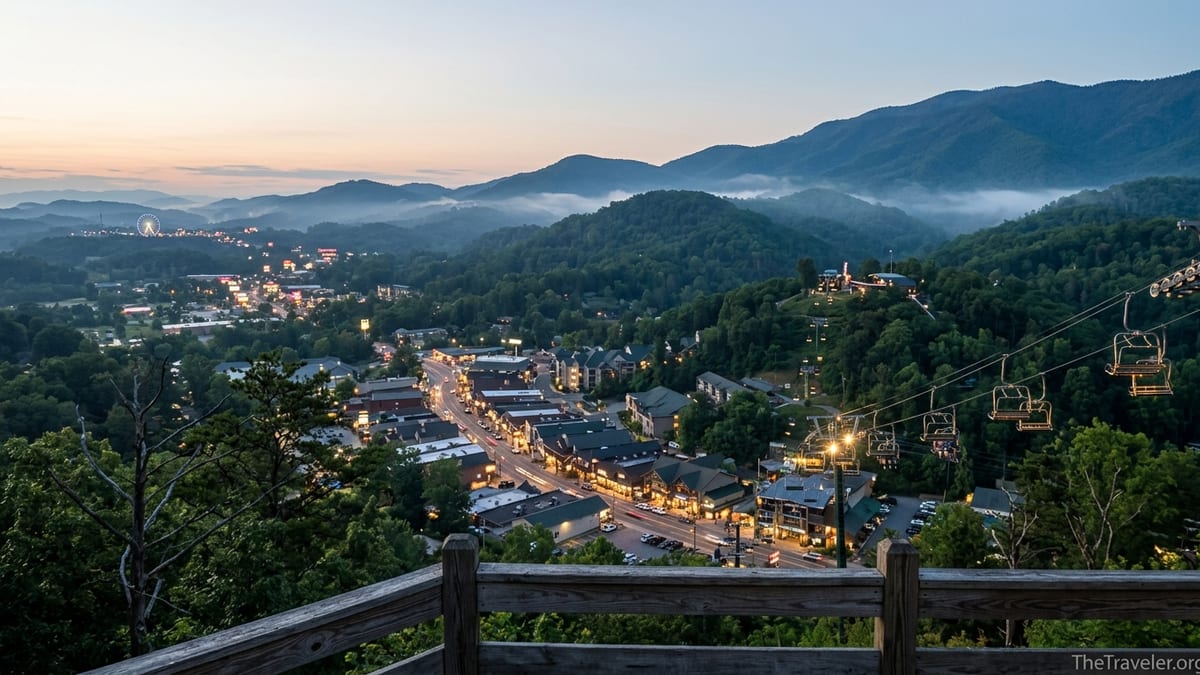
Gatlinburg’s atmosphere leans into its identity as a mountain village. The town is compact, hemmed in by steep ridges on three sides, and its main Parkway is walkable end to end for most visitors. You can park once in a central garage near the aquarium and spend the evening strolling past taffy shops, moonshine tasting rooms, glassblowing studios, and small arcades. Overhead, you can see the chairs of the SkyLift inching up to Gatlinburg SkyPark and the gondolas heading toward Anakeesta or Ober Mountain.
Pigeon Forge feels much more spread out and suburban, with multilane roads, big parking lots, and stand‑alone attractions. Rather than a single walkable “downtown,” Pigeon Forge is a string of mini‑districts. The Island in Pigeon Forge gives you a concentrated pedestrian zone with a giant Ferris wheel and outdoor fountains, but many other highlights, from go‑kart complexes to outlet centers, require short drives. The impression is less “alpine village” and more family resort corridor.
For couples seeking a cozy, slightly more romantic mountain base, Gatlinburg’s wooded cabin neighborhoods and ridge‑top chalets can feel more atmospheric, especially at night when the town glows below and the surrounding slopes are dark. Many cabins off Ski Mountain Road or in the arts and crafts community sit in dense forest, and it is not unusual for guests to spot black bears wandering near trash bins or along driveways, particularly in late spring and fall.
For multigenerational family trips where grandparents, teens, and little kids are all along for the ride, Pigeon Forge’s wide streets and abundant parking lots can be easier to navigate. Large groups often appreciate being able to drive directly up to attractions like the Titanic Museum Attraction, big dinner theaters, or indoor water parks without worrying about downtown congestion or tight mountain roads around Gatlinburg.
Access to Trails, Scenic Drives, and the Park
If your Smokies trip is primarily about the national park, Gatlinburg usually wins as a base. Sugarlands Visitor Center sits just a couple of miles from town and acts as a hub for ranger information, exhibits, and several easy nature trails. From Sugarlands, you can turn left toward Newfound Gap and Clingmans Dome, or right toward Elkmont, Laurel Falls, and the Little River Road corridor. Being 10 to 20 minutes closer each way than Pigeon Forge might sound minor on paper, but on a multi‑day hiking trip it adds up quickly.
For example, a traveler staying on the south end of Gatlinburg can reach the Laurel Falls trailhead in roughly 20 minutes in light morning traffic. Someone starting from mid‑Pigeon Forge might need 40 minutes or more for the same drive, and considerably longer if they depart mid‑morning in peak season. The popular Roaring Fork Motor Nature Trail, a narrow one‑way loop with access to Grotto Falls and other hikes, starts right at the edge of Gatlinburg, which makes it particularly convenient for those based in town or in nearby cabins.
Pigeon Forge still offers reasonable access to the park, particularly if you stay at the south end of town or along Wears Valley Road. Travelers using Wears Valley can reach lesser‑known entrances near Metcalf Bottoms or the “quiet side” of the park around Townsend, which is handy for families who want picnic areas and gentler river access with fewer crowds. However, for signature park experiences like Newfound Gap, Chimney Tops views, or the drive over to Oconaluftee and Cherokee, you will typically drive through Gatlinburg anyway.
Another factor is the new parking tag requirement inside Great Smoky Mountains National Park, which applies if you park longer than a brief drop‑off. Tags are relatively inexpensive, but staying in Gatlinburg encourages guests to walk or take very short drives to the park and commit to longer hikes in a single outing, rather than popping in and out multiple times a day. That can simplify your planning and reduce your time stuck on the Spur, the busy road that connects Gatlinburg and Pigeon Forge through the woods.
Attractions and Entertainment: Rides, Shows, and Mountain Views
When it comes to built attractions, Pigeon Forge is the heavyweight. Dollywood, Tennessee’s most visited ticketed attraction, sits just off Dollywood Lane and draws families who would happily spend two or three full days exploring its roller coasters, live music, and seasonal festivals. Parking at Dollywood is paid and can run around the mid‑20 dollar range per day depending on the lot, so staying nearby can cut down on commuting time and allow families to pop back to their hotel for a kids’ rest break or an afternoon swim before returning for evening shows.
Pigeon Forge also hosts a dense lineup of dinner shows and themed venues, from country music revues and lumberjack competitions to pirate‑themed stunt shows. A family might pair a day at Dollywood or Dollywood’s Splash Country with an evening show and still have energy left for arcades, mini‑golf, or an after‑dark visit to The Island’s fountains and rides. For many repeat visitors with young children, the trip revolves around this entertainment cluster, with the national park playing more of a cameo role.
Gatlinburg’s marquee attractions lean heavily into views and mountain ambiance. At Gatlinburg SkyPark, visitors ride a chairlift to a mountaintop park and walk across a long pedestrian suspension bridge with panoramic views of both town and the Smoky Mountain ridge lines. Anakeesta, built on a separate hilltop, offers its own gondola access, tree‑canopy bridges, mountain coasters, and relaxed fire‑pit seating areas. Ober Mountain, reached via an aerial tram from downtown, combines an amusement park feel with seasonal winter sports like skiing, snowboarding, and tubing.
Beyond the big ticket draws, Gatlinburg also has a surprisingly strong arts and crafts culture. The Great Smoky Arts & Crafts Community, an 8‑mile loop on the edge of town, is lined with independent studios making pottery, woodcarvings, quilts, and blown glass. Visitors who base themselves in Gatlinburg can spend mornings hiking and afternoons browsing these workshops, then walk downtown for dinner without moving the car. Travelers who value this slower, artisan‑oriented side of the Smokies often find Gatlinburg a better match than Pigeon Forge’s neon‑lit go‑kart strips.
Costs, Lodging Styles, and Practical Logistics
Prices in both towns vary widely by season, but some patterns repeat year after year. Gatlinburg’s lodging stock includes a large number of traditional roadside motels, midrange hotels with indoor pools, and individually owned cabins perched on steep hillsides. In peak periods like October weekends or mid‑June, central Gatlinburg rates often climb quickly, especially for rooms within easy walking distance of Parkway attractions. Cabins with panoramic views and hot tubs can command a premium, particularly if they are less than 10 to 15 minutes from Sugarlands.
Pigeon Forge, with more flat land to build on, tends to have a higher share of large hotels, condo‑style resorts, and multi‑bedroom rental cabins a bit farther out. Travelers often find slightly more budget‑friendly options here, especially for big groups who need four or five bedrooms and ample parking. For instance, a family reunion might book a large cabin off Wears Valley Road at a nightly rate that would only cover a couple of smaller condos closer to central Gatlinburg.
Parking logistics differ as well. In Gatlinburg, parking in the core can be a significant line item if you drive into town each day. City garages and private lots near the aquarium, SkyPark, and main Parkway shops often charge daily or flat‑rate fees. Many downtown hotels now charge for on‑site parking too, reflecting how tight space has become. The payoff is that once you park, you typically walk everywhere. In Pigeon Forge, most attractions and restaurants offer free surface parking, but you will usually drive between them, which means dealing with traffic lights and left turns on a busy parkway.
Food and drink expenses also reflect each town’s character. Pigeon Forge leans heavily on familiar chains and big buffets, which can be cost‑effective for families with picky eaters who prefer known menus. Gatlinburg has its share of pancake houses and casual spots, but its concentration of local distilleries, wineries, and small independent restaurants appeals more to adults and couples happy to linger over a cocktail or tasting flight in the evening.
Traffic, Crowds, and Seasonal Considerations
Both Gatlinburg and Pigeon Forge experience heavy traffic in peak seasons, but the way congestion feels on the ground can be different. In Pigeon Forge, backups tend to be long but moderately flowing along the main Parkway, with many turnouts and side roads. Even when every go‑kart track and mini‑golf lot is full, you have broad lanes and plenty of room to maneuver. Travel times still stretch, but the town’s sprawl lets visitors disperse more widely.
In Gatlinburg, everything narrows. The streets are tighter, parking is more limited, and there are fewer alternate routes. On busy Saturdays in October or holiday periods like New Year’s Eve, it can take an hour or more to crawl a couple of miles through town in a car. Many seasoned visitors now recommend leaving the car parked at your hotel or cabin and timing your walks downtown for early morning or late evening to avoid the mid‑day crush. Travelers who dislike dense crowds on sidewalks may find Gatlinburg’s compact core more overwhelming than Pigeon Forge’s broader layout.
Season also shapes the better base choice. In winter, when Ober Mountain’s ski slopes and snow tubing draw visitors, Gatlinburg is particularly convenient. You can ride the aerial tramway from downtown and be on the slopes without a challenging mountain drive. In high summer, when afternoon thunderstorms are common and temperatures climb, families often appreciate Pigeon Forge’s many indoor attractions and water‑centric parks like Dollywood’s splash complex, which offer easier last‑minute weather backups.
Shoulder seasons like late April, early May, and early December can offer a sweet spot: enough activity for restaurants and attractions to operate with full hours, but less gridlocked roads. If you can travel midweek in those windows, the choice between Gatlinburg and Pigeon Forge becomes less about avoiding traffic nightmares and more about which atmosphere you find more appealing.
Who Should Choose Gatlinburg, and When It Shines
Gatlinburg tends to be the stronger base for travelers whose primary goal is to experience the national park itself. Serious hikers planning early‑morning starts for routes like Alum Cave, Charlies Bunion, or longer segments of the Appalachian Trail often prefer to stay as close as possible to Sugarlands and the Newfound Gap corridor. Fewer pre‑dawn miles on the road mean more energy left for climbing, and it is notably easier to catch sunrise from high overlooks when you are not battling a 45‑minute drive before you even enter the park.
The town also suits couples’ getaways and small friend groups who want a blend of nature and nightlife. A typical Gatlinburg day might include a morning hike to Grotto Falls, an afternoon tasting at a local distillery, and an evening visit to SkyPark to watch the lights come on below. Because the core is walkable, you can enjoy tastings or cocktails without having to drive afterward, something that is harder to manage in more spread‑out Pigeon Forge.
Travelers with a strong interest in local crafts and galleries will also appreciate Gatlinburg’s arts and crafts loop. You can dedicate a whole day to visiting studios around the 8‑mile circuit, chatting with woodworkers and potters, and picking up handmade souvenirs that feel genuinely tied to the Smoky Mountains rather than mass‑produced. Staying in Gatlinburg or in cabins along that loop makes it simple to dip in and out of the studios without a long highway commute.
Gatlinburg does come with tradeoffs. Budget travelers may find nightly rates higher for central accommodations, and those who dislike crowds need to be strategic about timing. But for many visitors whose trip is anchored around Great Smoky Mountains National Park, the convenience and mountain ambiance outweigh the costs and congestion.
Who Should Choose Pigeon Forge, and When It Wins
Pigeon Forge often makes the better home base for families with young children, multigenerational groups, and travelers who prioritize shows and theme parks over serious hiking. Dollywood alone can justify two or more full days, especially during peak festival seasons when the park layers on additional live performances and evening shows. Being able to return easily to a nearby hotel or cabin for afternoon naps, costume changes, or dinner before an evening ride session is a major convenience.
Many of Pigeon Forge’s accommodations are designed specifically with families in mind: multi‑bedroom condos, resorts with indoor and outdoor pools, and cabins featuring game rooms, movie theaters, and bunk spaces. For example, a three‑generation family might book a large cabin near Wears Valley that includes a pool table, hot tub, and fire pit. On days when not everyone wants to head into the park, grandparents can relax on the deck while parents take the kids to mini‑golf, an indoor trampoline park, or a dinner show only a 10 to 15 minute drive away.
Pigeon Forge also tends to offer more straightforward driving for visitors nervous about mountain roads. Most of the town’s main routes are wide and relatively flat, with good visibility and frequent services like gas stations and grocery stores. Travelers pulling trailers or driving large RVs often favor staying closer to Pigeon Forge for that reason, making day trips into Gatlinburg or the park when conditions and traffic look favorable.
Finally, if you are watching your budget closely but still want a full Smokies experience, Pigeon Forge can stretch your dollars. You may find more frequent mid‑range hotel specials, slightly lower cabin rates a short drive off the Parkway, and a wider choice of affordable dining chains, buffets, and fast‑casual spots. The extra 20 to 30 minutes of driving to the park on hiking days may be a worthwhile tradeoff for lower nightly rates and more space.
The Takeaway
There is no single “right” choice between Gatlinburg and Pigeon Forge. Both towns are deeply intertwined with Great Smoky Mountains National Park, and most visitors will end up spending time in each regardless of where they sleep. The better question is which base best fits your style of travel, your tolerance for traffic, and how often you plan to step into the park itself.
Choose Gatlinburg if you envision sunrise trailheads, evenings strolling a compact downtown, and quick access to Sugarlands, Newfound Gap, and Roaring Fork. Expect higher central lodging prices and heavier sidewalk crowds, but enjoy the payoff of a mountain village feel and easy transitions between hiking boots and dinner reservations. This base especially suits hikers, couples, and travelers who want the national park to be the undisputed star of the trip.
Opt for Pigeon Forge if your Smokies vacation looks more like a theme park and entertainment week with a side of mountain scenery. You will trade a bit of extra drive time to the park for more spacious lodging options, easier parking, and front‑row access to Dollywood, The Island, and a long list of family‑friendly shows and attractions. This base especially suits young families, large groups, and budget‑conscious travelers.
Whichever town you pick, remember that they are close enough that you can sample the best of both: a day riding coasters in Pigeon Forge followed by a scenic drive to Clingmans Dome, or a morning at Anakeesta paired with an evening show in Pigeon Forge. With realistic expectations about drive times and crowds, either base can anchor a memorable Smoky Mountains escape.
FAQ
Q1. Which town is closer to Great Smoky Mountains National Park?
Gatlinburg sits directly at one of the main park entrances, so it is closer. From central Gatlinburg, Sugarlands Visitor Center is usually just a short, 5 to 10 minute drive, whereas it typically takes 20 to 30 minutes or more from mid‑Pigeon Forge depending on traffic.
Q2. Is Gatlinburg or Pigeon Forge better for families with young kids?
Pigeon Forge often works better for families with younger children because many attractions are clustered along the Parkway, parking is abundant and usually free, and Dollywood and its water park are nearby. Gatlinburg still appeals to families, but its tight streets and paid parking can be more challenging with strollers and naps.
Q3. Where should hikers and nature lovers stay?
Hikers and park‑focused travelers are generally better off basing in Gatlinburg or nearby cabin communities. Being close to Sugarlands Visitor Center, Roaring Fork, and the Newfound Gap corridor cuts daily drive times and makes it easier to start early, finish late, and adjust plans quickly if weather changes.
Q4. Which town is more budget‑friendly?
Both towns have a range of prices, but Pigeon Forge often offers more budget‑friendly options for large groups and families, thanks to its many chain hotels, condo‑style resorts, and cabins a short drive off the main strip. Central Gatlinburg can be pricier, especially during peak foliage and holiday weekends.
Q5. Do I need to move hotels if I want to see both towns?
Most travelers do not need to move. Gatlinburg and Pigeon Forge are close enough that you can easily drive between them in a single day. Many visitors pick one base for the entire stay and plan designated days for Dollywood or dinner shows in Pigeon Forge and other days for Gatlinburg attractions and national park hikes.
Q6. Is traffic really that bad between Gatlinburg and Pigeon Forge?
Traffic can be heavy, especially on weekends, holidays, and in October, but conditions vary by time of day. In early mornings or on winter weekdays, the drive along the Spur can be surprisingly quick. Planning park days with early starts, staying on the south end of Pigeon Forge, or walking within Gatlinburg whenever possible helps reduce frustration.
Q7. Which base is better in winter?
In winter, Gatlinburg has an edge if you plan to ski or snow tube at Ober Mountain, because you can ride the aerial tramway from downtown and avoid steep, potentially icy roads. Pigeon Forge still works well in colder months thanks to its indoor attractions and shows, but it is less convenient for quick trips to snow activities.
Q8. Where will I find more nightlife and adult‑oriented activities?
Gatlinburg typically offers a livelier evening scene for adults, with walkable access to distilleries, wineries, cocktail bars, and mountaintop attractions that stay open after dark. Pigeon Forge’s nightlife leans more toward family‑friendly shows and arcades rather than bar‑hopping, though The Island does provide a pleasant evening atmosphere.
Q9. Is it easier to get around without a car in Gatlinburg or Pigeon Forge?
Gatlinburg is easier without constant driving because its central area is dense and walkable, and many attractions line the main Parkway. You will still need a vehicle to reach most trailheads and outlying cabins, but you can leave your car parked for much of the evening. In Pigeon Forge, distances between attractions are longer, so a car is practically essential.
Q10. If I am visiting for the first time, where should I stay?
If it is your first Smokies trip and you are unsure of your priorities, Gatlinburg makes a strong all‑around base because it immerses you in the mountains and keeps the national park front and center. You can still drive to Pigeon Forge for a Dollywood day or a dinner show, then decide on a future visit whether you prefer a more park‑centric or entertainment‑centric stay.