


More news on this day
Travel conditions across the Middle East have entered a new phase of volatility as Lebanon moves into the highest risk category alongside Iraq, Palestine and Syria, while Australia and other governments escalate emergency warnings over conflict, airspace closures and mounting disruption to international flights.
Get the latest news straight to your inbox!
Lebanon Shift Highlights Expanding High-Risk Corridor
Recent Australian government material on the regional crisis shows Lebanon grouped with Iraq, Palestine and Syria in a cluster of destinations described as extremely high risk for civilian travel, reflecting concern over spillover from the latest multi-front conflict and the possibility of sudden escalation along several borders. Publicly available travel advice and briefing documents indicate that Australians are urged not to travel to most of the central and eastern Middle East, with Lebanon, Syria, Iraq, Yemen and the Palestinian territories singled out for the most severe warnings.
This alignment places Lebanon firmly inside a widening corridor of states where ground conditions are characterized by periodic cross-border strikes, armed group activity and infrastructure damage. International assessments point to sustained tension along the Lebanon–Israel frontier, layered over longstanding political and economic fragility inside Lebanon itself, which heightens the risk of rapid deterioration in security for visitors and residents alike.
The wider context is a regional conflict environment that has been steadily deteriorating since late February 2026, when a sharp military escalation involving Iran and several neighboring states triggered a cascade of reprisals and counterattacks. Humanitarian reporting describes large-scale displacement, damage to critical facilities and a heightened risk of localized flashpoints in Lebanon, Iraq, Syria and adjacent areas, all of which feeds into the sharp rise in government travel advisories.
Australia Raises the Alarm Across the Middle East Map
Australia’s Smartraveller service and related government publications now present a stark regional picture for citizens contemplating travel. Publicly accessible material released in recent months outlines advice not to travel to a long list of Middle Eastern destinations, including Israel, Iran, Iraq, Lebanon, Syria, Yemen and parts of the occupied Palestinian territories, citing the prospect of further military action, terrorism and civil unrest. Separate documentation notes that Australians already in certain countries such as Oman, Jordan and Saudi Arabia are being told to reconsider their need for travel as conflict risks mount.
These warnings form part of a broader pattern among Western governments, which have updated Middle East advisories repeatedly since early 2026 to reflect rapidly changing on-the-ground conditions. The United States maintains a worldwide caution notice and specific regional alerts that refer to the potential for hostilities and sudden security incidents across multiple Middle Eastern states, as well as the possibility of restricted consular access if crises escalate further.
For Australian travelers, the message is increasingly focused on avoiding non-essential trips, maintaining high levels of personal security awareness and being prepared for significant delays or cancellations if travel proceeds. Public-facing government communications stress that consular assistance may be limited or unavailable in certain high-risk locations, and that local authorities in affected countries may introduce curfews, movement restrictions or airspace closures with little or no warning.
Airspace Closures and Flight Disruptions Reshape Routes
The evolving conflict has had a direct impact on airspace management and airline scheduling across the region. Aviation and security analyses show that during the most intense phases of the recent fighting, Iran’s skies effectively emptied of civilian aircraft as Bahrain, Iraq, Israel, Kuwait, Qatar, Syria and the United Arab Emirates temporarily closed or restricted segments of their airspace. Risk assessments produced earlier in 2026 characterized flights over much of the eastern Middle East as a high-risk undertaking, citing the potential for miscalculation or misidentification in congested skies.
On 13 July 2026, industry reporting indicated that while some carriers have begun restoring services to selected Middle Eastern destinations following a lull in hostilities, significant disruption remains. A number of airlines continue to suspend or reroute flights around sensitive airspace, often resulting in longer flight times, higher operating costs and complex knock-on effects for global schedules, especially on popular Europe–Asia and Europe–Australasia corridors.
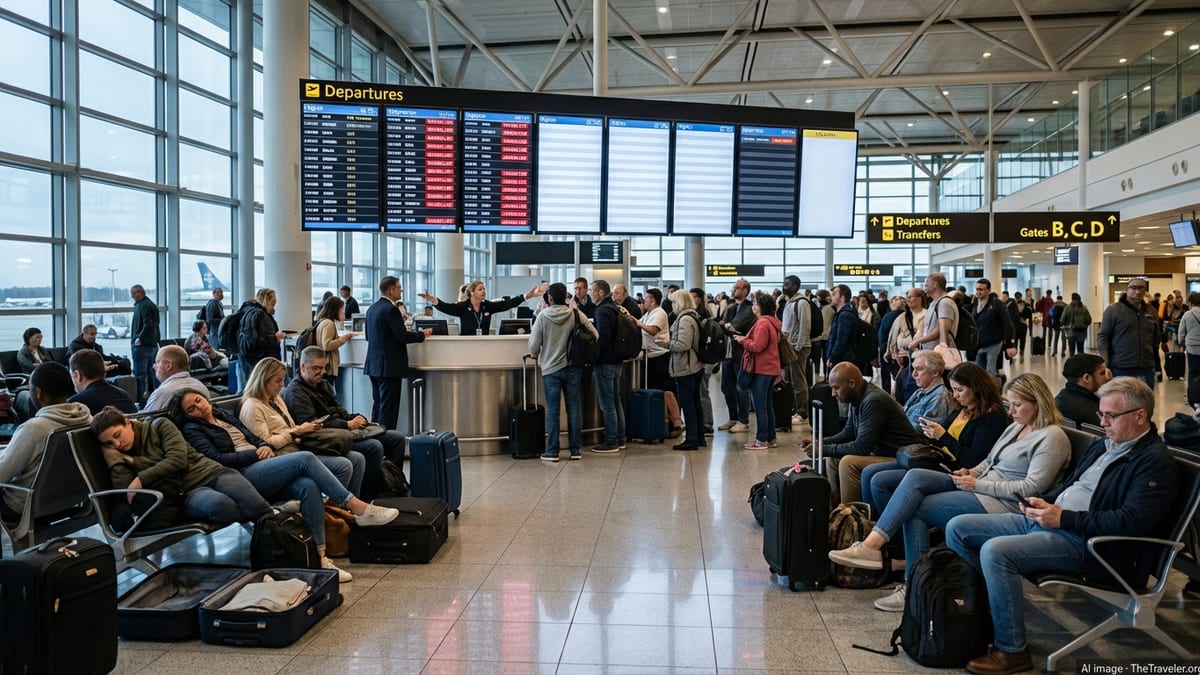
Travel risk specialists note that the aviation environment remains fluid, with the prospect of new airspace restrictions if tensions flare again. Passengers are being urged, through public advisories and airline communications, to closely monitor flight status, avoid proceeding to airports without confirmed bookings and allow for the possibility that transit hubs could become inaccessible at short notice if military activity intensifies.
Global Travellers Face Layered Security and Planning Challenges
For international travelers, the convergence of elevated conflict risk, volatile airspace conditions and shifting government advice has produced a complex and often confusing landscape. Public guidance from multiple governments highlights a range of potential threats in Lebanon, Iraq, Palestine, Syria and neighboring states, including missile and drone strikes, sporadic rocket fire, terrorism, kidnapping and civil unrest, as well as hazards from unexploded ordnance in some border regions.
These dangers are compounded by the possibility that crisis conditions could constrain basic services. Analysts warn that intensified fighting may disrupt power, telecommunications and medical facilities, and could also affect critical transport nodes such as ports, main highways and international airports. In a number of conflict-affected areas, humanitarian agencies are already reporting strained local capacity and limited safe access for civilians.
Against this backdrop, travel planners recommend that individuals and companies reassess itineraries that transit high-risk air corridors or rely heavily on regional hubs now exposed to potential spillover from nearby fighting. Insurers and corporate security advisers are updating risk matrices and, in some cases, revising coverage terms, particularly for destinations where governments advise against all travel or warn that evacuation options may be extremely limited in a sudden crisis.
Rising Demand for Real-Time Information and Flexible Itineraries
The fast-moving situation has led to a surge in demand for timely, verified information as travelers attempt to navigate overlapping warnings from different governments and carriers. Publicly available resources from foreign ministries, aviation authorities and international organizations are being supplemented by real-time flight tracking tools and commercial risk intelligence platforms, as travelers and travel managers seek clarity on which routes remain viable.
Specialists in corporate and leisure travel planning note a marked shift toward flexible booking arrangements that allow for rapid changes without heavy penalties. According to industry commentary, businesses with staff in or near the affected region are increasingly adopting layered contingency plans, ranging from alternative routing through safer hubs to remote work arrangements that reduce the need for physical presence in high-risk areas.
For now, the outlook remains uncertain. With Lebanon newly aligned in practice with Iraq, Palestine and Syria on many government high-risk lists, and with Australia and other states maintaining elevated alerts, global travelers face an extended period in which caution, flexibility and close attention to official advisories and airline updates are likely to be essential components of any journey touching the Middle East.