


More news on this day
Australian travelers connecting through Qatar and the United Arab Emirates are being urged to reassess their plans as updated government guidance highlights an unpredictable security environment around key Gulf transit hubs, amid concerns that wider Middle East conflict risks could re-emerge.
Get the latest news straight to your inbox!
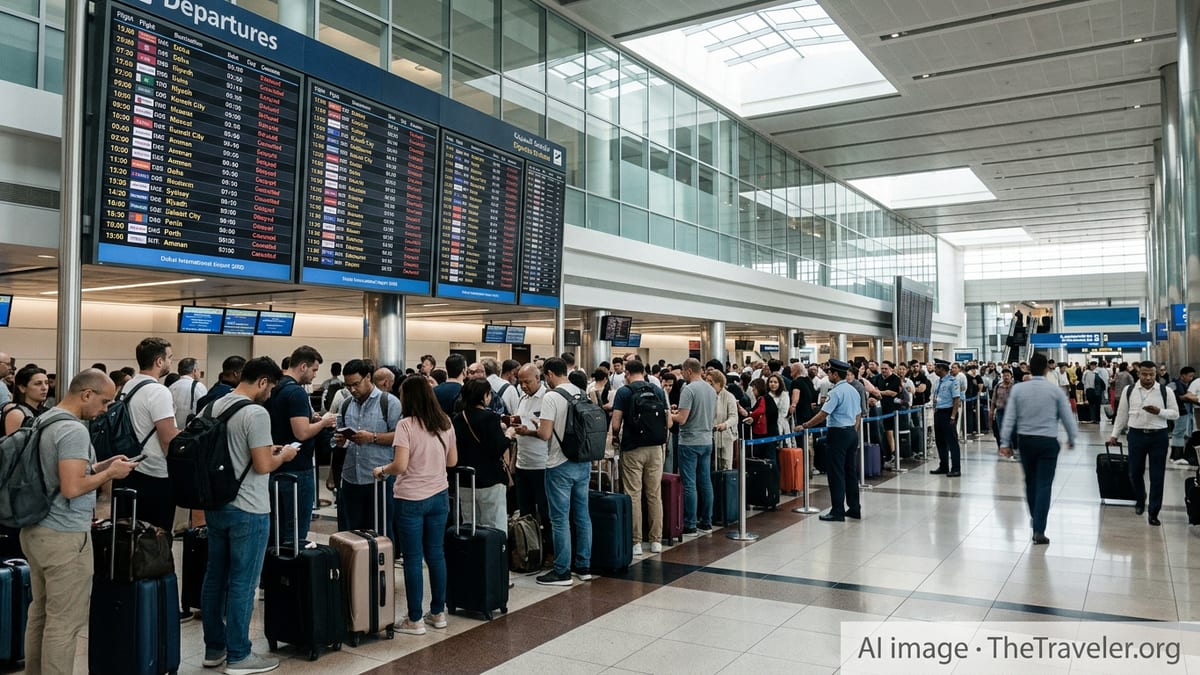
Doha Moves to Level 3 as Security Concerns Intensify
Australia’s Smartraveller service recently raised its advice for Qatar to a “reconsider your need to travel” level, placing Doha in the same higher-risk category as several other Middle East states and reflecting growing unease about regional tensions and possible spillover from the 2026 Iran conflict. Publicly available advisories describe an unpredictable security situation in Qatar and its surrounding airspace, noting that conditions can deteriorate quickly.
The change means Australian travelers transiting Hamad International Airport are now formally on notice that their journeys may be disrupted at short notice. Travel advisories highlight the possibility of airspace closures or restrictions, as well as the risk that security alerts in or around Doha could affect airport operations and the wider network of connections through Qatar Airways.
International partners have taken a similar line, with the United States and several European governments also flagging heightened security risks and the potential for renewed hostilities in parts of the Middle East. Together, these alerts underline that the conflict which shut large sections of regional airspace earlier in the year continues to cast a long shadow over Gulf aviation.
Warnings Extend to UAE Transit Hubs Dubai and Abu Dhabi
The increased caution around Qatar comes as Australian travel advice continues to urge a high degree of vigilance for the United Arab Emirates, where Dubai and Abu Dhabi serve as major global transit gateways. Australia ranks the UAE alongside Qatar in an elevated risk category, noting the potential impact of regional conflict, terrorism threats and missile or drone activity on civilian aviation.
Public information from government portals points out that while day-to-day life in Gulf cities may appear largely normal, any sudden escalation in tensions could trigger rapid airspace changes or targeted strikes on infrastructure viewed as strategically important. During earlier phases of the conflict, the UAE was among states that temporarily closed or restricted their airspace, forcing airlines to cancel or reroute thousands of flights.
For passengers, this means Emirates and Etihad Airways itineraries that rely on smooth transits through Dubai and Abu Dhabi carry a higher degree of uncertainty than usual. Airlines continue to operate extensive schedules, but travelers are being advised to check both airline alerts and government advisories frequently in the lead-up to departure.
Emirates, Qatar Airways and Etihad Navigate a Fragile Recovery
Gulf carriers Emirates, Qatar Airways and Etihad Airways have spent much of 2026 rebuilding their networks after earlier waves of cancellations, diversions and temporary corridor openings that followed the outbreak of war involving Iran and its rivals. Industry analyses note that these airlines face some of the greatest operational uncertainty, given their reliance on dense long-haul traffic flows that converge on a small number of regional hubs.
In recent weeks, publicly available airline updates indicate that carriers are striving to keep schedules intact while adding flexibility for passengers affected by sudden security developments. Some have offered fee-free rebooking or refunds during defined disruption windows, while reminding customers that decisions on airspace closures ultimately rest with governments and aviation authorities rather than individual airlines.
Australian regulators are also monitoring the knock-on effects. The Australian Competition and Consumer Commission has reported that Middle East instability has filtered through to ticket pricing and capacity on routes linking Australia to Europe and beyond, with some travelers opting for longer routings via Asia or North America to avoid Gulf stopovers. Consumer guidance underscores that cancellations or delays triggered by government security decisions are generally treated differently to routine operational disruptions.
Middle East Conflict Risks Remain a Key Unknown
Although front-line fighting has eased compared with the peak of the 2026 Iran war, regional security briefs continue to warn that the underlying drivers of conflict have not been resolved. Government crisis hubs describe the situation as fluid, with the possibility that missile exchanges, drone strikes or proxy clashes could flare again and quickly draw in Gulf states that host key energy and aviation infrastructure.
Earlier stages of the conflict saw Qatar, the UAE and several neighboring countries temporarily close their airspace, contributing to what analysts described as the largest aviation disruption since the pandemic. Thousands of passengers were stranded worldwide as carriers suspended services or waited for narrow, specially negotiated corridors to reopen across the Gulf.
Policy papers and think-tank reports suggest that any renewed escalation could again target or indirectly affect major transit hubs such as Doha, Dubai and Abu Dhabi, given their dual roles as aviation crossroads and logistical centers for regional governments and partners. Travel advisories therefore continue to frame the risk environment as dynamic rather than settled, even as commercial flights resume on many routes.
What Australian Travelers Are Being Urged to Consider
For Australians planning trips to Europe, Africa or Asia that rely on Gulf connections, the latest advisories effectively raise the bar for acceptable risk. Official guidance stresses that each traveler must make an individual decision about whether the convenience and price advantages of transiting the Middle East outweigh the potential for sudden disruption or exposure to a deteriorating security environment.
Travel advice encourages passengers to consider purchasing comprehensive travel insurance that clearly covers conflict-related disruptions and to read the fine print around airline schedule changes linked to security incidents. Observers also recommend keeping itineraries as flexible as possible, allowing time buffers for missed connections and considering alternative routings that avoid contested airspace if personal risk tolerance is low.
Public commentary from the travel industry in Australia indicates that, despite the warnings, demand for cheaper Middle East transit fares remains strong. Some travelers continue to prioritize cost and convenience, while others are shifting to more expensive one-stop options through Asian or European hubs outside the Gulf. The latest escalation in security alerts around Doha and the continued caution around the UAE suggest that this divide in traveler behavior is likely to persist as long as the regional outlook remains uncertain.