


More news on this day
A fast moving wildfire in the historic Fontainebleau forest, about 60 kilometers south of central Paris, has forced evacuations, closed part of a key motorway and severely disrupted high speed train services at the height of France’s summer travel season.
Get the latest news straight to your inbox!
Blaze of exceptional scale in Fontainebleau forest
Publicly available information from French and international media describes the fire as unusually intense for the Paris region, burning through large sections of the Fontainebleau forest between the towns of Avon and Noisy sur École. The blaze broke out over the weekend and intensified into Monday, fanned by dry vegetation and hot winds linked to a wider heatwave affecting much of western Europe.
Reports indicate that hundreds of firefighters worked through the night with ground crews, engines and heavy equipment to try to halt the flames in the dense woodland. Aerial images circulated by broadcasters show towering smoke columns and blackened clearings in an area normally known for hiking trails, climbing sites and day trips from the capital.
According to published coverage, the fire has consumed several hundred hectares of forest, though precise figures are evolving as containment lines shift. Emergency bulletins emphasize that conditions remain volatile, with smoldering hotspots and changing winds posing a risk of flare ups close to residential zones and main transport corridors.
Evacuations ordered as smoke approaches residential areas
Local authorities in the Seine et Marne area have ordered precautionary evacuations in parts of Avon and neighboring communities on the forest edge. Residents in streets closest to the advancing fire line were asked to leave their homes, particularly where thick smoke and flying embers threatened gardens and rooftops.
French media reports describe people leaving with overnight bags and pets, heading to relatives’ houses or temporary reception centers prepared by local municipalities. Social media posts from the area show cars lining narrow roads out of affected neighborhoods as ash falls on parked vehicles and outdoor furniture.
For now, publicly available information suggests that damage to homes has been limited compared with major wildfire incidents in southern France in recent years. However, the scale of the smoke plume and the proximity of flames to built up areas have heightened concern, and officials have urged residents in surrounding towns to keep windows closed and limit outdoor activity where smoke is heavy.
High speed train lines hit at peak holiday period
The wildfire has severely disrupted high speed rail services on the busy south eastern axis that links Paris with Lyon and the Mediterranean. National rail operator updates cited in French news reports say that the main high speed line running just south of the capital has been “strongly disrupted” since Sunday because of the fire close to the tracks.
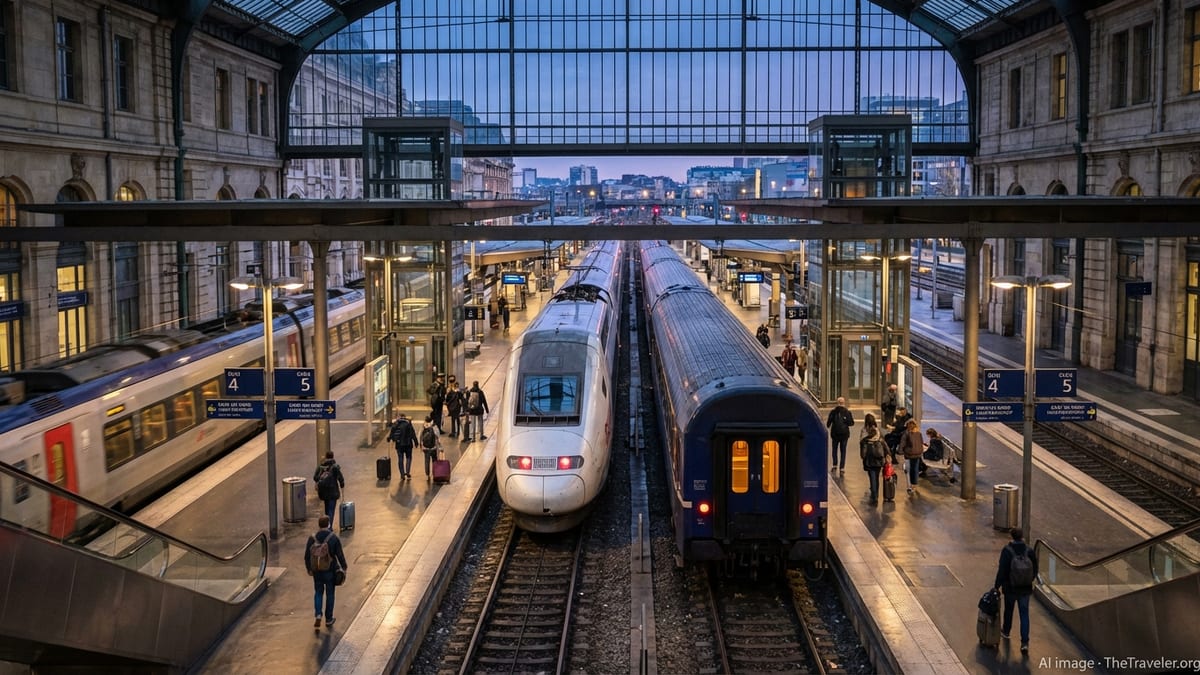
Trains between Paris Gare de Lyon and destinations in eastern and southeastern France have been delayed, rerouted or cancelled, with some services reportedly facing delays of several hours. Passengers described crowded concourses and long waits as rail traffic was throttled to protect crews working near the line and to reduce the risk of sparks or new ignitions along the embankments.
Travel coverage notes that the disruption comes at a particularly sensitive moment, with schools on summer break and many travelers on the move ahead of France’s 14 July national holiday. Rail companies have advised passengers to check schedules before heading to stations, expect last minute changes and carry water as air conditioning on some stranded trains has struggled in the extreme heat.
Motorway closures snarl road traffic south of Paris
The blaze has also affected one of France’s main north south road arteries. According to French press reports, a section of the A6 motorway, which connects Paris with Lyon and further onward routes, has been closed near the fire zone to allow firefighting operations and to keep drivers away from heavy smoke and low visibility.
Traffic alerts indicate that vehicles heading toward Lyon have been diverted off the A6 at Cély, while those driving toward Paris have been rerouted at Ury and other junctions farther south. Long queues have formed on local roads taking the diverted flow, with drivers facing extended journey times on what is normally one of the busiest weekends of the season.
Images carried by national broadcasters show cars at a standstill beneath a hazy sky, with electronic signs warning of fire related closures. Road operators have urged motorists to follow diversion signs, avoid stopping on the hard shoulder near the affected area and monitor national traffic bulletins for updates on when sections of the motorway can safely reopen.
Heatwave amplifies wildfire risk across France
The fire near Paris is unfolding against the backdrop of an intense heatwave that has pushed temperatures far above seasonal norms across much of France. Meteorological reports place more than thirty departments under high level heat advisories, with daytime highs in parts of the country running several degrees above long term averages.
Environmental agencies have repeatedly warned that prolonged hot, dry spells are drying out forests and scrubland, creating conditions where even relatively small ignitions can rapidly escalate into large and hard to control fires. The Fontainebleau blaze is being cited in national coverage as a striking example of how areas not traditionally associated with severe wildfires, including the wider Paris region, are now facing increased risk.
Travel and tourism analysts say the episode is likely to sharpen attention on fire preparedness around popular natural sites close to major cities, and on how transport networks plan for simultaneous challenges from heat and wildfire. For visitors planning trips to or through the Paris area in the coming days, publicly available guidance recommends monitoring official transport updates, allowing extra time for journeys and being ready to adjust itineraries if conditions worsen or new safety measures are introduced.