


More news on this day
Rail passengers faced disruption at Birmingham New Street after a train fire led to evacuations and service suspensions across parts of the network, as emerging reports began to clarify what sparked the blaze.
Get the latest news straight to your inbox!
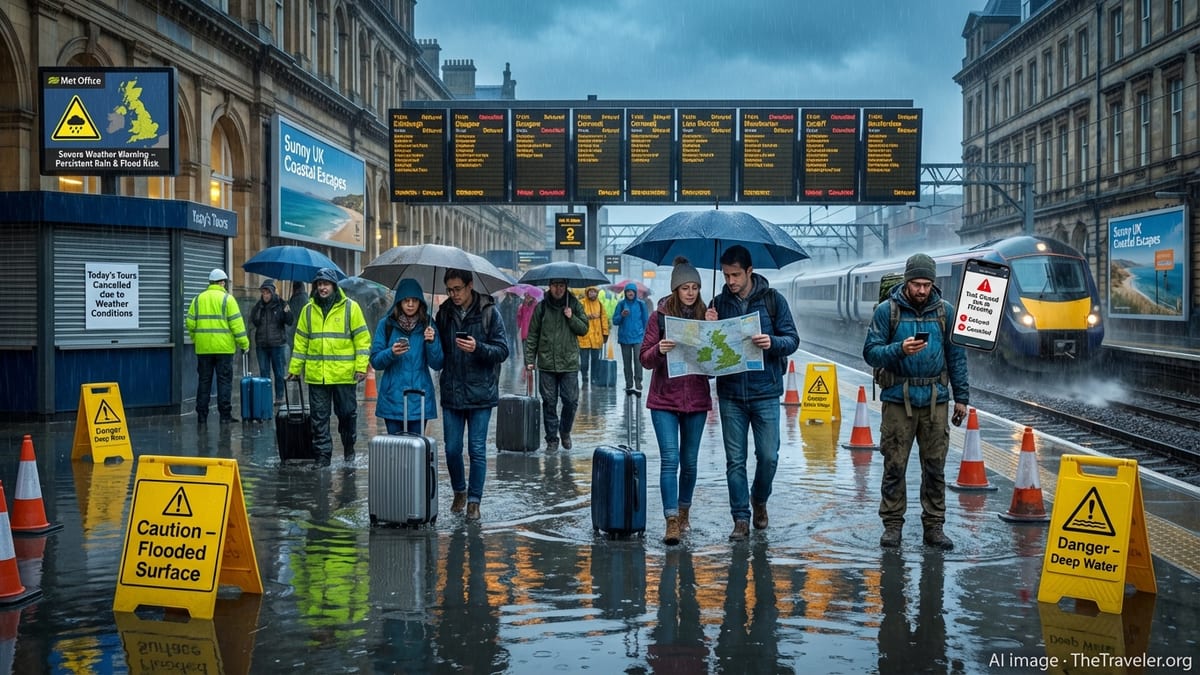
Evacuations at Major Midlands Hub
Reports from rail operators and local media indicate that a train at or near Birmingham New Street developed a fire that prompted the immediate evacuation of passengers on board. Some services were brought to a standstill while staff guided people away from affected platforms and trains. Witness accounts shared through public channels described smoke visible around one of the carriages and a rapid response that saw trains held outside the station approaches.
The incident unfolded at a time of steady passenger traffic through the key Midlands interchange, heightening concern about the potential scale of disruption. Publicly available information shows that services on routes passing through New Street were delayed or diverted while checks were carried out on the affected unit and on nearby infrastructure. Crowded concourses and information boards showing cancellations added to the pressure on travellers attempting to continue their journeys.
Emergency plans for rail incidents typically prioritise moving passengers off trains and away from confined spaces when smoke or fire is suspected. In this case, people were guided from carriages onto platforms and out of the immediate vicinity of the affected train, with announcements and staff direction used to keep flows of passengers as orderly as possible. No serious injuries had been highlighted in early coverage, although some passengers reportedly experienced minor smoke exposure and shock.
Cause of the Blaze Linked to Train Systems
As services began to recover, attention turned to what sparked the blaze. Early technical indications cited in rail and regional news coverage point toward a problem within the train’s electrical systems, consistent with faults that have triggered other recent rail fires. These can include overheating components in underfloor equipment, issues within power cars, or failures in cabling linked to onboard power supplies.
The pattern described in available reports suggests that the fire originated in equipment beneath or at one end of the train, rather than from passenger areas. Similar incidents documented elsewhere on the rail network have involved overheating brake components or electrical arcing in power circuits, resulting in smoke and, in some cases, visible flames. In many of those cases, rapid activation of fire suppression systems and prompt driver action limited the spread of the blaze.
Technicians are expected to carry out a detailed inspection of the affected train, examining components such as traction equipment, auxiliary power units and associated wiring. Findings from those checks are likely to inform any further safety guidance issued to operators using the same train type. While the initial focus is on a possible electrical fault, published commentary notes that investigators will also consider factors such as recent maintenance history, train loading and ambient temperatures on the day of the fire.
Service Disruption and Passenger Impact
The fire and subsequent evacuation added to a challenging period for rail passengers using Birmingham New Street, already a busy interchange for services across the West Midlands and beyond. Disruption reports show trains on key routes experiencing delays, with some services terminated short of their planned destinations while the affected lines were checked and cleared. Replacement routes and diversions were used where possible, but some journeys took significantly longer than scheduled.
Passengers shared images and accounts across social media platforms, highlighting crowded concourses and departure boards filled with revised timings. Some described being held outside the station on trains awaiting clearance to enter, while others reported needing to re-plan connections as the incident unfolded. Rail operators advised travellers to check live information and to retain tickets for potential delay compensation claims, reflecting established practice during major disruption.
While the incident caused inconvenience for many, it also demonstrated how quickly modern rail hubs can implement emergency protocols. Once the immediate risk from the fire had been contained, engineers inspected trackside and overhead equipment to confirm it was safe to restart traffic. Progressive restoration of services followed, with priority given to clearing stranded trains and reconnecting the most heavily used routes through the station.
Safety Procedures Under Fresh Scrutiny
The Birmingham New Street fire joins a series of recent rail incidents in the United Kingdom and abroad that have prompted renewed scrutiny of evacuation and fire safety procedures. Analyses of comparable events often highlight the importance of early detection of smoke or unusual odours, clear communication to passengers, and swift coordination between train crews, station staff and control centres. In crowded urban networks, these factors can significantly reduce the risk of injury and help prevent panic.
Publicly available guidance on rail safety stresses that most train fires are contained to small areas of equipment and are brought under control quickly. However, the confined nature of carriages and platforms, particularly in partially enclosed station environments, means that smoke can spread rapidly and create hazardous conditions even when flames are limited. As a result, evacuation decisions are often taken early, sometimes before the full scale of an incident is known.
Specialist rail investigators typically review incidents of this type to determine whether existing protocols worked as intended or whether changes are needed. This can include evaluating how long it took to identify the problem, how effectively passengers were moved to safety, and how quickly services could be restarted without compromising safety. The Birmingham New Street event is likely to be examined in that wider context, contributing to ongoing efforts to strengthen resilience across the network.
What Travellers Can Expect Next
In the aftermath of the New Street train fire, passengers on affected routes can expect some continued knock-on delays as timetables and rolling stock diagrams are reset. Trains taken out of service for inspection and repair can create short term gaps in fleet availability, which operators may cover by altering formations or substituting different train types. Updated journey planners and station announcements are expected to reflect these changes over the coming days.
Rail users are being encouraged through operator communications and news coverage to allow extra time for journeys that pass through Birmingham New Street, particularly at peak periods. Travellers who experienced significant disruption during the incident are generally advised to check eligibility for delay compensation through the relevant train company, using journey records and tickets as evidence.
At the same time, the emerging picture of an equipment related cause is likely to reinforce ongoing industry work around inspection and maintenance of electrical and mechanical systems on busy passenger fleets. While full technical conclusions may take time, the Birmingham New Street blaze is already shaping discussions about how to manage similar events, reduce the likelihood of recurrence and maintain passenger confidence in one of the country’s most important rail hubs.