


More news on this day
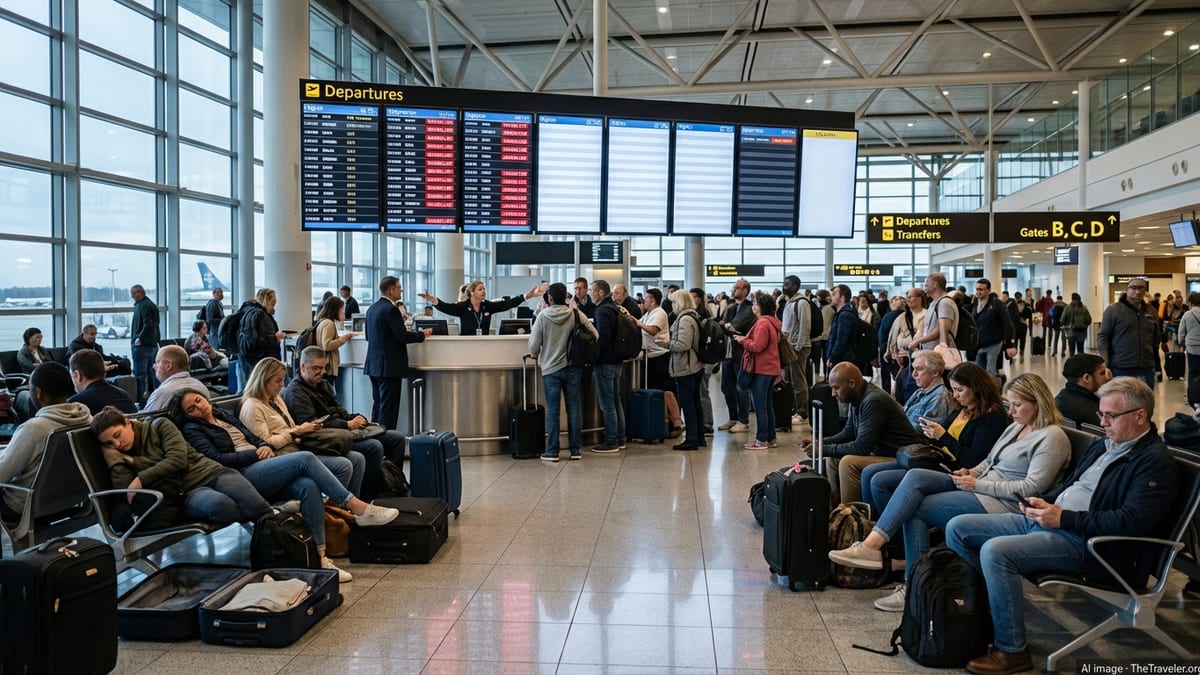
Australian travelers have been urged to prepare for fresh disruption across key Middle Eastern hubs, as updated government advisories flag the risk of sudden airport shutdowns, flight cancellations and complicated insurance claims linked to the evolving security situation involving Iran and its regional neighbors.
Get the latest news straight to your inbox!
Heightened official warnings for Australians in the region
Publicly available guidance from Australia’s Smartraveller service and the broader crisis hub for the Middle East has been updated through June 2026, reflecting what officials describe in published material as a highly volatile situation across multiple states, including Iraq, Lebanon, Israel and the Gulf. While advisory levels differ from country to country, the overarching message for Australians is to expect short-notice changes to aviation operations and to reconsider non essential travel through conflict-affected airspace.
Recent Iraq specific advice highlights that airspace closures and flight disruptions can occur with little warning and may affect services globally, not just point to point routes in the immediate region. Similar wording appears across Middle East destination pages, underlining the possibility that a local airport decision or airspace restriction can ripple quickly into schedules linking Europe, Asia and Australia.
The crisis hub overview also notes that although a diplomatic framework between the United States and Iran has been outlined to de escalate tensions, the deal remains fragile and incomplete. Public summaries stress that ceasefire understandings and partial airspace reopenings have not yet translated into a predictable environment for civil aviation.
As a result, Australian citizens are being encouraged through open source channels to maintain flexible plans, register travel where possible and follow airline and airport announcements closely, particularly when connecting through major hubs in the Gulf and Levant.
Iran conflict fallout continues to reshape air routes
The renewed travel warnings come against the backdrop of an extended aviation crisis triggered by confrontations involving Iran, Israel, the United States and several Gulf states. Since late February 2026, a series of missile exchanges and retaliatory strikes has led multiple governments, including Iran, Iraq, Israel, Jordan, Qatar, Bahrain and Kuwait, to close or heavily restrict their airspace at different points.
Industry and logistics bulletins describe a patchwork of closures, temporary suspensions and controlled corridors that has forced airlines to reroute long haul services away from traditional Middle East transit lanes. Passenger and freight operators have been diverting flights via alternative paths through the Caucasus, North Africa or the Indian Ocean, adding time and cost while placing additional strain on aircraft and crew resources.
Analyses by aviation bodies and logistics providers indicate that the attacks on Iranian territory in early 2026 and subsequent Iranian action against several Gulf states produced the most severe disruption to regional air routes since the pandemic period. Capacity reductions for the June to August 2026 season are evident in published schedule data, with some carriers trimming frequencies to and from the region to maintain resilience in the face of continuing uncertainty.
Against this complex operational backdrop, Australia’s travel advice emphasises that even when airports remain technically open, overflight bans or re routings elsewhere in the network can still result in missed connections, diversions and extended layovers for passengers traveling to or from the Middle East.
Pressure on key hubs in Bahrain, Qatar, Israel, Kuwait, Lebanon and Iraq
Regional coverage from airlines, data providers and specialist travel outlets points to particular pressure on hub airports in Bahrain, Qatar, Israel, Kuwait, Lebanon and Iraq, which sit close to contested airspace and have faced repeated disruption throughout 2026. On several occasions in recent months, coordinated or near simultaneous airspace restrictions across parts of the Gulf and Levant have led to rolling waves of cancellations and delays.
Earlier in June, tracking data cited by aviation focused publications showed clusters of cancellations and extended delays at airports in Qatar, Kuwait and Bahrain, coinciding with temporary suspensions of air routes over neighboring states. Separate reporting on the aftermath of Iranian strikes in February and March highlighted how Bahrain and Kuwait, both hosting foreign military facilities, experienced short-notice pauses in civilian operations as safety assessments were carried out.
Israel’s airspace and major gateway at Tel Aviv have also seen periodic shutdowns and tight operating windows as security conditions fluctuate, with knock-on effects for flights serving Lebanon and Iraq due to shared or adjacent flight information regions. While many of these closures have been lifted within hours or days, repeated adjustments have made it harder for airlines to maintain stable schedules and for travelers to plan with confidence.
Despite these challenges, not all services have been suspended. Airlines based in the Gulf and beyond continue to operate a substantial number of flights, but they are increasingly building contingency buffers into timetables and warning customers that schedules remain subject to change as regional dynamics evolve.
Travel insurance, bookings and risk management for Australians
The Australian government’s messaging underscores a critical but sometimes overlooked point for travelers: standard travel insurance policies may exclude coverage for events linked to war, civil unrest or government ordered airspace closures. Insurance industry advisories indicate that claims for costs arising from security related airport shutdowns or mass cancellations can be treated differently depending on policy wording and the timing of bookings.
Travel risk specialists recommend that Australians planning itineraries through Bahrain, Qatar, Israel, Kuwait, Lebanon, Iraq or neighboring states carefully review their policy documents before departure. Particular attention should be paid to exclusions related to known events, declared conflicts and government travel warnings, as these can affect eligibility for reimbursement if flights are later cancelled due to the evolving Iran linked situation.
Booking flexibility has become a key defense for long haul passengers. Airlines serving the Middle East corridor, including carriers with extensive connections to Australia, have periodically offered change fee waivers or broader flexibility windows tied to the unrest. However, these measures are usually time limited and may not apply to all fare classes, so passengers are encouraged by public guidance to monitor airline travel alert pages in the lead up to departure.
For travelers who still choose to transit high risk hubs, risk advisers point to practical steps such as allowing longer connection times, avoiding tight same day onward links and keeping essential items in cabin baggage in case luggage is delayed or rerouted during operational disruptions.
What Australian travelers should watch in the weeks ahead
Looking ahead to the northern summer peak, analysts note that the Middle East’s role as a bridge between Europe, Asia and Australasia means that even incremental changes in regional stability can have outsized effects on global connectivity. Airline schedule data and industry commentary suggest that carriers are proceeding cautiously with capacity additions, mindful that further escalations involving Iran or its regional rivals could prompt new restrictions.
Travel trade surveys conducted in May and June signal that tour operators and corporate travel managers serving the Australian market are re evaluating routings, in some cases steering customers through alternative hubs where commercially viable. At the same time, a portion of demand continues to flow through established Gulf and Levant gateways, reflecting limited options for certain city pairs and the continued importance of Middle Eastern carriers on the Australia to Europe and Africa corridors.
Australian travelers considering journeys through Bahrain, Qatar, Israel, Kuwait, Lebanon, Iraq or neighboring countries in the near term are therefore being advised by publicly available guidance to stay informed about both security and operational developments. Monitoring airline advisories, checking national travel advice before and during trips, and being prepared to adjust plans quickly remain central to managing the heightened risk of airport shutdowns, sudden flight cancellations and complex insurance outcomes across this strategically vital region.