


More news on this day
Chicago O’Hare and Hartsfield-Jackson Atlanta are emerging as rare bright spots for U.S. international tourism in 2026, with new datasets showing the two hubs outpacing domestic rivals in attracting overseas travelers.
Get the latest news straight to your inbox!
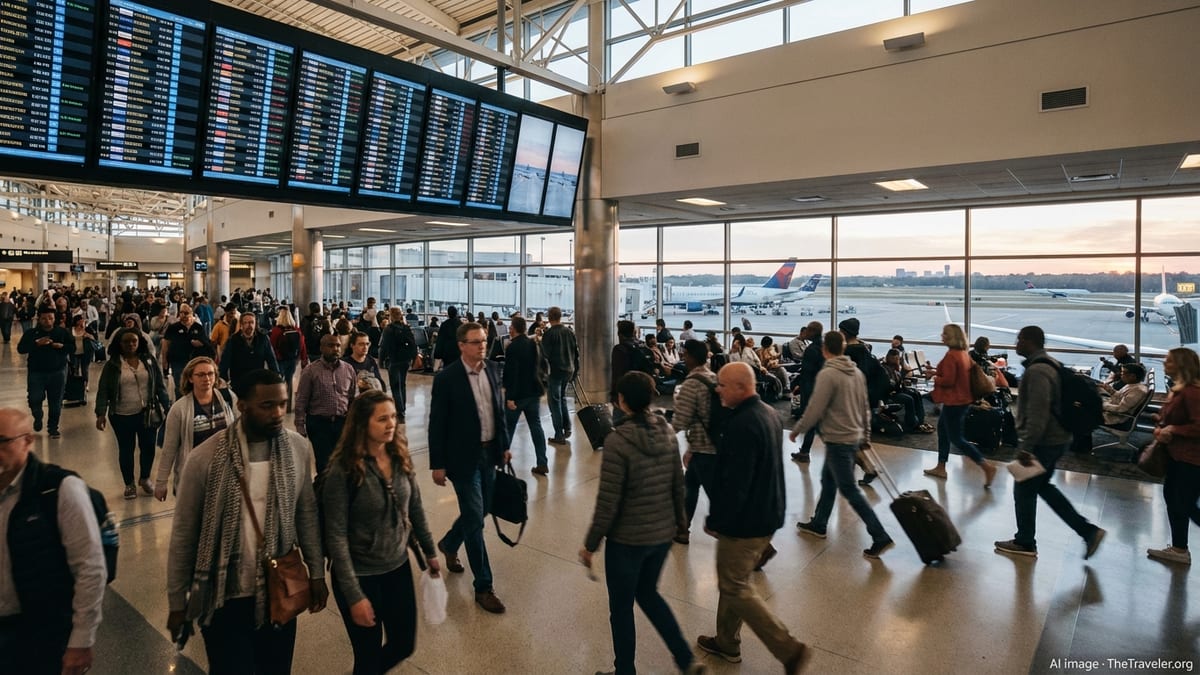
New Data Highlights Diverging Paths for U.S. Gateways
Fresh figures released in the first half of 2026 suggest that Chicago and Atlanta are breaking away from other major U.S. airports when it comes to international tourism growth. While overall North American passenger counts softened slightly in 2025, publicly available traffic datasets from Airports Council International and federal aviation statistics point to a contrasting pattern at these two hubs, where long haul and connecting international flows are expanding faster than at other U.S. gateways.
Airports Council International’s 2026 World Airport Traffic Dataset, which finalized 2025 global numbers in July 2026, shows that both Chicago O’Hare and Hartsfield-Jackson Atlanta maintained places among the world’s busiest airports by total passengers. Chicago strengthened its position in aircraft movements, while Atlanta kept its long established lead in overall passenger traffic. Behind those headline rankings, analysts note that the international component of their traffic has grown more robustly than at most competing U.S. hubs, particularly on transatlantic and Latin American routes.
In parallel, preliminary 2025 enplanement figures published by U.S. aviation authorities in June 2026 indicate that Chicago posted one of the stronger year on year passenger increases among major U.S. airports, while Atlanta’s figures were broadly stable despite a modest dip in domestic volumes. Combined with schedule data for early 2026 showing additional international services at both hubs, this has reinforced the view that Chicago and Atlanta have become the country’s strongest platforms for renewed inbound tourism growth.
Chicago O’Hare Rides Network Expansion and Fleet Shifts
Chicago O’Hare’s performance has been closely tied to the way U.S. and international carriers are rebalancing their networks. World airport rankings released in April and July 2026 highlighted that O’Hare climbed to the top global position for aircraft movements in 2025, with more than 850,000 takeoffs and landings and double digit growth in operations compared with 2024. That increase was driven in part by additional widebody activity and the restoration of pre pandemic long haul routes to Europe and Asia.
Industry coverage notes that Chicago has been a particular beneficiary of new generation long range aircraft that allow airlines to connect secondary European and Asian cities nonstop to the U.S. Midwest. As more carriers deploy fuel efficient twin engine jets on these routes, O’Hare has gained capacity to cities that were previously served via East Coast gateways. This has translated into higher volumes of inbound visitors using Chicago as their first point of entry to the United States, rather than transiting through New York or other coastal hubs.
Domestic connectivity has also supported the international surge. Chicago’s role as a central hub in the U.S. network means that international tourists can reach a wide range of interior destinations on single ticket itineraries. Travel industry reports suggest that tour operators and online travel platforms increasingly promote itineraries that route visitors through O’Hare, leveraging relatively reliable connections and an expanding mix of European, Middle Eastern, and East Asian airlines.
Atlanta Consolidates Its Status as a Global Mega Hub
Hartsfield-Jackson Atlanta has long topped the global rankings for total passenger traffic, and 2025 was no exception. ACI’s latest dataset confirms that it remained the world’s busiest airport by passenger numbers, processing more than 100 million travelers. Historically, the majority of that volume has been domestic connecting traffic, but recent timetables and airline announcements for late 2025 and 2026 indicate a strategic push to deepen international flows.
According to published airport traffic reports and schedule analyses, Atlanta has seen steady seat growth on routes to Western Europe, Mexico, and the Caribbean, alongside an increase in frequencies to key hubs in South America. Additional widebody services on trunk routes to major European capitals are feeding more inbound visitors into the southeastern United States, with Atlanta serving as their first stop and primary transfer point.
Another factor supporting Atlanta’s international tourism growth is its positioning as a one stop option between secondary U.S. cities and overseas destinations. The airport’s extensive domestic bank structure allows carriers to time long haul departures to maximize inbound connection opportunities, which is particularly attractive for European travelers heading to beach and theme park destinations in Florida and the Carolinas. Air service development efforts in the years following the pandemic have increasingly focused on maintaining and thickening these high value international flows, rather than adding large numbers of new domestic routes.
Why Other U.S. Hubs Are Lagging on International Tourism
The outperformance of Chicago and Atlanta stands in contrast to more muted results at other major U.S. gateways. While airports such as Dallas Fort Worth, Denver, Los Angeles, Miami, and New York’s major hubs all continue to report very high overall passenger numbers, recent datasets show flatter or declining year on year growth in total enplanements and a slower rebound in some long haul segments.
Part of this divergence reflects regional demand patterns. Analysts point to capacity constraints, airspace congestion, and ongoing terminal redevelopment projects at some coastal airports, which can limit the pace at which carriers add new international services. In addition, certain hubs face stronger competition from nearby international gateways that share the same catchment area, spreading inbound tourism flows across multiple airports instead of consolidating them at a single mega hub.
North American traffic reports for 2025 also indicate that domestic volumes declined slightly across the region, weighing on overall totals at airports where international traffic remains a relatively small share of operations. By contrast, Chicago and Atlanta have been able to rely on a combination of resilient domestic demand and faster growing international segments, positioning them as the two U.S. airports where international tourism growth is most fully offsetting regional softness.
Implications for Travelers Planning U.S. Trips in 2026
For international travelers planning trips to the United States in late 2026 and into 2027, the strengthened role of Chicago and Atlanta has practical implications. With airlines concentrating more long haul capacity at these hubs, visitors are likely to see a broader choice of nonstop options, potentially more competitive fares, and improved connection possibilities to secondary U.S. cities when booking through either airport.
Travel industry commentators note that O’Hare’s growing portfolio of European and Asia Pacific links makes it an increasingly efficient entry point for itineraries that combine major coastal destinations with time in the Midwest and Great Lakes region. For visitors from Europe or the Middle East, routings via Chicago can reduce total travel time to cities such as Minneapolis, Detroit, or St. Louis compared with connecting through East Coast airports.
Atlanta, meanwhile, is consolidating its reputation as the primary connecting hub for overseas visitors heading to the American South. Expanded links to Caribbean and Latin American destinations also make the airport attractive for multi country holidays that combine the southeastern United States with beach resorts further south. With both Chicago and Atlanta now standing out as the leading U.S. airports for international tourism growth in 2026, travelers can expect these hubs to remain central nodes in global air itineraries for the foreseeable future.