


More news on this day
Operations of Nigerian carrier Air Peace were severely disrupted in Lagos and Abuja as aviation unions halted flights over a labour dispute, stranding passengers and intensifying scrutiny of working conditions in the country’s aviation sector.
Get the latest news straight to your inbox!
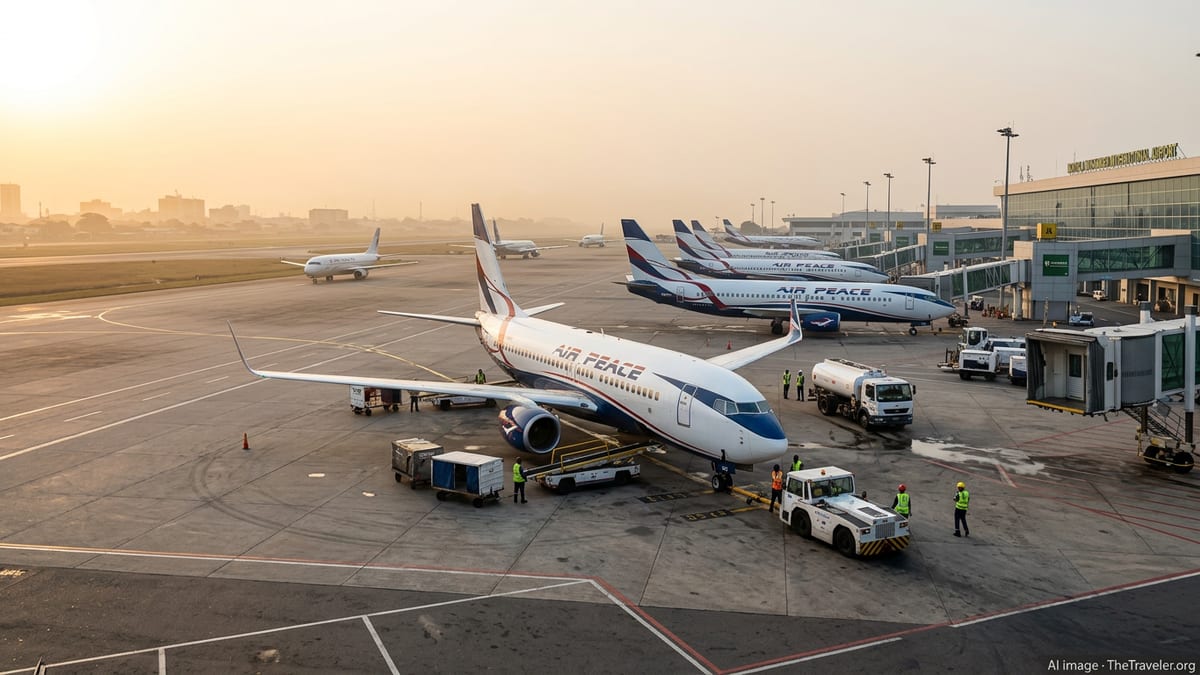
Unions Target Airline Operations in Key Hubs
According to published coverage in Nigerian media, aviation unions moved to shut down Air Peace operations at Murtala Muhammed International Airport in Lagos and Nnamdi Azikiwe International Airport in Abuja following a breakdown in negotiations over employment conditions. The disruption affected multiple departures and arrivals, with check in counters reportedly closed and aircraft kept on the ground.
Reports indicate that the action formed part of a wider push by union leaders to pressure airline management and relevant government agencies to address grievances involving staff welfare, job security and alleged contract breaches. By concentrating on Lagos, the country’s busiest aviation hub, and Abuja, the political capital, union organizers maximized the visibility and impact of the stoppage.
Publicly available information shows that Air Peace, Nigeria’s largest carrier by fleet and market share, plays a central role in connecting Lagos and Abuja with other domestic cities and select international destinations. Any extended halt to its flights is therefore significant for both business and leisure travelers and for the broader perception of stability in Nigeria’s aviation market.
Witness accounts shared across local news platforms and social media described scenes of confusion as passengers learned of cancellations at short notice and sought alternatives on other carriers or via road transport between the two cities.
Labour Dispute Reflects Long running Tensions in Aviation
The shutdown of Air Peace flights comes against a backdrop of long running tensions between aviation unions and airline operators in Nigeria. Past disputes have centered on wage levels, delays in benefits, outsourcing of key functions, and concerns about safety and workload. Analysts note that these flashpoints mirror wider economic strains, including high inflation and currency volatility that have pushed up operating costs for carriers and living costs for employees.
Reports in business and labour focused outlets highlight that unions in the sector see industrial action as one of the few tools available to secure binding commitments on staff welfare. At the same time, airline executives have frequently pointed to steep fuel prices, foreign exchange shortages and expensive maintenance obligations as constraints on their ability to meet every union demand.
In the case of Air Peace, the latest dispute appears to involve a combination of disagreements over conditions of service and broader frustrations over how labour concerns are handled across the industry. Commentators quoted in Nigerian newspapers have suggested that the targeting of a single high profile airline is intended to send a message to other carriers and regulators about the seriousness of union demands.
Industry observers also link the current standoff to a wider pattern of labour unrest in strategic sectors such as energy, ports and public services, where unions have periodically staged strikes to protest economic reforms and the rising cost of living.
Passenger Disruption and Wider Travel Ripple Effects
The immediate impact of the grounding has been felt most sharply by travelers on the busy Lagos Abuja corridor, one of West Africa’s most heavily trafficked domestic routes. Flight cancellations forced many passengers to rebook on rival airlines, contend with steep last minute fares or abandon plans altogether, adding to the financial and emotional cost of the dispute.
Travel industry reports describe long queues at airline customer service desks and growing pressure on other carriers operating from Lagos and Abuja as stranded passengers sought remaining seats. With limited spare capacity in the market, aviation analysts warn that even a short shutdown of Air Peace services can lead to a cascading effect of delays and overbooked flights across the domestic network.
Businesses that rely on same day trips between the commercial and political capitals have also been affected. Corporate travel managers cited in local coverage noted that frequent disruptions force companies to build greater contingency time into schedules, shift some meetings online or fall back on lengthy road journeys between cities.
For international travelers connecting through Lagos or Abuja on Air Peace services, the situation has added another layer of uncertainty. Missed onward flights, extra accommodation costs and visa validity concerns are among the practical complications highlighted by passenger advocacy groups commenting on the disruption.
Economic and Regulatory Stakes for Nigeria’s Aviation Sector
Beyond the short term disruption to passengers, the grounding of Air Peace flights raises broader questions about resilience in Nigeria’s aviation sector. As the dominant local carrier and a key tenant at Lagos’s Murtala Muhammed International Airport, Air Peace is often regarded as a bellwether for the health of the domestic market.
Economic analysts note that repeated labour disputes and operational stoppages can undermine investor confidence and complicate efforts to position Nigeria as a regional aviation hub. Irregular flight schedules and sudden cancellations may also affect the country’s attractiveness to foreign airlines, business travelers and tourism operators looking for reliable regional connections.
Publicly available regulatory documents and past enforcement actions show that aviation authorities are tasked with balancing worker rights, airline viability and passenger protection. While unions seek stronger guarantees for staff, carriers argue for policies that ease cost pressures and support fleet renewal, safety upgrades and route expansion.
Commentary in national newspapers suggests that the present dispute could prompt renewed debate over sector wide frameworks for handling labour disagreements, including mediation mechanisms designed to avert last minute shutdowns of key routes and to give passengers more predictable information.
What Travelers Should Expect in the Coming Days
Travel advisories published by Nigerian media outlets emphasize that passengers booked on Air Peace should monitor official airline communications and airport information boards closely for updates on flight status. Given the scale of the disruption in Lagos and Abuja, recovery to normal operations is likely to be gradual even once a resolution to the labour dispute is announced.
Industry experts quoted in aviation analysis pieces explain that airlines typically need time to reposition aircraft and crew, clear passenger backlogs and rebuild regular schedules after a shutdown. This means that delays and occasional cancellations can persist for several days as operations are recalibrated, especially on high frequency domestic routes.
Travel agents and corporate travel departments are advising customers to confirm connections, consider flexible tickets where possible and allow extra time at airports during the period of uncertainty. Some commentators recommend that travelers with urgent commitments explore backup options on other carriers or alternative transport modes while the labour standoff runs its course.
As negotiations continue, the Air Peace shutdown in Lagos and Abuja is being closely watched across Nigeria’s transport sector. The outcome is expected to shape expectations for how future disputes are handled and to influence perceptions of reliability in one of Africa’s most important aviation markets.