


More news on this day
Australia’s aviation network is set for a significant upgrade in 2026, as Qantas and partner carriers roll out new Asia-Pacific routes and modern aircraft designed to give travelers smoother, faster journeys with fewer delays.
Get the latest news straight to your inbox!
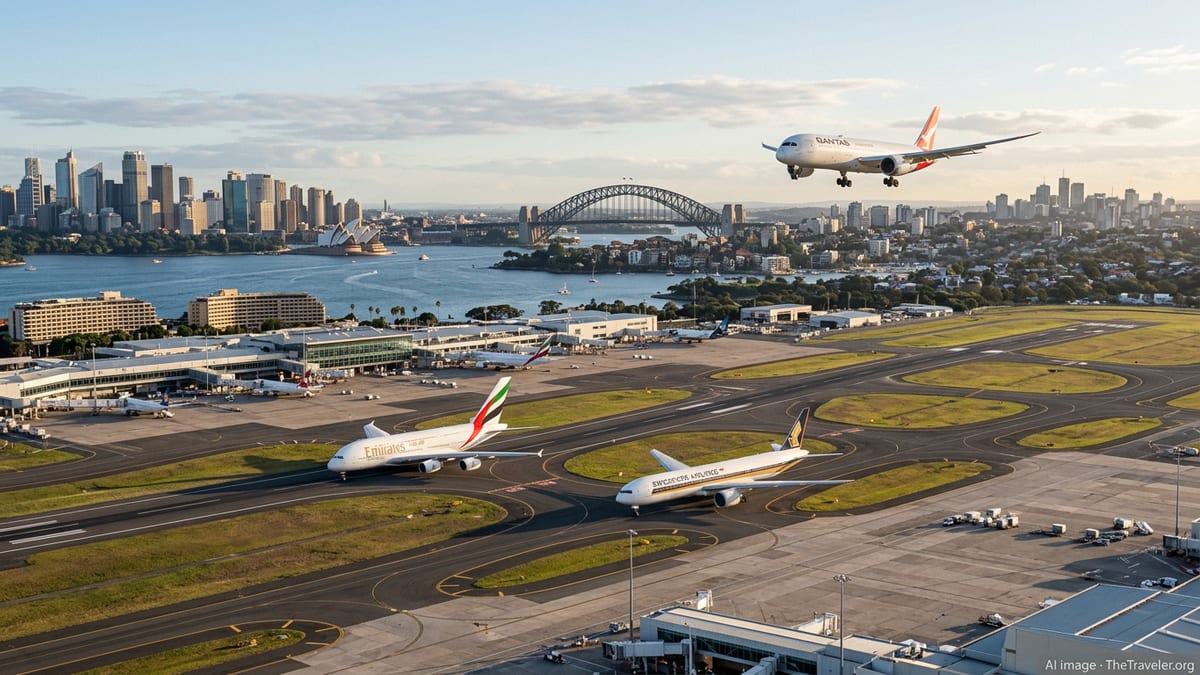
New Qantas Routes Redraw the Asia-Pacific Map
Australia’s flag carrier is using 2026 to deepen its reach across the Asia-Pacific region, adding new links and reshaping existing schedules to better match demand. Publicly available information from the airline’s network updates indicates that upcoming services are focused on short and medium haul routes that connect Australian hubs with key regional capitals and leisure destinations. The overall pattern points to a strategy of more point to point flying that reduces the need for congested mega-hub transfers.
Recent coverage of the country’s aviation expansion highlights that more than 20 new international routes across multiple airlines are due to come online from mid 2026, with Qantas and its low cost arm Jetstar taking a prominent share of that growth. These routes include fresh connections into Pacific islands and Southeast Asia alongside schedule adjustments on underperforming links. By thickening frequencies where demand is strongest and trimming weaker services, carriers are positioning the network to run more reliably and with additional slack to absorb disruptions.
Analysts note that this targeted growth is arriving at a time when Asia-Pacific air travel demand is rebounding strongly and pushing toward record seat capacity. The emphasis on regional and mid haul markets allows Qantas Group to add capacity where operational risk is lower than on ultra long haul sectors, and where turnaround times can be better controlled. For passengers, the effect is expected to be more choice of departure times and a better chance of rebooking quickly when disruptions occur.
Within Australia, New Zealand and nearby island markets, the widening web of direct flights also reduces reliance on traditional choke points such as Sydney and Melbourne for international connections. Additional gateways, including Brisbane and the Gold Coast, are being plugged more tightly into the international network, which can help spread traffic and lessen bottlenecks at the busiest terminals.
Trans-Tasman and Island Gateways Promise Smoother Connections
One of the most tangible changes for travelers is the expansion of services between Australia and New Zealand, along with new links to remote territories. Qantas Group announcements show a substantial increase in seat capacity on trans Tasman routes in 2025 and 2026, including new Brisbane services and additional frequencies from other east coast cities. These moves are complemented by new New Zealand services planned from emerging Australian gateways such as the Gold Coast from mid 2026, giving leisure travelers more non stop options.
Reports also indicate that QantasLink is stepping into longer regional missions, with flights to destinations such as Christmas Island and the Cocos (Keeling) Islands to begin from late 2025. While technically outside the 2026 window, the services are integrated into the broader Qantas domestic and international network and are expected to feed passengers into Asia bound and trans Tasman flights. That integration is important for reliability, as it offers more through-checked itineraries on a single airline group rather than forcing passengers to self connect between separate carriers.
Across the Tasman, the deployment of new aircraft types is expected to play a key role in smoothing operations. Aviation industry coverage notes that Qantas plans to introduce its latest Airbus A220 aircraft on Brisbane to Wellington in February 2026, marking the type’s first international route for the airline. The aircraft’s modern avionics and improved fuel efficiency are paired with lower maintenance requirements, which can help reduce technical delays compared with the aging jets they replace.
New and upgraded trans Tasman links also create more opportunities for same day onward connections to North America and Asia, particularly through Sydney, Brisbane and Auckland. With airlines spreading capacity over more frequencies rather than concentrating everything into a few peak departures, passengers gain more backup options in the event of disruption, which can significantly cut the risk of forced overnight stays.
Next-Generation Qantas Fleet Targets Reliability and Speed
The network changes are being underpinned by a large scale fleet renewal program. Qantas Group documents outline orders and planned deliveries for more than 100 new aircraft over the next several years, including Airbus A220s, A321XLRs and long range A350-1000s. Many of these jets are scheduled to arrive or be in active service by late 2026, progressively replacing older Boeing 717s and some widebody aircraft on both domestic and short haul international routes.
The new narrowbody and mid size jets have several operational advantages that can translate into smoother trips. They are designed to operate longer sectors without payload penalties, meaning fewer fuel stops and more direct routings on flights linking Australia with Southeast Asia, the Pacific and secondary Asian cities. Their improved range and fuel burn give planners more flexibility to route around weather patterns or congestion without adding extra stops, which helps keep itineraries intact when conditions deteriorate.
Cabin refurbishment programs on existing Airbus A330 aircraft, expected to run through to the end of 2026, are another piece of the upgrade story. Industry summaries of the refit program describe new seats, refreshed cabins and the introduction of high speed Wi Fi on selected Asia routes. Beyond passenger comfort, the standardized interiors and updated systems should simplify maintenance and reduce the number of last minute aircraft swaps, a common trigger for delays and missed connections.
The most high profile element of the fleet plan is the arrival of ultra long range A350-1000 aircraft toward the end of 2026 under the banner of Project Sunrise. While most of these non stop flights are expected to link Sydney with distant cities such as London and New York, the technology also frees up other long haul jets for redeployment across Asia and the Pacific. As more long range aircraft become available, Qantas gains the ability to redesign schedules with additional backup capacity, which can be used to recover more quickly after major disruptions.
Balancing Capacity Cuts With Smarter Scheduling
Despite the headline growth in new routes, Qantas and Jetstar are also continuing capacity reductions on some trunk domestic sectors into the September quarter of 2026. Company market updates filed in early May describe a 5 percentage point cut on certain major capital city routes, extending an earlier decision to trim flying where on time performance had come under pressure. The intent, according to publicly released material, is to build more resilience into the timetable rather than chase maximum seat numbers.
By slightly reducing the schedule on the busiest corridors, the group can hold more crew and aircraft in reserve and create longer turnaround windows. This can be particularly valuable during peak holiday periods and at slot constrained airports, where even small delays can cascade throughout the day. Analysts following the sector suggest that this combination of targeted growth on international and regional services, paired with modest restraint on crowded domestic legs, is designed to deliver a net improvement in reliability.
Independent monitoring by Australia’s competition regulator has previously linked over-scheduling to lower on time performance and higher cancellation rates during the post pandemic recovery period. The current round of timetable adjustments appears to take those findings into account, tilting the emphasis from raw capacity growth toward sustainable operations. For passengers, the result may be fewer flights to choose from on certain city pairs, but a better chance that the selected flight will depart and arrive as planned.
In parallel, Qantas and its low cost subsidiary are using new aircraft deliveries to retire some of the least reliable older jets while still growing international seat capacity. This approach allows the group to advertise more new and reinstated routes in 2026 without overburdening maintenance operations or stretching crew availability. It reflects a broader regional trend in Asia-Pacific, where airlines are attempting to balance rapid demand growth with the operational lessons of the past several years.
What the 2026 Expansion Means for Travelers
For travelers planning journeys in and around 2026, the combined impact of new routes, upgraded aircraft and revised schedules is expected to be a system that is both more connected and more forgiving when things go wrong. Additional non stop options from secondary Australian cities into New Zealand, Pacific islands and parts of Asia mean fewer backtracking itineraries and less time spent navigating tight connections at large hubs.
The arrival of new generation aircraft such as the A220 and A321XLR on international and longer domestic routes should improve punctuality by reducing technical delays and enabling more efficient flight paths. As these jets replace aging models, airlines can also standardize operations across fleets, which simplifies crew rostering and maintenance scheduling. Those behind the scenes changes are often invisible to passengers but can make the difference between a minor delay and a major disruption.
At the same time, travelers will still need to pay attention to ongoing timetable changes, especially where temporary capacity reductions remain in place on key domestic links. Some routes that existed before the pandemic have not returned, and others may operate with fewer weekly frequencies as airlines optimize their networks. However, the overall direction in 2026 suggests that Qantas and its partners are prioritizing reliability and smart connectivity over pure volume growth.
As the new services ramp up from mid 2025 into 2026, Australia’s place within the Asia-Pacific air travel network is likely to strengthen. With more direct access to regional centers, better balanced schedules and fleets designed around efficiency and range, the country’s main carriers are betting that a carefully managed expansion can deliver smoother and faster journeys for both local and international passengers.