


More news on this day
Austria is entering a new phase of tourism growth as record visitor numbers, renewed focus on lesser-known Alpine valleys and strong cultural city breaks combine to create a broad-based travel boom across the country.
Get the latest news straight to your inbox!
Record Tourism Highs Power a Growing Travel Economy
Recent tourism data show that Austria has surpassed its pre-pandemic visitor records, underscoring the country’s status as one of Europe’s most resilient and dynamic travel markets. Statistics from national authorities indicate that overnight stays reached around 154 million in 2024, edging past the previous peak set in 2019 and confirming a full recovery in both winter and summer seasons.
Tourism’s contribution to the wider economy is rising in parallel. Analysis from Austria’s statistics office and international organizations describes tourism’s direct value-added at roughly 4.4 percent of national economic output in 2024, slightly above the previous year. The figures highlight not only the return of traditional markets, such as Germany and other European neighbors, but also renewed long-haul interest from North America and beyond.
Government documents and parliamentary reports emphasize that this resurgence is being closely monitored through a “balanced tourism” lens, with policy efforts aimed at distributing visitor flows more evenly across seasons and regions. Support programs for destinations are structured to avoid overburdening individual hotspots, while still capitalizing on the global appetite for Alpine landscapes and cultural experiences.
Industry observers note that the spending profile of visitors has also shifted. Longer stays, higher average daily expenditure and a growing preference for sustainable transport and locally run accommodation are all cited in recent tourism reports. This mix is seen as critical in turning headline visitor records into durable economic gains for rural communities and city neighborhoods alike.
Majestic Alps Attract Year-Round Adventure Seekers
The Austrian Alps remain the backbone of the country’s tourism empire, but their role is changing as year-round mountain travel becomes the norm. While winter sports continue to draw millions of skiers and snowboarders, summer and shoulder seasons are now matching or surpassing winter in total overnight stays, according to compiled national statistics. Hiking, trail running, cycling and wellness-focused retreats are transforming former ski-only destinations into multi-activity resorts.
Travel coverage from outlets such as National Geographic and other European media highlights how regions like Tyrol, SalzburgerLand and Styria are actively repositioning themselves as four-season playgrounds. Marketing campaigns increasingly showcase panoramic ridge hikes, family-friendly bike routes and lake-and-mountain combinations that appeal to a broader demographic than traditional ski tourism.
Infrastructure is evolving to support this shift. Austria’s extensive mountain hut network, managed largely by Alpine clubs, has become a draw in its own right, enabling multi-day traverses across ranges such as the Zillertal and Karwendel. Recent traveler reports describe huts offering hot meals, simple accommodation and access to well-maintained high-altitude trails, making alpine experiences more accessible to casual hikers.
At the same time, climate research projects are tracking how glacier retreat and changing snowfall patterns affect trails, lifts and safety infrastructure. An initiative known as ReHIKE, for example, is using Earth observation data to map areas where melting ice increases erosion and rockfall risk, helping planners and local authorities anticipate maintenance needs and adapt routes for visitors in the years ahead.
Hidden Valleys and Reopened Gorges Draw Crowds Off the Beaten Path
One of the most notable trends in Austria’s current tourism boom is the push toward lesser-known valleys and natural attractions. As headline destinations such as Innsbruck, Salzburg and the high-profile ski circuits continue to attract heavy demand, regional tourism boards and local communities are steering visitors toward quieter corners of the Alps in search of “hidden” landscapes.
Valleys such as Paznaun, Gastein and parts of East Tyrol are increasingly promoted as alternatives for travelers seeking a slower pace, village life and uncrowded trails. Publicly available tourism statistics from Tyrol and other federal states suggest that these areas have seen a steady rise in overnight stays over recent seasons, though still at levels far below the country’s most famous resorts, leaving room for growth.
In Styria, the reopening of the Bärenschützklamm gorge in 2024 after several years of safety-related closure has given fresh momentum to regional nature tourism. The narrow valley, known for its wooden walkways and waterfalls, resumed operations with reinforced infrastructure and new parking facilities, and is once again appearing in guidebooks and travel media as a highlight for hikers based around the Graz Highlands.
This emphasis on dispersing visitors is closely aligned with the “balanced tourism” approach cited in government and parliamentary documents. Funding programs encourage destinations to develop products that highlight local culture, gastronomy and landscape without dramatically increasing environmental pressures. For travelers, it means a growing menu of quiet side valleys, mountain hamlets and forested gorges that complement the marquee Alpine peaks.
Rail, Climate Tickets and the Shift to Sustainable Access
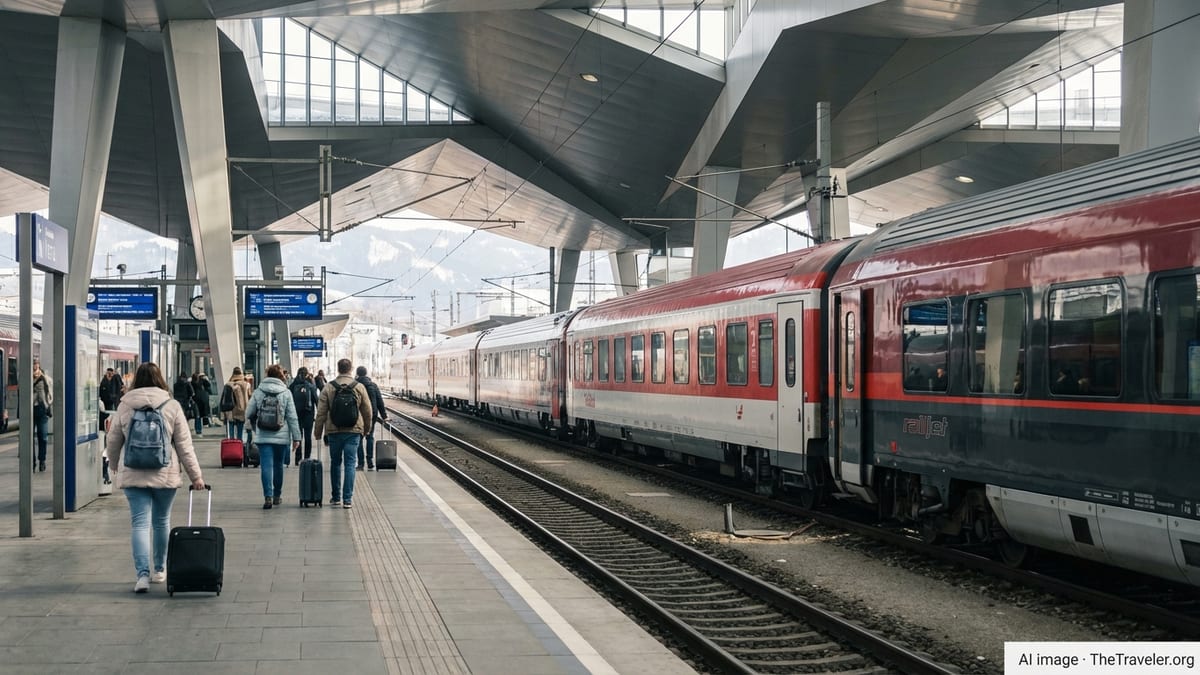
The expansion of Austria’s tourism empire is being accompanied by large-scale investments in rail and public transport designed to reduce car traffic in sensitive Alpine corridors. National rail operator project lists outline a long-term “target network 2040” that will upgrade lines across the country, with particular focus on routes that cross or approach the Alps.
Major infrastructure works include continued progress on the Brenner Base Tunnel between Austria and Italy and modernization of the Tauern route between Salzburg and Villach. Official project documentation describes how new tunnels and upgraded lines are expected to shorten travel times, increase capacity for passenger and freight trains and shift more long-distance journeys from road to rail along key transalpine corridors.
On the demand side, Austria’s nationwide KlimaTicket, introduced in 2021 as a flat-rate annual pass for public transport, is showing measurable impact on mobility choices. Academic studies assessing the policy indicate that public transport use has grown several percentage points faster than a modeled counterfactual, suggesting that more residents and visitors are opting for trains and regional buses in place of private cars.
Tourism boards have responded by bundling accommodations, mountain lifts and activities with rail-accessible itineraries. City break promotions in Vienna, Salzburg and Innsbruck increasingly highlight seamless rail connections to nearby valleys and ski areas, while Alpine guest cards in some regions include free or discounted use of local buses and mountain railways. The combined effect is gradually lowering the barrier for car-free exploration of remote valleys and high-mountain passes.
Cultural Cities Anchor a Diversified Tourism Map
While mountain destinations dominate imagery of Austria’s travel boom, the country’s cultural hubs play a central role in sustaining visitor numbers and smoothing seasonal fluctuations. Data on city tourism show that overnight stays in Vienna and the provincial capitals exceeded pre-pandemic levels in 2024, reflecting strong demand for classical music, architecture, museums and culinary scenes.
Vienna continues to rank among Europe’s top city-break destinations, attracting travelers with its opera houses, coffeehouse culture and imperial-era landmarks. Salzburg leverages its dual identity as the birthplace of Mozart and as a gateway to the Salzkammergut lake district, drawing visitors who combine concert tickets with boat trips or short mountain hikes.
Secondary cities such as Linz and Graz are gradually carving out their own niches. Cultural programming, design festivals and contemporary art venues are promoted alongside industrial heritage tours and nearby nature escapes. National and regional tourism strategies point to these urban centers as crucial in dispersing visitor flows, particularly during shoulder seasons when Alpine demand is lower.
Across the country, tourism planners emphasize the interplay between culture and landscape. Marketing materials and public strategies increasingly frame Austria not only as a skiing and hiking destination, but as a place where Alpine backdrops, Baroque cityscapes and small-town rituals form a single, interconnected travel narrative. This combination appears to be at the heart of Austria’s expanding tourism footprint, as record numbers of visitors seek both majestic peaks and the quieter rhythms of valleys, villages and concert halls.