


Agoda is a popular choice for travelers hunting for hotel deals in Asia, Europe, and beyond. It often shows lower headline prices than competitors and runs aggressive coupon and cashback offers. Yet a growing number of travelers report problems that usually trace back to simple booking mistakes: skipping key fine print, misunderstanding how taxes and fees work, or assuming Agoda will fix anything that goes wrong with the hotel. With a bit of care before you click “Book now,” you can dramatically reduce the chances of arriving to find your room unconfirmed, being surprised by extra charges, or fighting for weeks to get a refund.
Get the latest updates straight to your inbox!
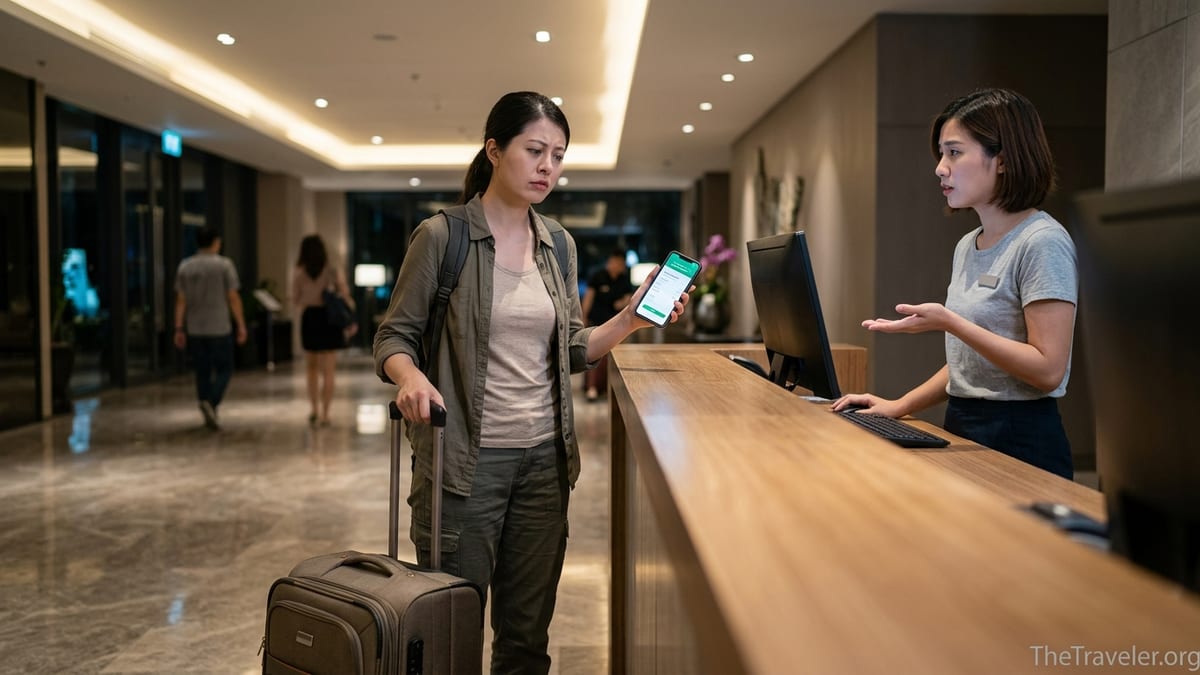
Misunderstanding Refundable vs Non‑Refundable Rates
One of the most expensive mistakes travelers make on Agoda is not paying close attention to the cancellation terms. Agoda typically shows at least two price types for the same room: a slightly higher “Free cancellation” option with a clear cancel‑by date, and a cheaper “Non‑refundable” or “Non‑cancellable” rate. In many Asian city hotels, that difference might only be 5 to 15 dollars per night. For a three‑night stay in Bangkok at a mid‑range hotel listed at 80 dollars per night, you might see 240 dollars for a free‑cancellation rate versus 216 dollars for non‑refundable. The lower number is tempting, but if your trip dates are not absolutely fixed, locking in the cheaper rate can become very costly.
Real‑world complaints about Agoda refunds usually involve travelers who clicked a bargain rate without checking the small line under the room name that describes cancellation. Many only realize later that “Non‑refundable” truly means no money back if they cancel or do not show up, even for reasons such as flight delays, visa issues, or illness. Third‑party guides to Agoda’s policies in 2025 and 2026 emphasize that the platform follows the rate’s stated rules quite strictly, and free‑cancellation bookings only remain flexible until a specific date and time, often listed as “Cancel by 23:59 local property time” a day or more before arrival.
A practical way to avoid painful surprises is to treat Agoda’s cancellation text as seriously as airline fare rules. Before booking, expand or hover over the “Cancellation policy” section and note the exact cut‑off date and whether it is based on the hotel’s local time zone. For trips involving visas, long‑haul flights, or peak seasons such as cherry blossom in Japan or New Year in Thailand, paying a bit more for a free‑cancellation rate often buys valuable peace of mind. If you do choose a non‑refundable rate, assume you will not be able to change your dates without losing most or all of the prepaid amount.
Ignoring Taxes, Resort Fees, and Currency Gotchas
Another common source of disappointment is the gap between the “great deal” shown on the search page and the amount that finally hits your card. Agoda usually advertises a low base rate and then adds taxes and service charges at a later step. In many United States and Southeast Asia destinations, guests report that the final price after local tax, service charges, tourism levies, and resort fees ends up 15 to 25 percent higher than the first figure they saw. In some cases, Reddit users have complained that a two‑night stay in an Arizona hotel booked for around 200 dollars turned into a bill closer to 260 dollars once a separate “tax recovery charge” and local fees were added at checkout.
Resort and facility fees cause particular confusion. For example, a Las Vegas or Honolulu hotel may show a nightly room rate of 120 dollars on Agoda, but only in the final breakdown do you see a 45 dollar per night resort fee payable directly to the property. Travelers who scroll quickly and focus only on the bolded total charged by Agoda arrive believing they are fully prepaid, then feel blindsided when the front desk asks for an additional 90 dollars for a two‑night stay to cover resort fees, parking, or access to pools and gym facilities. Similar complaints have surfaced in European city stays where parking or spa access is billed separately at check‑out.
Currency and foreign transaction effects add another layer of complexity. Some guests report being charged slightly more than the amount shown on Agoda’s payment page when their bank processes the charge, either because of currency conversion differences or foreign transaction fees on their credit card. One traveler described being quoted 560 dollars on the Agoda confirmation but seeing roughly 600 dollars charged after processing. In practice, the extra 40 dollars was mostly due to bank‑side fees and exchange rate movement rather than Agoda changing the price. To reduce this risk, check which currency is selected before you pay, avoid dynamic currency conversion options offered by some banks, and if your card charges foreign transaction fees, consider using a card that waives them for international purchases.
Failing to Confirm the Reservation with the Hotel
Most Agoda bookings go through without trouble, but enough cases of missing or “phantom” reservations have appeared in recent years that it is wise not to treat any third‑party confirmation email as the final word. In 2025, Japanese media outlets reported multiple incidents where travelers arrived at well‑known domestic brands only to be told that the room Agoda had sold them was not actually available in the hotel’s system. Industry commentary blamed this on issues with third‑party inventory suppliers and the complex technology that syncs availability between Agoda and hotels.
Individual travelers recount similar experiences in online forums. One guest booked what looked like a standard city hotel in Prague through Agoda, received a full confirmation and charge on their card, then discovered on arrival that the hotel had never received the reservation for one of the rooms. The guest ended up paying for a last‑minute alternative and later spent weeks pursuing a refund for the unused, duplicate booking. Another traveler who booked a beach resort in Southeast Asia reported that their Agoda confirmation number did not exist in the property’s system when they phoned two weeks before arrival, forcing them to scramble for alternative lodging during a busy holiday period.
You can significantly reduce the chance of this type of disruption with a quick verification step. Within 24 to 72 hours of booking, contact the hotel directly using the phone number shown in the Agoda voucher or on the property’s own website. Provide your full name, check‑in date, and Agoda confirmation number, and ask the front desk or reservations team to read back your room type and bed configuration. If they cannot see your booking, share a screenshot of your voucher and ask them to liaise with Agoda or their channel manager to resolve the issue well before you travel. This extra five‑minute check is especially important for stays over public holidays, during large festivals, or at small guesthouses that rely on manual systems.
Overlooking Room Details, Extra Guests, and Inclusions
Another frequent source of disagreement between Agoda customers and hotels is what, exactly, the booked room includes. On the search results page, it is easy to focus only on the room photos and the biggest price saving. Yet room descriptions on Agoda can be very specific about bed type, maximum occupancy, and extras such as breakfast. You might see a “Deluxe Double Room, 1 queen bed, room only” alongside a slightly more expensive “Deluxe Double Room, breakfast for 2” or a “Twin room, 2 single beds.” If you are traveling as a family of three or four or sharing with friends, booking the cheapest configuration without checking the occupancy rules can lead to substantial on‑arrival charges.
For example, a family visiting Tokyo might choose a double room listed at 140 dollars per night on Agoda, assuming their two young children can stay for free. When they arrive, the hotel points out that the room’s maximum occupancy is two people and charges an extra 40 dollars per child per night, plus breakfast surcharges. In another case shared by a UK traveler, a guest booked a central London hotel through Agoda expecting spa and pool access because the property photos highlighted those facilities. Only at check‑out did they discover separate daily fees for pool use and parking, which were not clearly listed as included in the Agoda rate.
To avoid these problems, expand the “Room details” and “Inclusions” sections for any option you are considering. Check the maximum number of guests allowed and whether children sleep for free or require an extra bed. Look for clear wording such as “Breakfast included for 2 guests” or “Room only, no meals.” If you plan to use facilities like a hotel pool, parking, or a resort shuttle, confirm in the description whether they are complimentary or chargeable. If the listing is ambiguous, sending a pre‑arrival message through Agoda’s messaging tool or emailing the hotel directly to ask about specific inclusions can save awkward conversations at the front desk later.
Relying on Marketing Tricks and Ignoring Real Reviews
Online travel agencies, including Agoda, compete fiercely for bookings and use a range of design nudges to encourage quick decisions. Academic research into “dark patterns” in hotel booking platforms has noted common tactics such as urgency messages, limited‑time discount badges, and aggressive strike‑through pricing. On Agoda, you might see banners that say “Only 1 room left at this price” or “Booked 15 times today” next to a property, as well as bright labels like “72% off” compared with an often unexplained “original” rate. For an unfamiliar market, such as a beach town in Vietnam or a business district in Seoul, these cues can push travelers to lock in a deal without taking time to verify whether the discount is truly meaningful or whether the hotel’s current service level matches the photos.
Traveler complaints on social media and forums often mention situations where the Agoda listing photos looked glossy and modern, while the actual room was much older, darker, or located in a separate annex. In some cases, guests discovered construction noise, closed pools, or breakfast quality far below expectations. Because Agoda sits between the guest and the property, getting compensation or a room change after check‑in can be slow and uncertain. Guests report that Agoda agents sometimes need to wait for the hotel’s approval before offering partial refunds or alternative rooms, which can take hours or days if the property is unresponsive.
To make better choices, treat Agoda’s marketing messages as background noise rather than decisive evidence. Scroll past the first few lines of promotional text and focus on recent traveler photos and reviews, especially those from the past six to twelve months. Pay attention to comments about cleanliness, staff responsiveness, and accuracy of the photos. If a hotel in Bali shows a 9.0 “Excellent” score but recent reviews mention worn‑out furniture and loud nightclub noise, you may prefer a quieter, slightly lower‑rated option with more consistent feedback. Cross‑checking the same property on another major platform or the hotel’s own site can also reveal whether a “70 percent discount” is based on a real previous price or simply a marketing anchor.
Assuming Agoda Will Easily Fix Any Problem
Many travelers book through Agoda believing that the platform will step in quickly and decisively if anything goes wrong. In practice, Agoda’s ability to resolve issues such as overbookings, bad rooms, or refund disputes depends heavily on the cooperation of the hotel or the underlying inventory supplier. Public complaint forums include cases where guests were walked to alternative hotels much farther from their preferred neighborhood, or waited two to six weeks for refunds for stays that were cancelled by the property due to overbooking. One traveler who arrived at a fully booked resort reported calling Agoda’s customer service daily for nearly two weeks before seeing any progress on their promised refund.
Agoda’s own help center explains that refunds typically follow the policy attached to your booking, and that refund processing times depend on your bank or card issuer. Separate PDF guides and third‑party explainers published in 2025 and 2026 describe how some refunds can take several business days to appear as pending and up to 30 days or more to fully post back to a card statement, especially for international cards or alternative payment methods like e‑wallets and online banking. This time frame can be frustrating if the refund covers a large holiday booking and your card limit is tied up while you are still traveling.
To protect yourself, think of Agoda as a facilitator rather than a blanket guarantor. Keep all documentation related to your stay: screenshots of the room description and price breakdown, email confirmations, chat transcripts with Agoda agents, and receipts from the hotel. If the property cannot honor your booking, politely ask the front desk to put the reason in writing or send an email stating that they could not accommodate you. This sort of evidence can make escalation with Agoda and your bank much smoother if you later need to dispute charges as “services not rendered.” For high‑value trips, consider using a credit card with strong travel protections rather than a debit card; card issuers are often more effective at resolving contested charges than any customer support line.
Overlooking Alternative Booking Channels and Direct Rates
A final mistake is assuming that Agoda always has the best overall value once all factors are considered. While the platform can show impressive discounts in certain markets, especially across Southeast Asia, its prices are not consistently lower than competitors or a hotel’s own website. In some of the complaint stories shared by travelers, a guest booked a non‑refundable Agoda rate, later discovered that the same hotel offered a similar or slightly higher price directly with flexible cancellation, and then had no way to shift without losing most of the original payment. With Agoda launching more bundled products such as combined hotel and flight bookings, it is even easier to feel locked in once everything is in a single cart.
Before committing to a non‑refundable Agoda deal, take a few minutes to compare the same room type and dates on at least one other major booking site and the hotel’s direct site. In cities like Singapore or Tokyo, it is not unusual to find that an official website offers a “Best Rate Guarantee” with added perks such as breakfast or late check‑out for similar or slightly higher prices than Agoda’s headline figure. Direct bookings can also simplify changes or cancellations, because you negotiate with the hotel rather than through an intermediary that must recoup its commission.
This does not mean you should avoid Agoda entirely. The platform can still be a powerful tool for discovering properties, reading large volumes of guest reviews, and occasionally securing genuine flash sales. The key is to treat it as one of several tools rather than an unquestioned default. If you do choose Agoda for convenience or price, double‑check that the combination of rate conditions, taxes, and inclusions genuinely beats what you could get by booking elsewhere with more flexibility.
FAQ
Q1. Is it safe to book hotels through Agoda?
Agoda is a well‑known global booking platform used by millions of travelers, and most stays proceed without issue, but problems can arise if you overlook details such as cancellation rules, taxes, and inclusions, so careful review of each booking is essential.
Q2. Why was I charged more than the price I saw on Agoda?
The amount charged to your card can be higher than the first price you saw due to added taxes, service charges, resort or facility fees, and possible foreign transaction or currency conversion fees from your bank.
Q3. How can I avoid hidden fees when booking with Agoda?
Before paying, expand the full price breakdown to check for taxes and mandatory fees, watch for notes about resort or facility charges payable at the hotel, and confirm with the property if you are unsure what is included.
Q4. What should I do if the hotel cannot find my Agoda reservation?
Stay calm, show the hotel your Agoda voucher, ask them to double‑check under your name and confirmation number, request written confirmation if they cannot accommodate you, and contact Agoda support immediately with all documentation.
Q5. How long do Agoda refunds usually take to appear?
Refunds approved by Agoda or the hotel often take several business days to show as pending and can take a few weeks or more to fully reach your card or bank account, depending on your payment method and bank processes.
Q6. Can I change the dates of a non‑refundable Agoda booking?
Non‑refundable rates are generally not changeable, and date changes often require cancelling and rebooking, which may mean losing most or all of the original payment unless the hotel and Agoda make an exception.
Q7. How do I make sure breakfast and extra guests are included?
Read the room details carefully for occupancy limits and inclusions, look for clear wording such as “Breakfast included for 2 guests,” and contact the hotel or message them through Agoda if you plan to bring children or additional adults.
Q8. Are Agoda’s discount percentages always real?
Discount labels and strike‑through prices are marketing tools and may compare against a high reference rate; it is wise to compare the same hotel and room across other sites and the hotel’s own website before assuming a large advertised discount is exceptional.
Q9. What payment method is best when using Agoda?
A major credit card with good travel protections is usually safer than a debit card because it offers better support for disputing incorrect or non‑rendered charges and does not directly lock up funds from your bank account in case of delays.
Q10. What is the single best way to reduce problems with Agoda bookings?
The most effective step is to slow down before confirming: read the cancellation and fee details line by line, verify the final total, and contact the hotel within a few days to confirm your reservation is in their system.